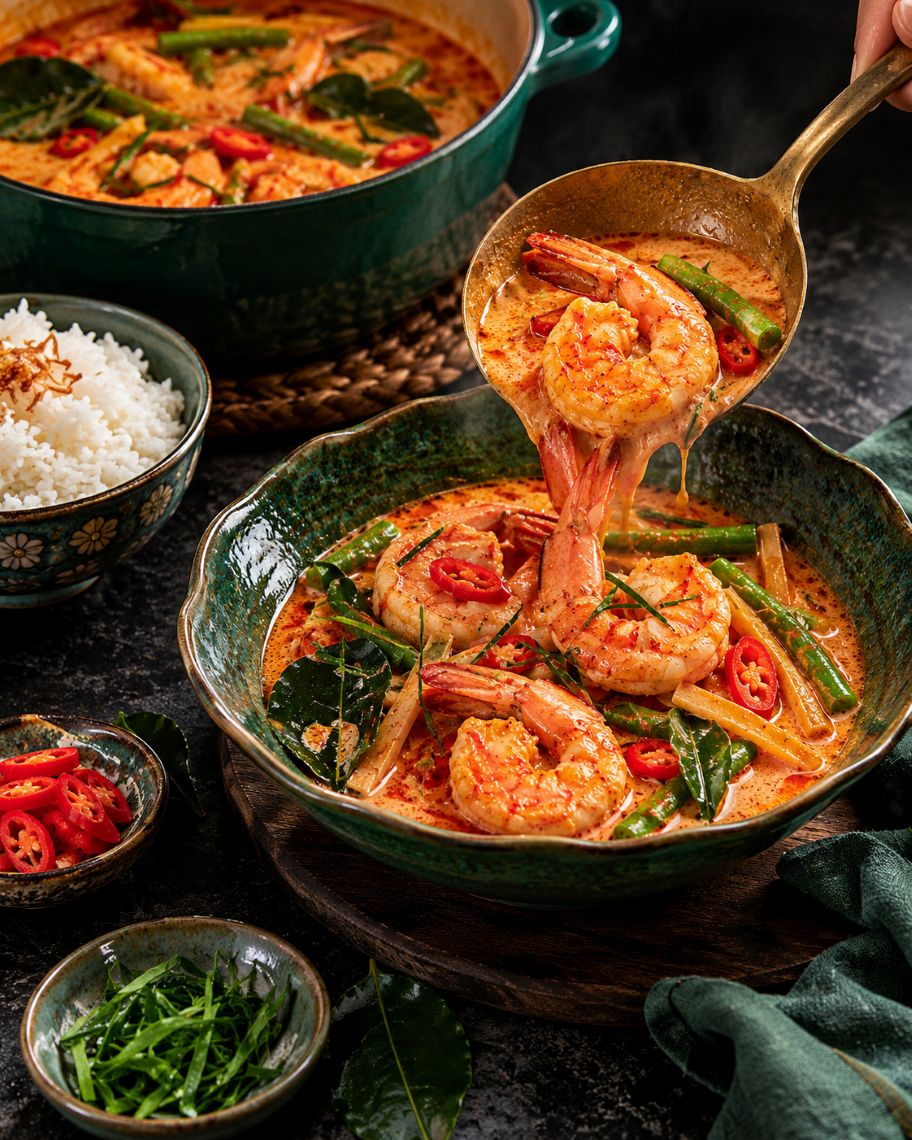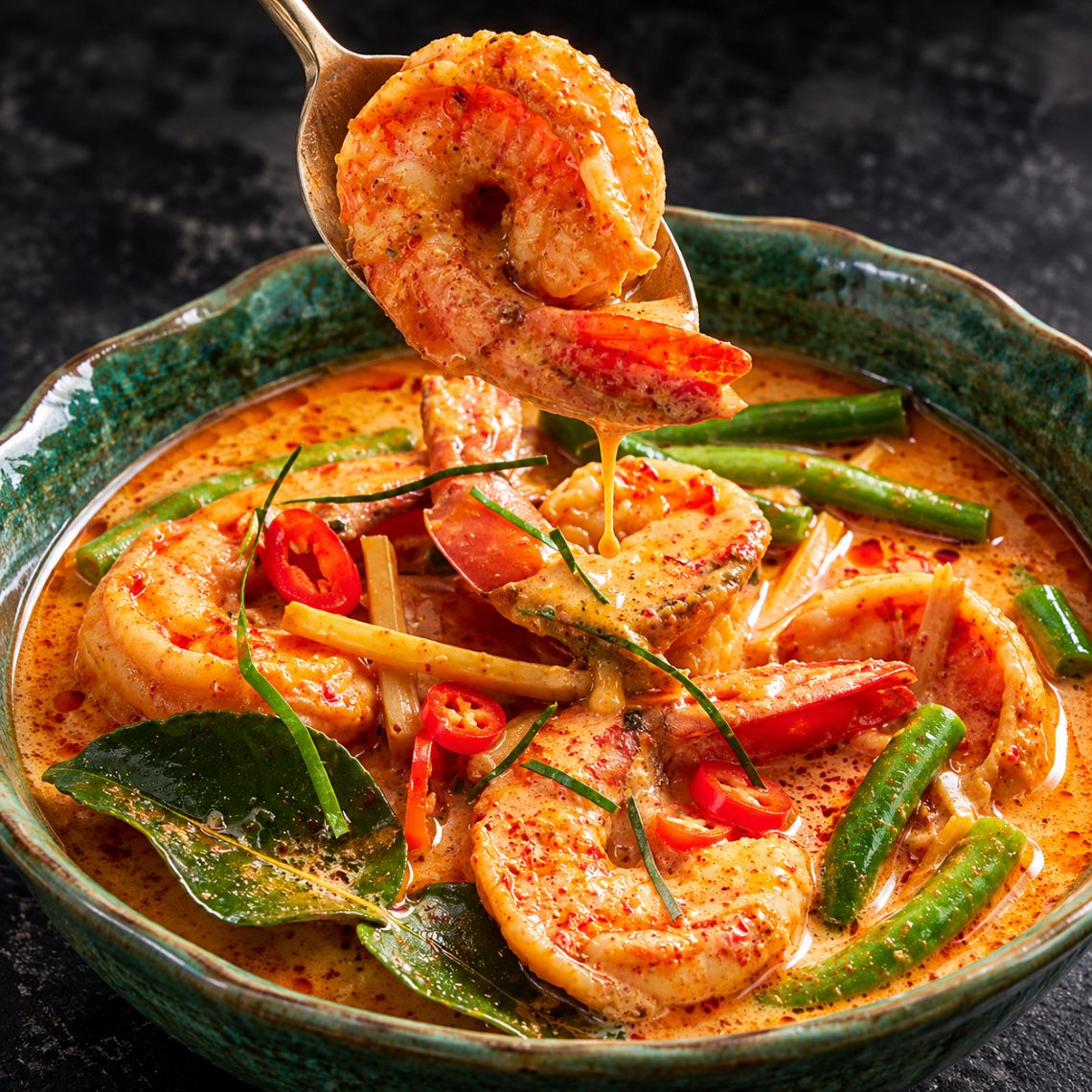

Thai Red Curry Prawns
Course: MainDifficulty: Intermediate4
servings45
minutes20
minutes300
kcalKeep the screen of your device on
Ingredients
- 1. Homemade Thai Red Curry Paste
- This recipe makes approximately 1 generous batch of curry paste. Use around half for the curry, then adjust according to your preferred heat and flavour intensity.
20 g mild dried red chillies, such as guajillo or puya, cut into 1–2 cm pieces
10 g spicy dried red chillies, such as Thai dried chillies or arbol, cut into pieces
½ teaspoon white peppercorns
1 teaspoon coarse salt
1 stalk lemongrass, bottom half only, thinly sliced
15 g finely chopped galangal
4 cilantro roots, or 10–12 cilantro stems, chopped
2 teaspoons finely chopped makrut lime zest
30 g garlic, chopped
70 g shallots, chopped
2 teaspoons fermented shrimp paste
- Optional toasted spices
2 teaspoons coriander seeds
1 teaspoon cumin seeds
- Ingredient notes
Mild and spicy chillies: The combination provides colour, body and adjustable heat. Remove some seeds if you prefer a milder curry.
Lemongrass: Use the tender lower portion, discarding the tough outer layers.
Galangal: This aromatic root gives Thai curry its distinctive peppery, citrus-like character. Ginger can be substituted in a pinch, although the flavour will differ.
Cilantro roots: These provide a deeper, more concentrated aroma than leaves. If unavailable, use the stems as indicated.
Makrut lime zest: Use only the coloured outer zest, avoiding the bitter white pith.
Shrimp paste: This adds savoury depth and traditional character. For a vegetarian alternative, use miso, recognising that the result will taste different.
- 2. For the Red Curry Prawns
2 tablespoons vegetable oil
Approximately ½ batch of the homemade Thai red curry paste, to taste
400 ml coconut milk
500 g raw prawns, peeled and deveined, tails left intact if desired
150–200 g vegetables, such as green beans and sliced bamboo shoots
120 ml water or light stock, as needed
1–2 teaspoons fish sauce, or to taste
1 teaspoon palm sugar or brown sugar, optional
1–2 teaspoons fresh lime juice, optional
- 3. For Garnishing and Serving
Makrut lime leaves, finely shredded, optional
Fresh red chilli, thinly sliced, optional
Fresh Thai basil or cilantro leaves, optional
Steamed jasmine rice
Directions
- Part 1 — Prepare the Thai Red Curry Paste
You can use an immersion blender for convenience or a traditional mortar and pestle for a more hands-on approach. - Method A: Using an immersion blender
- Step 1 — Prepare the dried chillies
1. Place the mild and spicy dried chillies in a heatproof bowl.
2. Cover with hot water and soak for approximately 20–30 minutes, or until softened.
3. Drain thoroughly and squeeze out excess moisture. Reserve a little soaking water only if needed to help the blender work.
4. Handle the chillies carefully, particularly if they are very hot, and wash your hands after preparation.
Softened chillies are easier to blend into a smooth paste and help create the deep red colour associated with Thai red curry. - Step 2 — Toast the optional spices
1. Place the coriander and cumin seeds in a dry frying pan over low to medium heat.
2. Toast for 1–2 minutes, shaking the pan frequently, until fragrant.
3. Transfer to a spice grinder and grind into a fine powder.
4. If using whole white peppercorns, grind them with the spices or separately.
Toasting enhances the fragrance of the spices and adds warmth to the finished curry. Allow them to cool slightly before grinding. - Step 3 — Blend the aromatics
1. Place the lemongrass, galangal, cilantro roots and makrut lime zest into a tall, narrow container.
2. Add the chopped garlic, shallots and shrimp paste.
3. Add the drained softened chillies.
4. Use an immersion blender to process the mixture, stopping occasionally to scrape down the sides.
5. Add the white pepper, salt and optional ground spices.
6. Continue blending until the paste is as fine and uniform as possible.
The paste should be thick, aromatic and concentrated. If the blender struggles, add a teaspoon of water at a time, using as little as possible. - Step 4 — Finish the paste
Taste cautiously and check the balance of heat and aromatics. The paste should be intensely flavoured because it will later be diluted with coconut milk.
Set aside the amount needed for the curry. Transfer the remainder to a clean container. - Method B: Using a mortar and pestle
1. Soak the dried chillies in water for at least 30 minutes, then drain and pat dry.
2. Pound the white peppercorns and optional toasted spices into a fine powder. Remove and set aside.
3. Pound the chillies with the salt until they form a coarse paste.
4. Add the lemongrass, galangal, cilantro roots and makrut lime zest. Continue pounding until the fibres break down.
5. Add the garlic and shallots, pounding after each addition until incorporated.
6. Add the ground spices and pound until the mixture becomes smooth and cohesive.
7. Add the shrimp paste last and pound until evenly combined.
Pounding takes patience, but it gradually breaks down the fibrous ingredients and creates a cohesive paste with excellent aromatic depth.
Storage: Refrigerate the fresh paste in an airtight container and use within 3 days, or freeze in small portions for several months. Always use a clean spoon when handling stored paste. - Part 2 — Cook the Thai Red Curry Prawns
- Step 1 — Prepare the prawns and vegetables
1. Peel and devein the prawns if necessary, leaving the tails intact for presentation if desired.
2. Pat them dry with kitchen paper. This helps them retain their texture during cooking.
3. Trim the green beans and cut them into manageable lengths.
4. Drain the bamboo shoots thoroughly. If they have a strong packaged aroma, rinse them under cold water.
5. Prepare the coconut milk, curry paste, fish sauce and remaining seasonings before you begin cooking.
Having everything ready is important because the curry comes together quickly once the paste is fried. - Step 2 — Fry the curry paste
1. Heat the vegetable oil in a wok or heavy-based saucepan over medium heat.
2. Add approximately half the prepared curry paste, starting with a smaller amount if you are unsure about the heat.
3. Stir continuously for 1–3 minutes, until the paste becomes deeply fragrant.
4. If the paste begins to stick, reduce the heat slightly and add a small splash of coconut milk.
Why this step matters: Frying the paste in oil releases the aromatic compounds in the chillies, lemongrass, galangal and spices. It also rounds out the raw flavour of the aromatics, producing a fuller and more complex curry.
Avoid scorching the paste, as burnt garlic and shallots can introduce bitterness. - Step 3 — Add the coconut milk
1. Pour in the coconut milk gradually, stirring to combine it with the fried paste.
2. Add approximately 120 ml water or light stock, depending on the consistency you prefer.
3. Bring the mixture to a gentle simmer.
4. Stir until the curry paste is fully incorporated and the sauce becomes a uniform, rich red-orange colour.
5. Simmer for 3–5 minutes, allowing the flavours to develop.
The sauce should be creamy and pourable, not excessively thick. If it looks too concentrated, add a little more water or stock. - Step 4 — Cook the vegetables
1. Add the green beans to the simmering curry.
2. Cook for approximately 3–5 minutes, depending on their thickness.
3. Add the bamboo shoots and simmer for another 1–2 minutes.
The green beans should become tender but retain a slight bite. Bamboo shoots need only enough time to heat through and absorb some of the curry flavour.
If you are using different vegetables, adjust their cooking times accordingly. Firmer vegetables should go in first, while delicate vegetables should be added closer to the end. - Step 5 — Add the prawns
1. Reduce the heat to maintain a gentle simmer.
2. Add the prawns and stir gently to coat them in the curry sauce.
3. Cook for approximately 3–5 minutes, depending on their size, turning them once if necessary.
4. Check that the prawns are opaque throughout and have reached an internal temperature of 63°C.
5. Remove the pan from the heat as soon as they are cooked.
Prawns continue to cook briefly in the hot sauce, so avoid simmering them longer than necessary. Overcooked prawns become firm and rubbery, which takes away from the dish's delicate texture. - Step 6 — Season and balance the curry
1. Add 1 teaspoon of fish sauce and stir well.
2. Taste the curry before adding more. Continue with small additions until the savoury seasoning is balanced.
3. If the curry tastes too sharp or spicy, add a little palm sugar or brown sugar to round out the flavours.
4. If the sauce feels too rich, add a little lime juice for freshness.
5. If you want a more intense curry flavour, stir in a little additional prepared curry paste, ensuring it is cooked through in the sauce.
The goal is a balance of heat, savouriness, coconut richness and aromatic freshness. No single flavour should overpower the prawns. - Part 3 — Garnish and Serve
- 1. Spoon the curry into a warm serving bowl.
2. Scatter over finely shredded makrut lime leaves, if using.
3. Add a few thin slices of fresh red chilli for colour and extra heat.
4. Finish with Thai basil or cilantro leaves.
5. Serve immediately with freshly steamed jasmine rice.
The rice absorbs the fragrant coconut curry sauce and balances its richness. For a dinner-party presentation, arrange the prawns visibly on top of the curry and finish with a little fresh herb garnish.
Notes
- Chef's Notes
• Control the heat: Begin with less curry paste and add more to taste. Different dried chillies vary significantly in strength.
• Use full-fat coconut milk: It creates a richer sauce and helps carry the aromatic flavours.
• Do not rush the paste: A few minutes of gentle frying makes a noticeable difference to the depth of the curry.
• Avoid boiling the prawns vigorously: A gentle simmer keeps them tender.
• Balance the seasoning at the end: Fish sauce, sugar and lime juice should be adjusted according to the saltiness and acidity of your ingredients.
• Prepare the paste ahead: Homemade curry paste can be portioned and frozen, making future curries much quicker to prepare.
• Adjust the consistency: Add water or stock for a lighter sauce, or simmer briefly before adding the prawns if you prefer a thicker curry. - Serving Suggestion
Serve this Thai red curry with steamed jasmine rice, fresh herbs and lime wedges. A simple cucumber salad can also be served alongside to provide a refreshing contrast to the warmth and richness of the curry.
The beauty of this recipe lies in the curry paste. Once you have prepared it from scratch, you can use the same paste with chicken, firm white fish, tofu or vegetables, adjusting the cooking time according to the ingredients.
From My Kitchen to Yours — Sandra Djohan