

A family recipe, passed down through generations, with a personal twist.
Pontianak-style fried noodles are close to my heart because they remind me of the flavours and cooking traditions passed down through my family. This version takes inspiration from the original family recipe, traditionally made with flat rice noodles, or kwetiau, and replaces them with udon noodles.
I love using udon because its thick, chewy texture gives the dish more volume, a more substantial bite, and a satisfying noodle texture. It also pairs beautifully with chicken, prawns, squid, eggs, and the familiar savoury-sweet seasoning of Indonesian fried noodles.
The spirit of the original recipe remains the same: fragrant garlic, fresh seafood, a touch of chilli, sweet soy sauce, and the unmistakable flavour of a hot wok. The udon is simply my way of giving a treasured family recipe a new expression while preserving the flavours that make it special.
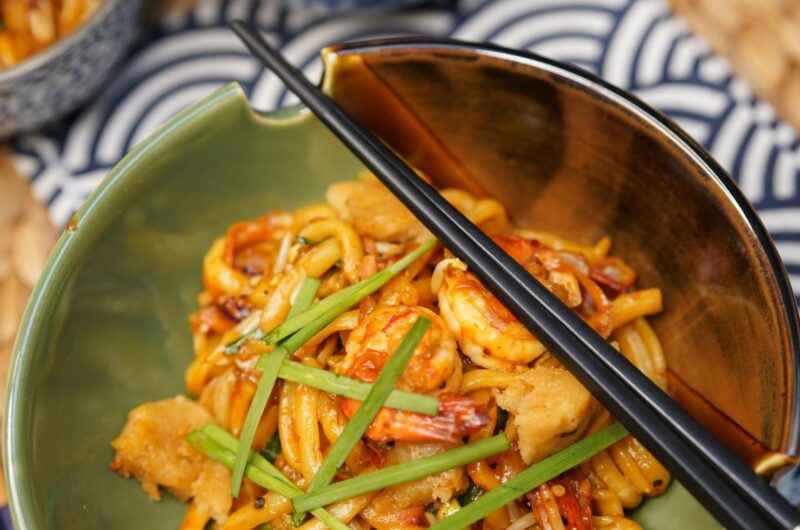
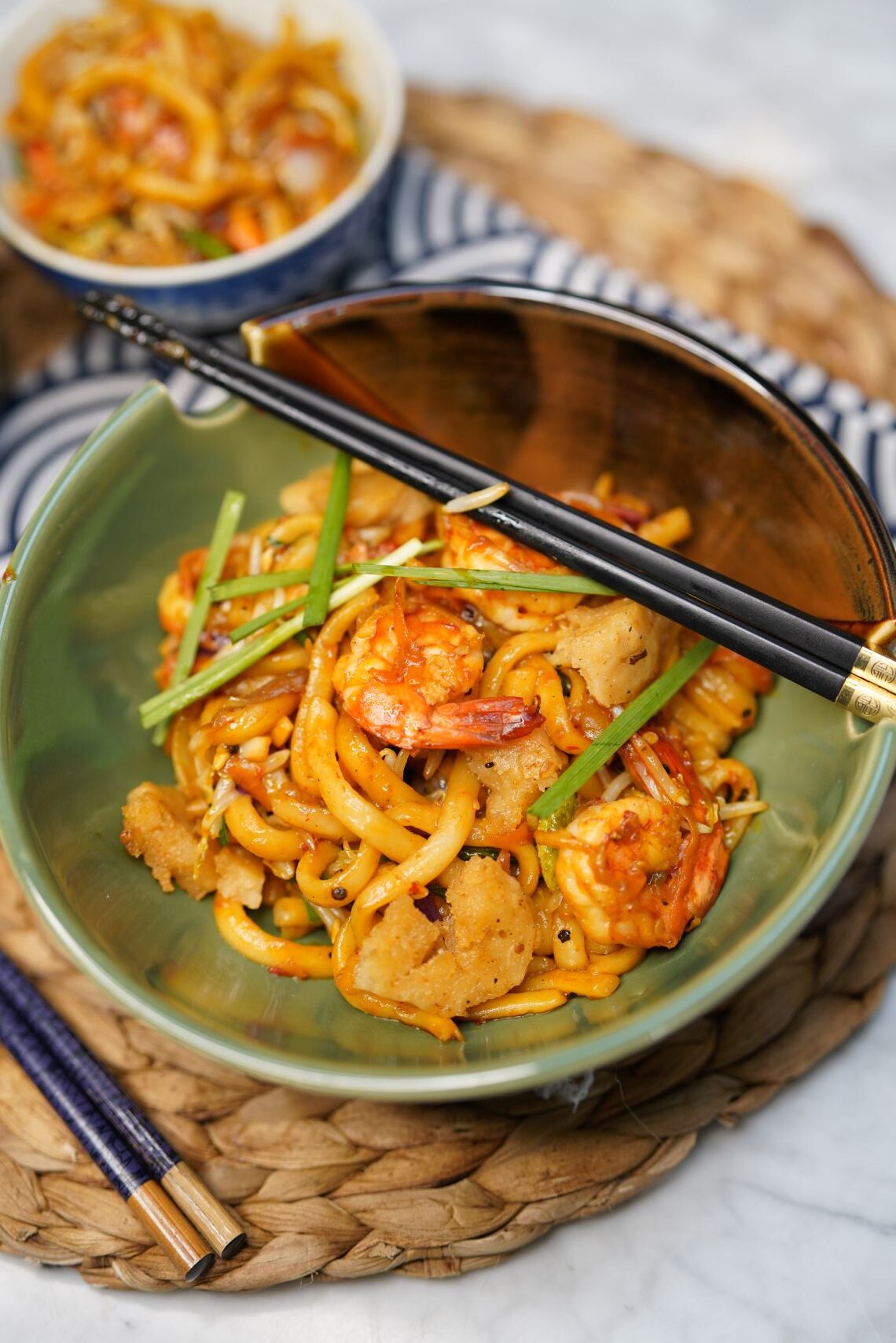
Indonesian-Style Fried Udon
Course: Main / Lunch / DinnerCuisine: AsianDifficulty: Moderate4
servings20
minutes20
minutes400
kcalKeep the screen of your device on
Ingredients
- Main ingredients
500 g fresh or vacuum-packed udon noodles
200 g chicken breast fillet, thinly sliced
300 g medium prawns, peeled, with tails left intact
200 g squid, cleaned and sliced into rings
6 cloves garlic, finely minced
5 red chillies, thinly sliced
3 chicken eggs, lightly beaten
200 g bean sprouts, rinsed and drained
150 g garlic chives, cut into 2 cm lengths
- Seasoning mixture
Mix all the ingredients in a small bowl before cooking. 2 tablespoons Bango Sweet Soy Sauce (kecap manis)
2 tablespoons soy sauce
1 teaspoon salt
½ teaspoon ground white pepper
½ teaspoon Royco Chicken Stock Powder
- Chef's note:
Sweet soy sauce provides the signature Indonesian sweetness and dark colour. The regular soy sauce balances it with savoury depth. If your udon is already salted or your stock powder is particularly salty, start with less salt and adjust at the end.
Detailed step-by-step cooking instructions
- Prepare the udon noodles
If using vacuum-packed udon, gently loosen the noodles according to the package instructions, using warm water if needed. If using frozen udon, thaw or blanch as directed on the package. Drain thoroughly.
Separate the strands gently with your fingers or chopsticks. Set aside. Avoid overcooking them at this stage because they will be heated again in the wok.
Important: If using fresh udon, check whether it is already fully cooked before blanching. - Prepare the chicken and seafood
Slice the chicken breast thinly across the grain so it cooks quickly and stays tender. Pat the prawns and squid dry with paper towels.
Keep the chicken, prawns, and squid in separate bowls. Thinly slice the red chillies, mince the garlic, rinse the bean sprouts, and cut the garlic chives into 2 cm lengths.
Having everything ready before turning on the stove is essential because fried udon cooks quickly over high heat. - Prepare the seasoning
In a small bowl, combine the sweet soy sauce, regular soy sauce, salt, white pepper, and chicken stock powder.
Stir well until the stock powder and salt are evenly distributed. Keep the mixture beside the stove so you can add it quickly once the noodles are in the wok. - Sauté the garlic
Heat 3 tablespoons of oil in a large wok over medium-high heat. Add the minced garlic and stir continuously for about 20–30 seconds until fragrant and lightly golden.
Do not let the garlic turn dark brown, as burnt garlic can make the noodles taste bitter. The fragrant garlic forms the flavourful foundation of this Pontianak-style dish. - Cook the chicken
Add the sliced chicken to the wok. Spread it out and stir-fry for 2–3 minutes until the pieces are no longer pink on the outside.
Keep the heat fairly high, stirring frequently so the chicken cooks evenly and absorbs the garlic aroma. Continue cooking until the chicken is fully cooked; thin slices should cook quickly. - Add the prawns and squid
Add the prawns and squid to the wok. Stir-fry for approximately 1–2 minutes, until the prawns begin turning pink and the squid starts becoming opaque.
Avoid overcooking the seafood, as it can become tough. The seafood will continue cooking when you toss everything together with the noodles. - Add the red chillies
Add the sliced red chillies and stir-fry for about 30 seconds. Toss them with the garlic, chicken, and seafood until evenly distributed.
The chillies add colour, fragrance, and a gentle heat. For a milder dish, remove the seeds or reduce the amount of chilli. - Cook the eggs
Push the chicken and seafood to one side of the wok. If the pan looks dry, add a small splash of oil.
Pour the beaten eggs into the empty space. Let them set for a few seconds, then gently scramble until nearly cooked. Fold the eggs into the chicken and seafood.
This method gives you soft pieces of egg throughout the noodles rather than mixing raw egg directly into the sauce. - Add the udon noodles
Add the prepared udon to the wok. Using two spatulas or a pair of long cooking chopsticks, gently lift and toss the noodles with the chicken, seafood, and eggs.
Work carefully to separate the noodles without breaking them. Allow the udon to heat through for about 1–2 minutes before adding the seasoning mixture.
If the wok becomes too crowded, cook in two batches. This helps the noodles fry properly instead of steaming. - Season the noodles
Pour the prepared seasoning mixture evenly over the noodles. Toss continuously for 1–2 minutes so the sweet soy sauce and seasonings coat every strand.
Keep the heat medium-high to high, ensuring the sauce clings to the noodles without pooling at the bottom. If the noodles seem dry before they are heated through, add 1–2 tablespoons of water.
Taste and adjust the seasoning if needed. The finished noodles should be savoury, slightly sweet, fragrant, and evenly coloured. - Add the bean sprouts and garlic chives
Add the bean sprouts and garlic chives. Toss everything together over high heat for about 30–60 seconds, just until the vegetables are heated through but still retain some freshness and crunch.
Avoid cooking them for too long, as the sprouts can release water and the chives can lose their bright green colour. - Final toss and serve
Give the noodles one final toss to distribute the chicken, seafood, egg, and vegetables evenly. Check that the chicken is fully cooked and the prawns and squid are cooked through.
Turn off the heat immediately once everything is ready. Transfer to a serving platter, arranging some prawns and squid on top for an attractive presentation.
Serve hot while the udon is still chewy and the noodles are fragrant from the wok.
Chef Sandra's tips for the perfect fried udon
- - Use a large wok: Udon noodles are thick and bulky. A roomy wok allows you to toss the ingredients without crushing the noodles.
- Keep the noodles dry: Drain the udon thoroughly before adding it to the wok. Excess water dilutes the seasoning and makes the dish soggy.
- Cook over high heat: Once the aromatics are fragrant, maintain a lively heat to achieve a proper stir-fried flavour.
- Do not overcrowd the wok: For a four-serving batch, divide the recipe into two batches if your wok is small.
- Add vegetables near the end: This preserves their freshness, colour, and slight crunch.
- Balance the sweet soy sauce: The sauce should coat the noodles rather than drown them. Adjust the sweetness and saltiness to your preference.






2 Responses
i like this recipe.
Looks tempting. I’ll recook