My Story Behind This Recipe

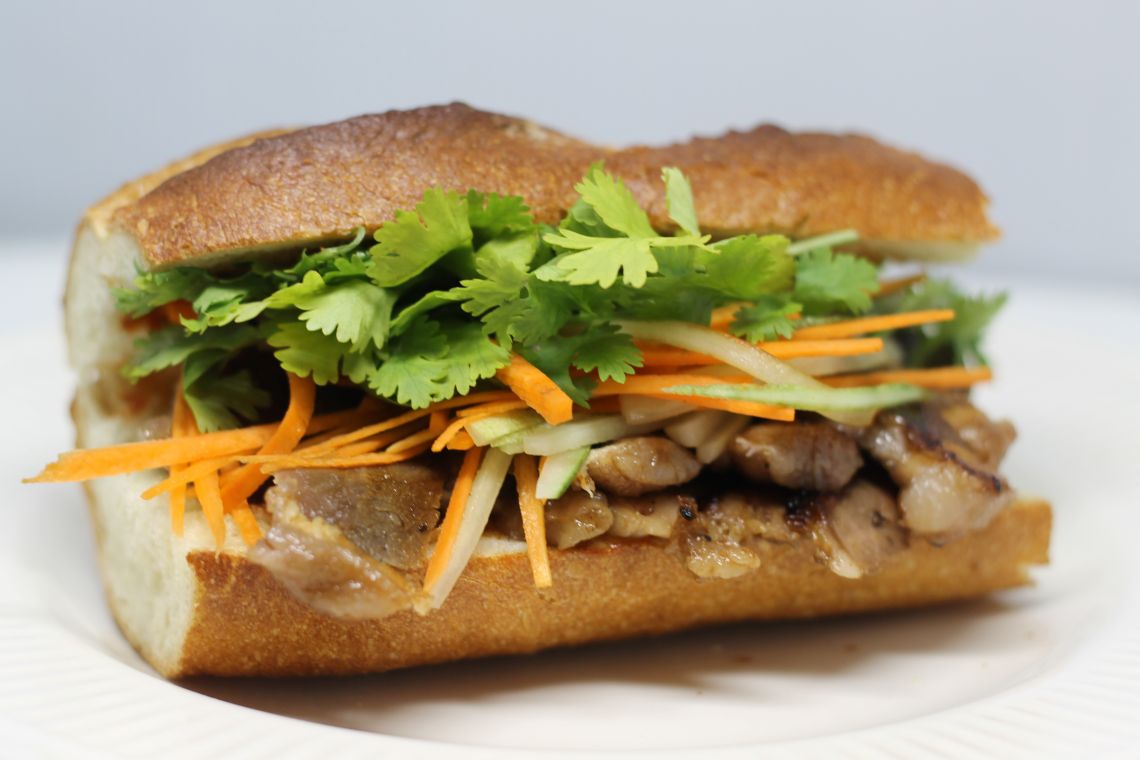
Lemongrass Beef Bánh Mì
Course: Main, LunchCuisine: VietnameseDifficulty: Easy, Intermediate6
servings45
minutes15
minutesKeep the screen of your device on
Ingredients
- A. Lemongrass Beef
680 g ribeye steak, thinly sliced
3 stalks lemongrass, finely minced
1–2 shallots, finely minced, approximately 30 g
4–5 cloves garlic, finely minced
3 tablespoons fish sauce
1½ tablespoons light soy sauce
1½ tablespoons neutral vegetable oil
1½ tablespoons honey
1½ tablespoons light brown sugar
- Chef Sandra's ingredient notes
Beef: Ribeye is my preferred choice because the marbling gives the meat a tender texture and rich flavor. Sirloin or another tender steak cut also works well.
Lemongrass: Use the tender inner portion of the stalk. Remove the dry outer layers and finely mince the pale center. Lemongrass gives the marinade its distinctive citrus aroma.
Fish sauce: Adds savory depth and umami. Different brands vary in saltiness, so adjust according to taste.
Honey and brown sugar: These help balance the saltiness of the fish sauce and soy sauce while encouraging the beef to caramelize during cooking.
- B. For the Bánh Mì
6 small Vietnamese baguettes, or 2 large French-style baguettes cut into 3 portions each
90 ml mayonnaise, preferably Kewpie
1½ cucumbers, cut into long, thin strips
65 g pickled carrots, drained
90 g pickled daikon, drained
1½ tablespoons fresh cilantro leaves, plus extra if desired
- C. Optional Additions
Vietnamese pâté
Fresh sliced red or green chili
Sriracha
A small splash of light soy sauce
Spring onion, thinly sliced
These additions are optional and can be adjusted to suit your preferred flavor.
- EQUIPMENT
Large sauté pan or heavy skillet
Mixing bowl for the marinade
Sharp knife and chopping board
Tongs or spatula
Measuring spoons
Small knife for opening the baguettes
Paper towels
Serving board or platter
Directions
- Step 1 — Prepare the Lemongrass Marinade
1. Trim the lemongrass stalks and remove the tough outer layers.
2. Slice the tender inner portion thinly, then mince it as finely as possible. The smaller the pieces, the more evenly the fragrance will distribute through the beef.
3. Peel and finely mince the shallots and garlic.
4. In a medium mixing bowl, combine the minced lemongrass, shallots, garlic, fish sauce, soy sauce, vegetable oil, honey, and brown sugar.
5. Mix thoroughly until the honey and sugar are incorporated into the marinade.
Chef Sandra's tip: Finely minced lemongrass is important. Large, fibrous pieces can be unpleasant to chew, particularly when the beef is sliced thinly. If you prefer a smoother marinade, pulse the lemongrass, shallots, and garlic briefly in a food processor before mixing with the remaining ingredients. - Step 2 — Marinate the Beef
1. Slice the beef thinly across the grain. Aim for slices approximately 3–5 mm thick.
2. Add the beef to the marinade.
3. Toss thoroughly until every slice is coated.
4. Cover the bowl and refrigerate for 30 minutes.
Thin slices allow the marinade to season the meat quickly and help the beef cook rapidly over high heat.
Chef Sandra's tip: Slice the beef across the grain to shorten the muscle fibers. This makes each bite more tender.
For the best browning, remove the beef from the marinade just before cooking and allow excess liquid to drip off. Too much liquid in the pan can cause the beef to steam instead of sear. - Step 3 — Prepare the Vegetables and Baguettes
While the beef marinates, prepare the remaining ingredients.
1. Cut the cucumber into long, thin strips.
2. Drain the pickled carrot and daikon thoroughly. Excess pickling liquid can make the bread soggy.
3. Wash the cilantro and dry it carefully.
4. Separate the leaves into small sprigs or roughly chop them.
5. Slice each baguette lengthwise, keeping one side attached if you prefer a hinged sandwich.
6. If the bread is not freshly baked, warm it in an oven preheated to 180°C for approximately 3–5 minutes, until the crust becomes crisp and the inside remains soft.
Chef Sandra's tip: The baguette is just as important as the filling. Choose bread with a thin, crisp crust and a light, airy interior. Vietnamese baguettes are ideal, but a good French baguette is an excellent substitute.
Avoid warming the bread for too long, as an overly hard crust can make the sandwich difficult to bite into. - Step 4 — Cook the Lemongrass Beef
1. Place a large sauté pan or heavy skillet over high heat.
2. Allow the pan to become thoroughly hot before adding the beef.
3. If necessary, add a small amount of oil to the pan. Remember that the marinade already contains oil.
4. Add the beef in a single layer, working in batches if necessary.
5. Sear the beef for approximately 1–2 minutes per side, depending on the thickness of the slices.
6. Turn the slices and cook until nicely browned and cooked to your preferred safe level of doneness.
7. Transfer the cooked beef to a plate and repeat with the remaining meat.
Important: Do not overcrowd the pan. Too much beef at once lowers the temperature, causing the meat to release liquid and steam rather than caramelize.
Chef Sandra's tip: High heat gives the beef its characteristic browned edges and concentrated flavor. Because the marinade contains honey and sugar, keep the beef moving as it caramelizes to prevent the sugars from burning.
For food safety, cook the beef appropriately for the cut and thickness. Whole cuts of beef should reach at least 63°C internally and rest for 3 minutes; ground beef requires 71°C. Thin slices can cook very quickly, so avoid leaving them in the pan longer than necessary. - Step 5 — Prepare the Mayonnaise
1. Place the mayonnaise in a small bowl.
2. Taste it and decide whether you prefer to use it plain or add a little Sriracha for heat.
3. If using pâté, have it ready to spread inside the baguette.
Kewpie mayonnaise is a personal favorite for bánh mì because of its rich, creamy texture. However, regular mayonnaise works perfectly well.
Chef Sandra's tip: Keep the mayonnaise layer generous enough to add moisture and richness, but not so thick that it overwhelms the beef and fresh vegetables. - Step 6 — Assemble the Bánh Mì
Work with one baguette at a time.
1. Open the baguette carefully without cutting it completely in half.
2. Spread mayonnaise along the inside of the bread.
3. If using Vietnamese pâté, spread a thin layer over the mayonnaise or on the opposite side of the bread.
4. Arrange the warm lemongrass beef inside the baguette.
5. Add the cucumber strips.
6. Top with pickled carrots and daikon.
7. Add fresh cilantro leaves generously.
8. If desired, finish with sliced chili, Sriracha, or a small splash of soy sauce.
9. Close the baguette gently, pressing just enough to hold the filling together without crushing the bread.
10. Repeat with the remaining baguettes. - Step 7 — Serve
Serve the bánh mì immediately while the baguette is crisp and the beef is still warm.
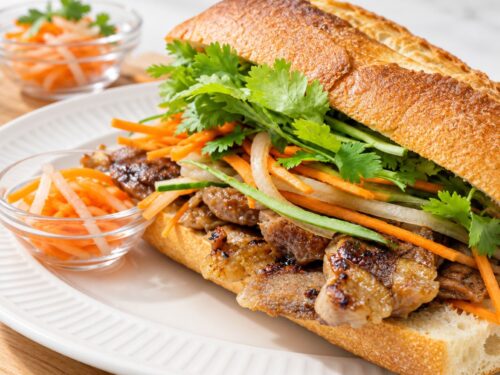
For a more polished presentation, cut each sandwich diagonally and arrange it on a serving platter. A small bowl of extra pickled carrot and daikon makes a fresh accompaniment.
The contrast is what makes the sandwich special: crisp bread, juicy beef, creamy mayonnaise, crunchy pickles, cool cucumber, and fragrant cilantro.