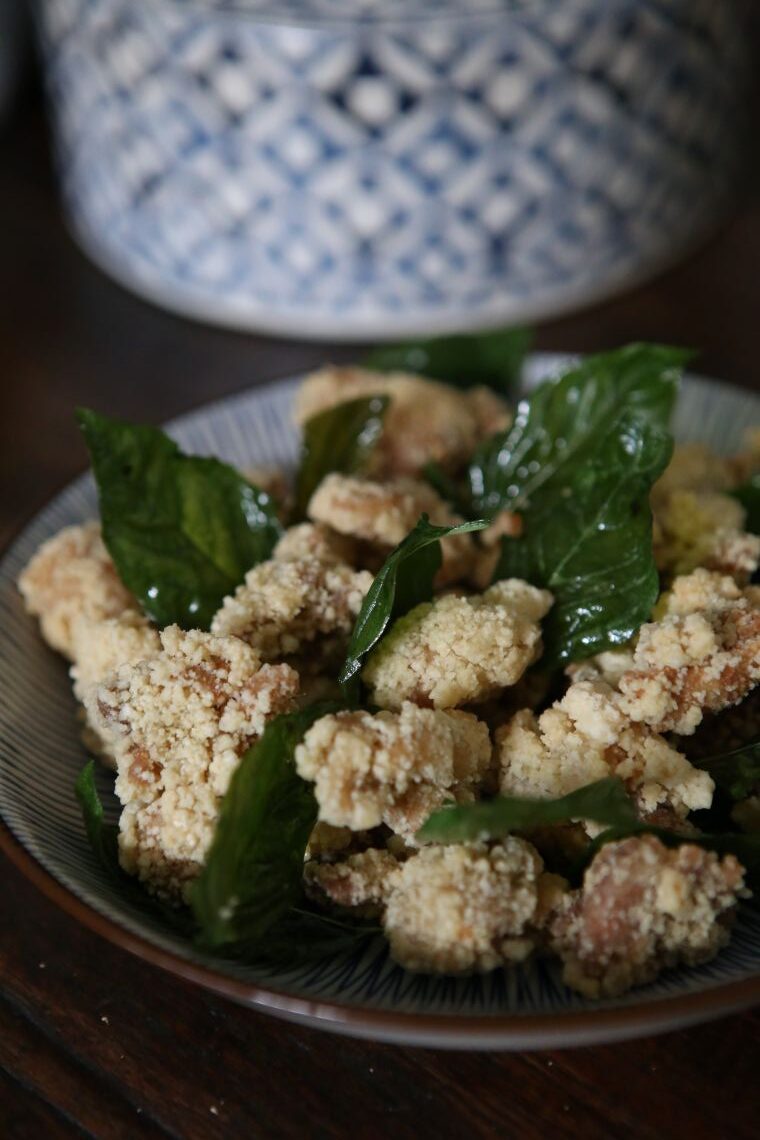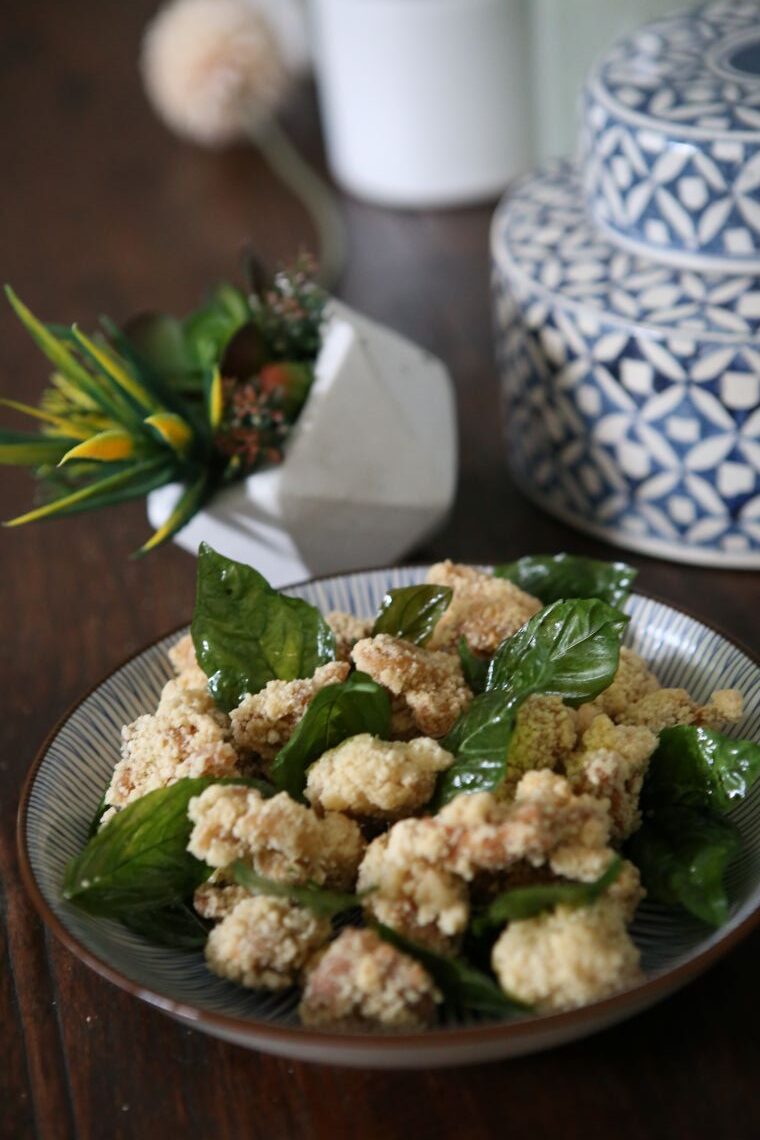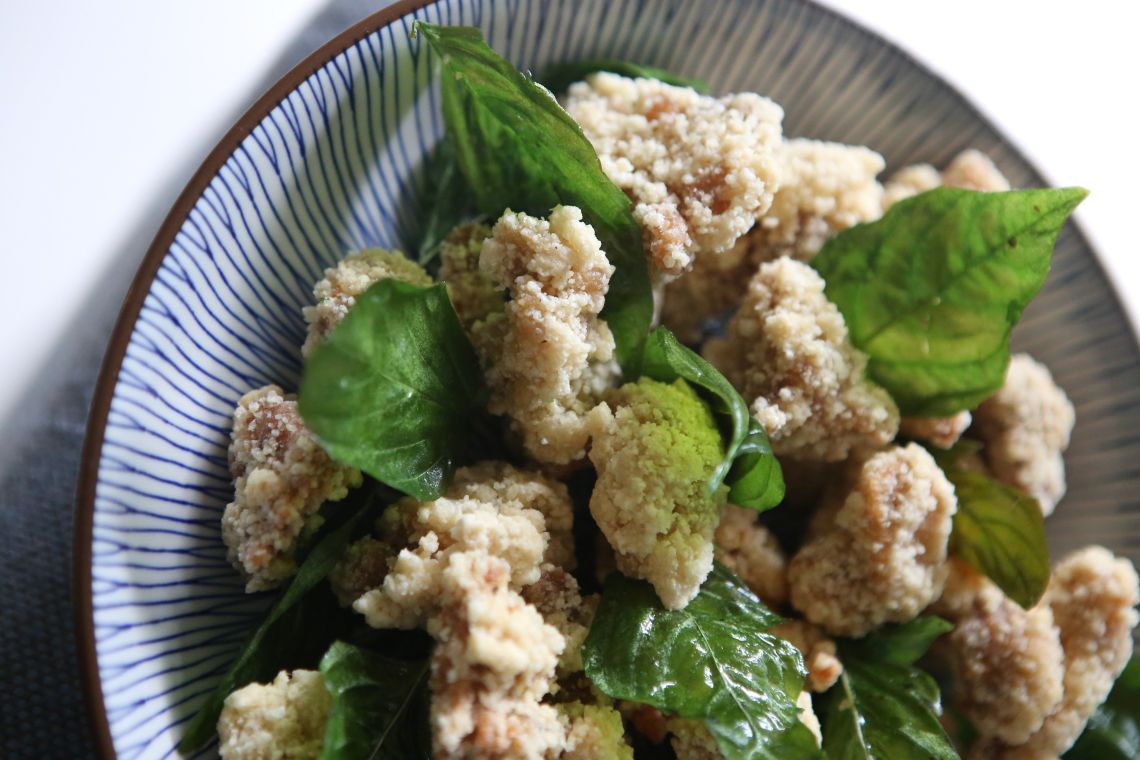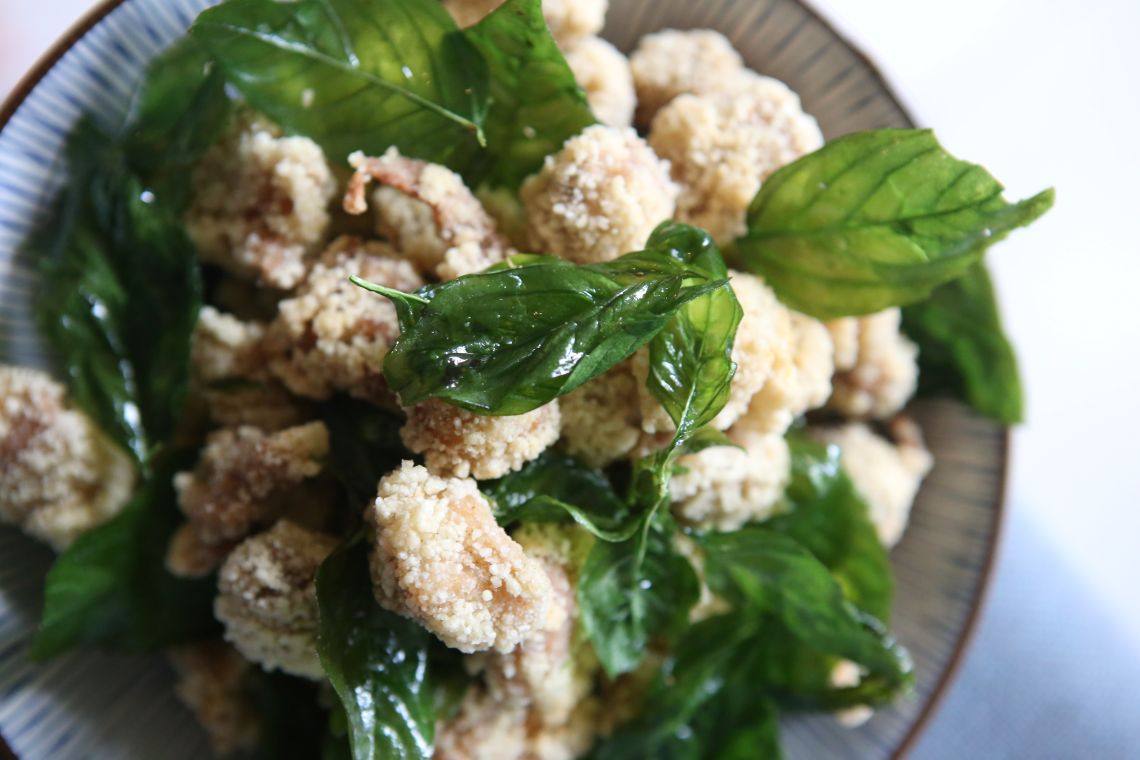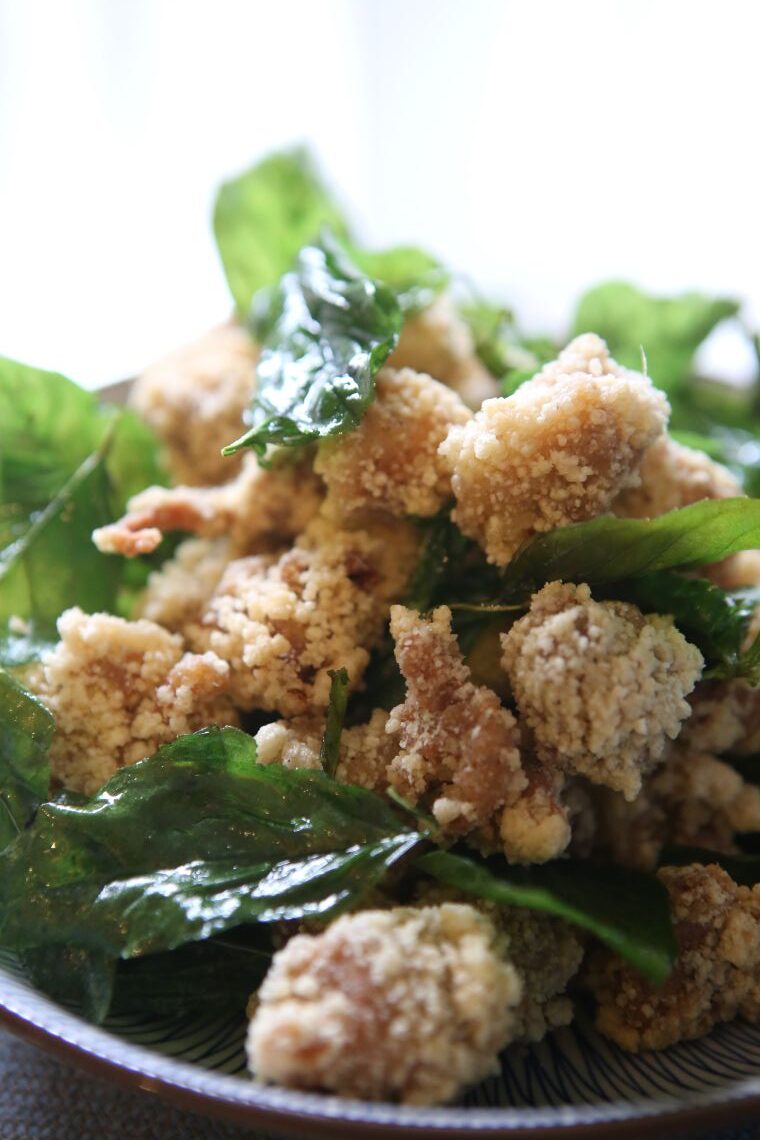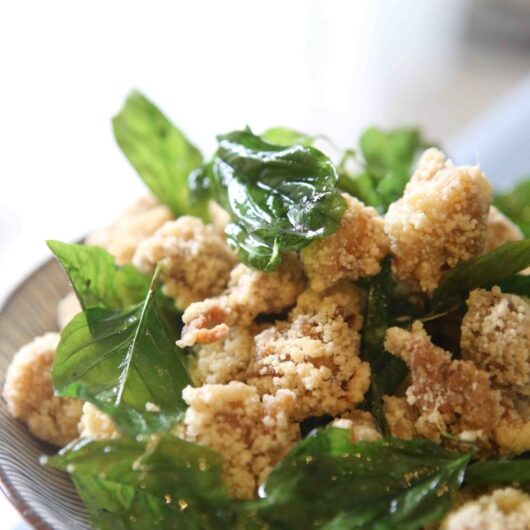
Taiwanese Salt And Pepper Chicken
Course: AppetizerCuisine: Taiwanese3
servings20
minutes20
minutes300
kcalKeep the screen of your device on
Ingredients
- A. For the Chicken
320 g boneless, skinless chicken thighs, cut into bite-sized pieces
120–150 g sweet potato starch, for coating
1 small bunch fresh Thai basil or Taiwanese basil, leaves separated from the stems and washed
Neutral vegetable oil, for deep-frying
Sweet potato starch is preferred for its characteristic crisp, slightly craggy coating. Tapioca starch or potato starch can be used as alternatives, although the texture may differ.
- B. For the Marinade
2 tablespoons light soy sauce
1 tablespoon beer
⅛ teaspoon Chinese five-spice powder
4 cloves garlic, finely grated or crushed into a paste
1 small egg, beaten, using approximately ⅔ of it or enough to lightly coat the chicken
1 teaspoon ground white pepper
1 tablespoon granulated sugar
1 teaspoon fine salt
- C. For the Salt and Pepper Seasoning
1 tablespoon ground white pepper
½ teaspoon Chinese five-spice powder
2 teaspoons fine salt
¼ teaspoon curry powder
Directions
- Step 1: Prepare the Chicken
1. Pat the chicken thighs dry with paper towels to remove excess moisture.
2. Cut the chicken into evenly sized bite-sized pieces, approximately 3–4 cm each. Keeping the pieces uniform helps them cook at the same rate.
3. Place the chicken in a mixing bowl.
4. Add the light soy sauce, beer, five-spice powder, garlic, beaten egg, white pepper, sugar, and salt.
5. Mix thoroughly by hand or with a spatula, ensuring every piece is evenly coated.
6. Cover the bowl and refrigerate for 30–60 minutes.
Why marinate the chicken? The soy sauce provides savory depth, garlic adds fragrance, and five-spice powder gives the chicken its characteristic Taiwanese street-food aroma. The egg helps the starch adhere to the surface, while the small amount of beer contributes flavor and moisture.
Chef's tip: Chicken thighs are ideal because they remain juicy during deep-frying. If you prefer chicken breast, cut it into slightly larger pieces and watch the cooking time carefully to avoid drying it out. - Step 2: Prepare the Basil
1. Separate the basil leaves from the thicker stems.
2. Wash the leaves gently under cool running water.
3. Dry them thoroughly using a salad spinner or clean kitchen towels, then pat dry with paper towels.
4. Set aside until ready to fry.
Important: Basil must be completely dry before it enters the hot oil. Water droplets can cause dangerous splattering. Fry the leaves in small batches, as fresh herbs contain moisture and can react vigorously with hot oil. - Step 3: Prepare the Seasoning Powder
1. Combine the white pepper, five-spice powder, salt, and curry powder in a small bowl.
2. Mix thoroughly so the spices are evenly distributed.
3. Place a small dry frying pan over low to medium-low heat.
4. Add the seasoning mixture and toast briefly for approximately 30–60 seconds, stirring continuously until fragrant.
5. Remove immediately from the heat and transfer to a cool, dry bowl.
Chef's tip: Gentle toasting releases the aromas of the spices and creates a more fragrant finishing seasoning. Do not toast for too long, as ground spices can burn quickly and develop a bitter taste.
Keep the seasoning mixture ready beside the frying station so you can season the chicken while it is still hot. - Step 4: Coat the Chicken
1. Remove the marinated chicken from the refrigerator.
2. Add approximately half of the sweet potato starch directly to the bowl.
3. Mix until the starch combines with the marinade and forms a thick, slightly sticky coating around the chicken.
4. Spread the remaining starch on a wide plate or shallow tray.
5. Working piece by piece, press each chicken portion into the starch, coating all sides evenly.
6. Shake off any excess starch and arrange the coated pieces on a clean tray.
7. Allow the chicken to stand for approximately 3–5 minutes so the coating can adhere.
The coating should look dry and slightly rough rather than wet and pasty. Small irregularities on the surface will create the characteristic crispy texture after frying.
Chef's tip: Sweet potato starch gives Taiwanese fried chicken its signature crunchy crust. Avoid substituting the entire quantity with plain wheat flour, which produces a different, less crisp texture. - Step 5: First Fry — Cook the Chicken
1. Pour enough neutral vegetable oil into a deep, heavy-based pot or wok to allow the chicken to float freely. Do not fill the pot more than halfway.
2. Heat the oil to 170°C (340°F).
3. Carefully add a small batch of coated chicken pieces, leaving sufficient space between them.
4. Fry for approximately 3–5 minutes, depending on the size of the pieces, turning occasionally to ensure even cooking.
5. Maintain the oil temperature as consistently as possible. If the temperature drops too much, the coating may absorb excess oil.
6. Remove the chicken once the coating is lightly golden and the chicken is cooked through. Check the largest piece with a food thermometer; the center should reach 74°C (165°F).
7. Transfer the chicken to a wire rack to drain. Allow it to rest for approximately 2–3 minutes while you prepare for the second fry.
Important: Frying times depend on the size of the chicken pieces and the amount added to the pot. Always confirm that the chicken is cooked through rather than relying on color alone. - Step 6: Fry the Basil
1. Allow the oil temperature to settle to approximately 150–160°C (300–320°F).
2. Carefully add a small handful of completely dry basil leaves. Keep your face and hands away from the pot, as the leaves may splatter when they enter the oil.
3. Fry briefly, usually for several seconds, until the leaves become fragrant and crisp.
4. Remove immediately with a slotted spoon and drain on a wire rack or paper towels.
5. Repeat in small batches if necessary.
The basil should remain green to deep green and aromatic. If it turns dark brown or black, it has been fried too long.
Chef's tip: Frying basil separately allows you to control its texture and prevents the delicate leaves from burning during the chicken's second fry. - Step 7: Second Fry — Create the Crispy Exterior
1. Increase the oil temperature to 190°C (375°F).
2. Return the cooked chicken to the hot oil in small batches.
3. Fry for approximately 30–60 seconds, turning as needed, until the coating becomes crisp, lightly golden, and craggy.
4. Remove immediately and allow excess oil to drain on a wire rack.
5. While the chicken is still hot, place it in a large mixing bowl.
6. Sprinkle the prepared salt and pepper seasoning over the chicken, starting with a portion of the mixture.
7. Toss well to distribute the seasoning evenly. Taste a piece and add more seasoning if desired.
Why fry twice? The first fry cooks the meat, while the hotter second fry removes surface moisture and firms the starch coating. This creates a crunchier exterior without requiring the chicken to remain in the oil for too long.
Avoid overcrowding the pot during the second fry. Work quickly so the chicken stays crisp. - Step 8: Combine and Serve
1. Add the fried basil leaves to the seasoned chicken.
2. Toss gently to distribute the fragrant basil without crushing it.
3. Transfer to a serving platter or paper-lined basket.
4. Serve immediately while the chicken is hot and crunchy.
For an extra Taiwanese night-market touch, offer a little additional salt and pepper seasoning on the side.
Notes
- CHEF'S NOTES
1. Sweet potato starch makes a difference.
For the closest Taiwanese street-food texture, use sweet potato starch. Potato starch is another good option, while tapioca starch can provide a crisp finish with a slightly different bite.
2. Keep the basil dry.
Moisture is the biggest challenge when frying fresh basil. Dry the leaves thoroughly and fry in small batches to minimize splattering.
3. Season while the chicken is hot.
The seasoning adheres best immediately after the second fry, when a little surface oil remains on the crispy coating.
4. Adjust the white pepper to taste.
White pepper is central to the dish's distinctive flavor. If you prefer a milder result, begin with half the seasoning mixture and add more gradually.
5. Keep the chicken crisp.
Serve immediately after frying. If preparing several batches, keep the fried chicken on a wire rack in a low oven, around 100–110°C (210–230°F), while finishing the remaining pieces. Avoid covering it, as trapped steam softens the coating.
6. Food safety.
Never leave raw chicken at room temperature during marination; refrigerate it instead. Use a clean thermometer to verify doneness, and take care when adding food to hot oil. - SERVING SUGGESTIONS
Taiwanese Salt and Pepper Chicken is delicious served with:
• Freshly fried basil leaves and extra white pepper seasoning.
• Pickled vegetables or sliced cucumber to balance the richness.
• Taiwanese-style fried sweet potatoes or crispy potato wedges.
• A cold drink or chilled beer for an informal night-market-inspired meal.