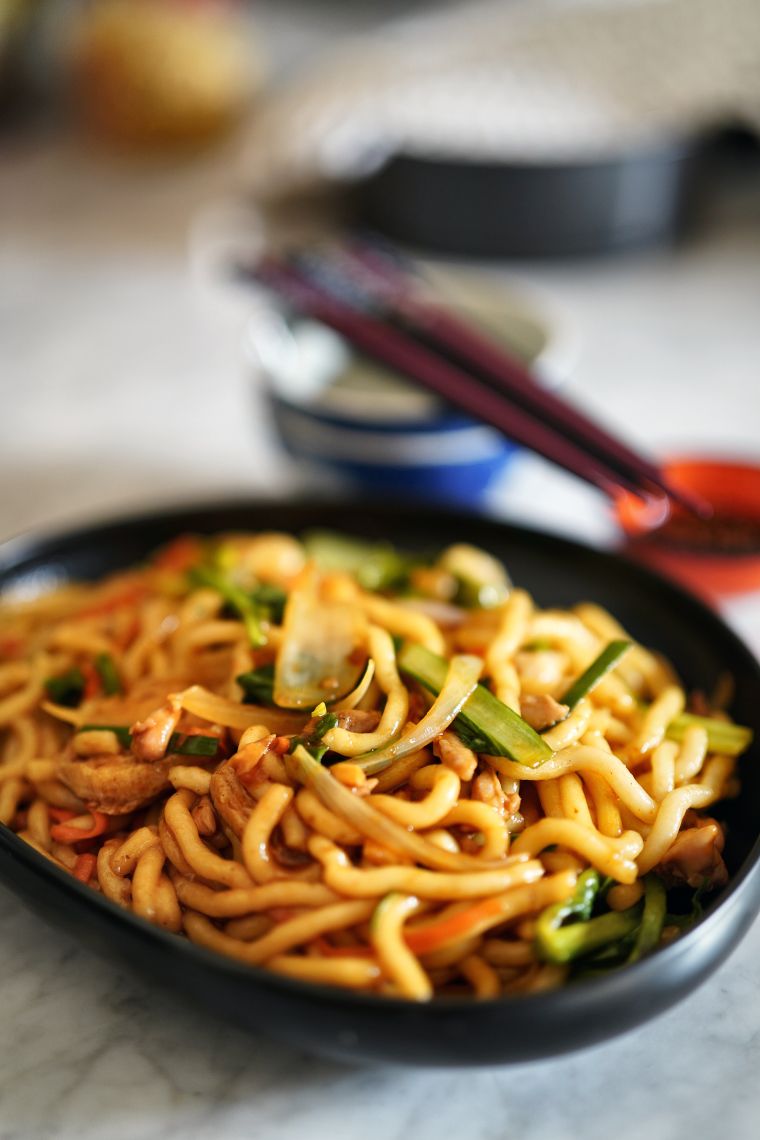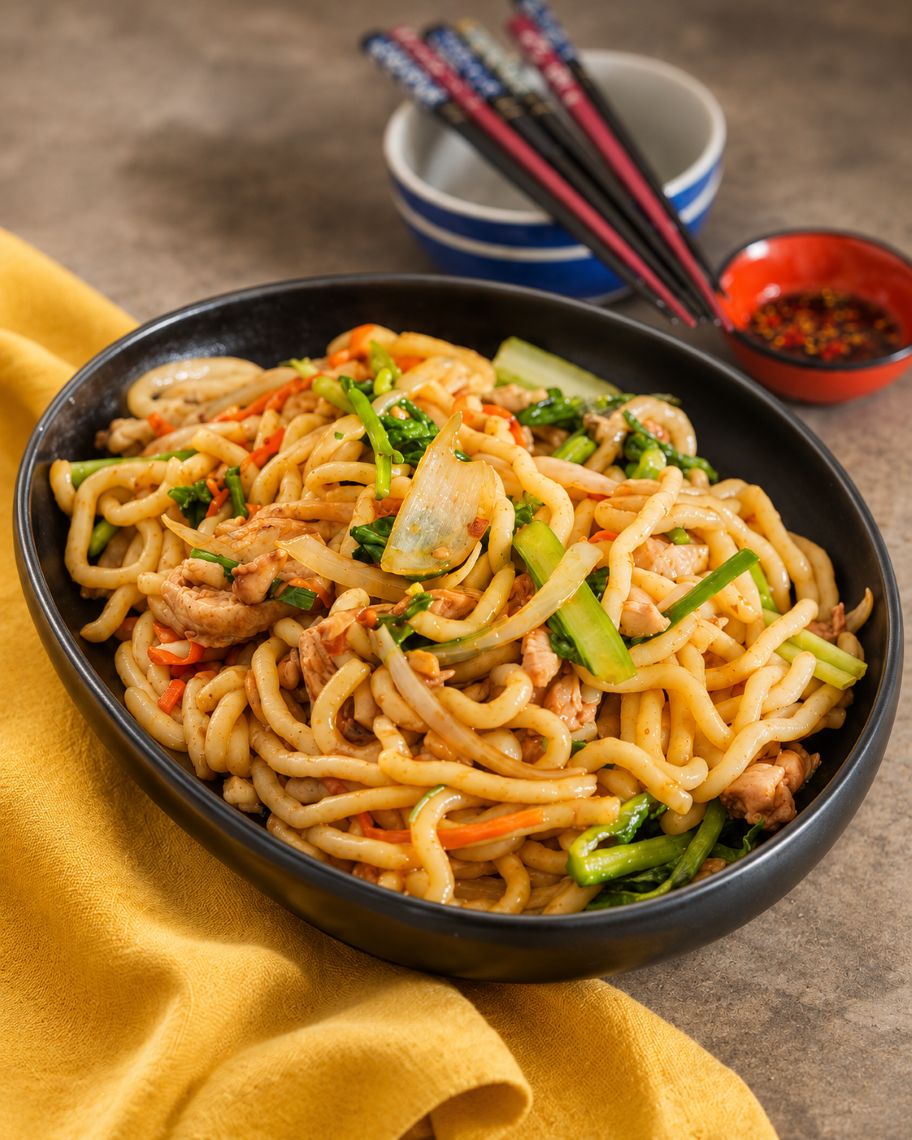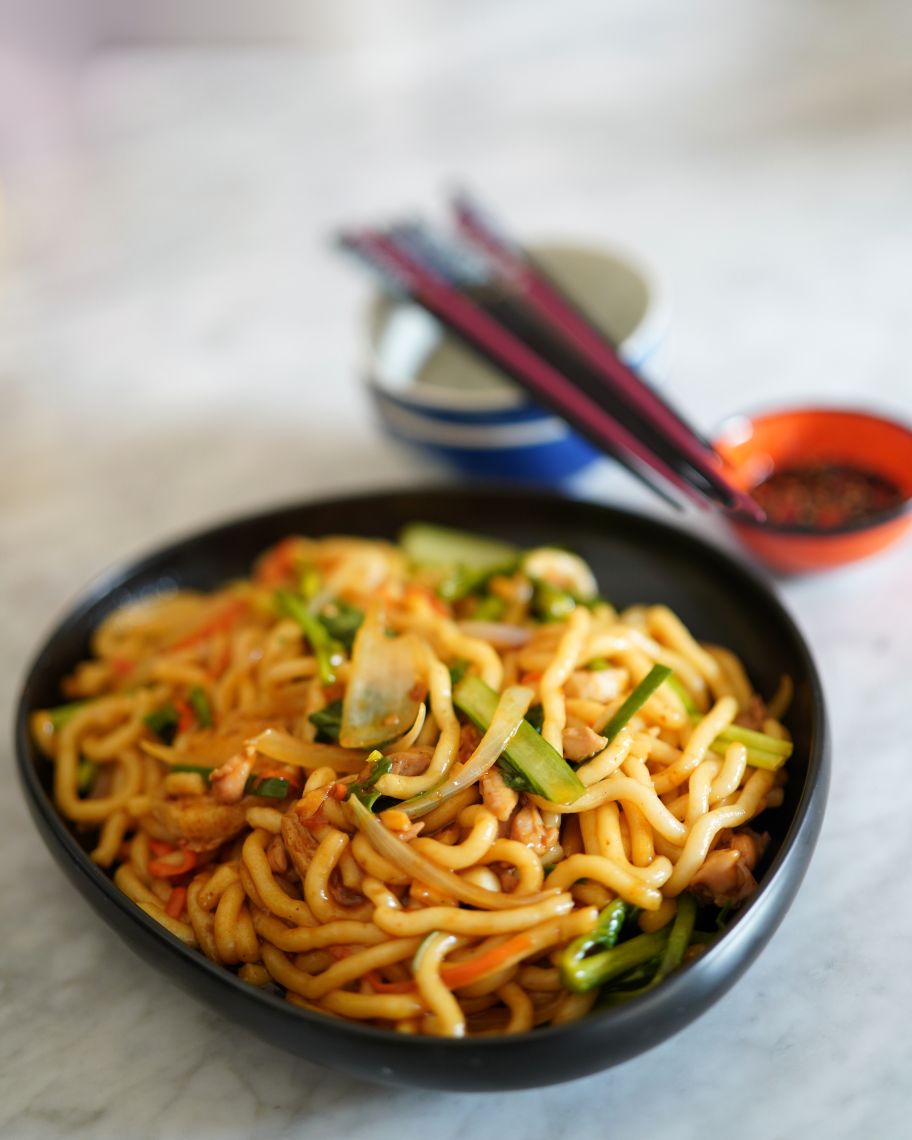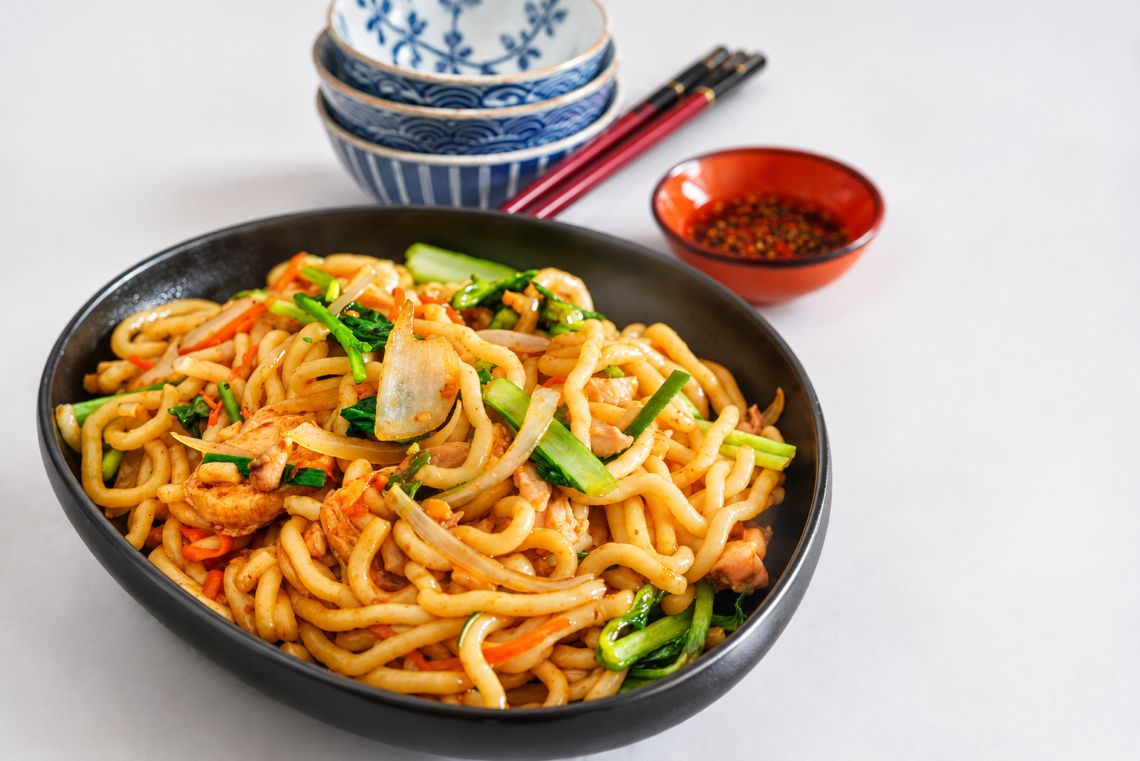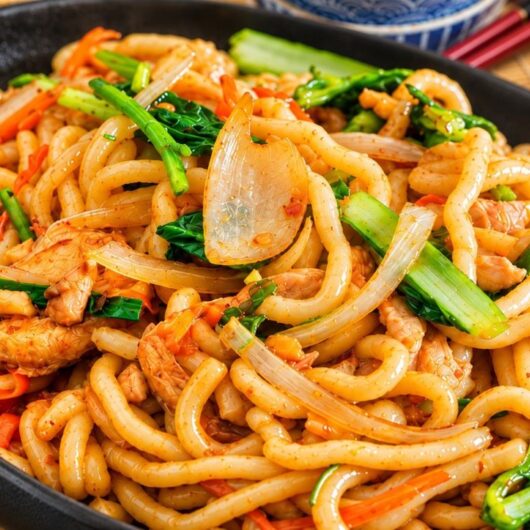
Yaki Udon
Course: MainCuisine: JapaneseDifficulty: Easy4
servings15
minutes15
minutesKeep the screen of your device on
Ingredients
- For the Noodles and Stir-Fry
1 kg frozen or vacuum-packed, precooked udon noodles
340 g boneless, skinless chicken thigh, thinly sliced across the grain
1 medium yellow onion, approximately 200 g, thinly sliced
450 g green cabbage, tough core removed and leaves cut into 2.5 cm pieces
100 g carrot, peeled and cut into thin matchsticks
4 fresh shiitake mushrooms, approximately 40 g, tough stems removed and caps thinly sliced
4 spring onions, cut into 5 cm lengths, white and green parts separated
2 tablespoons neutral cooking oil, divided
⅛ teaspoon fine table salt, or to taste
¼ teaspoon freshly ground black pepper
- Seasoning Option A: Soy and Dashi Sauce
1 teaspoon dashi powder
4 tablespoons Japanese soy sauce
2 tablespoons sake
2 teaspoons mirin
- Seasoning Option B: Quick Mentsuyu Sauce
Use this instead of Option A.
6 tablespoons 3× concentrated mentsuyu
2 teaspoons Japanese soy sauce
- Optional Garnishes
Dried bonito flakes, to taste
Pickled red ginger, to taste
Finely sliced spring onion greens
Directions
- Prepare the Sauce
Choose one seasoning option.
For Option A, combine the dashi powder, soy sauce, sake, and mirin in a small bowl. Stir well.
For Option B, combine the 3× concentrated mentsuyu and soy sauce.
Set the sauce beside the stove so it is ready to add during stir-frying.
Tip: Mentsuyu varies in strength. These quantities apply to a bottle labelled 3× concentrated; other concentrations require adjustment. - Prepare the Chicken
Pat the chicken dry with kitchen paper, then cut it into thin, bite-sized strips of a similar thickness.
Season with the salt and black pepper just before cooking.
Tip: Chicken thigh stays juicy during stir-frying. Chicken breast also works; slice it evenly and avoid overcooking it. - Prepare the Vegetables
Thinly slice the onion, keeping the slices reasonably even.
Remove the thick cabbage core and cut the leaves into bite-sized squares. Slice any thick leaf ribs more thinly so they cook at the same rate as the leaves.
Cut the carrot into fine matchsticks and thinly slice the shiitake caps.
Separate the white spring onion pieces from the green pieces. The whites go into the pan earlier; the greens are added near the end. - Loosen the Udon
Bring a large saucepan of water to a boil.
Add the frozen or precooked udon and gently loosen the strands with chopsticks or tongs. This often takes 30–60 seconds, but follow the package directions, especially for frozen noodles.
Drain thoroughly in a colander and shake off excess water.
Important: Do not force apart a firm block of noodles; let the hot water soften it first. Avoid overcooking, as the udon will finish cooking in the pan. - Heat the Pan
Heat a large wok or wide frying pan over medium-high heat.
Because this recipe contains a generous quantity of noodles and vegetables, cook in two batches unless your pan is very large.
Divide the chicken, vegetables, noodles, oil, and sauce evenly between the batches.
Tip: A crowded pan traps moisture and makes it difficult to develop a glossy stir-fried finish. - Stir-Fry the Chicken
Add the oil for your batch and swirl to coat the pan.
Spread the chicken in a single layer. Leave it undisturbed for approximately 1 minute, then turn and stir-fry for another 2–3 minutes, depending on its thickness, until cooked through.
Transfer the chicken to a clean plate, leaving the cooking juices in the pan. - Cook the Aromatic Vegetables
Add the sliced onion, carrot, and white spring onion pieces.
Stir-fry for 1–2 minutes, scraping up any browned chicken juices, until the onion begins to soften.
If the pan looks dry, add a small drizzle of oil. - Add the Cabbage and Mushrooms
Add the cabbage and shiitake mushrooms. Toss well to coat them with the oil.
Stir-fry for 2–3 minutes, until the cabbage begins to wilt but still retains a little crunch.
If the cabbage is particularly firm, add 1 tablespoon water, cover for 1 minute, then uncover and let the moisture evaporate.
Tip: The vegetables should remain colourful and lightly crisp. - Add the Udon and Chicken
Return the cooked chicken and any collected juices to the pan.
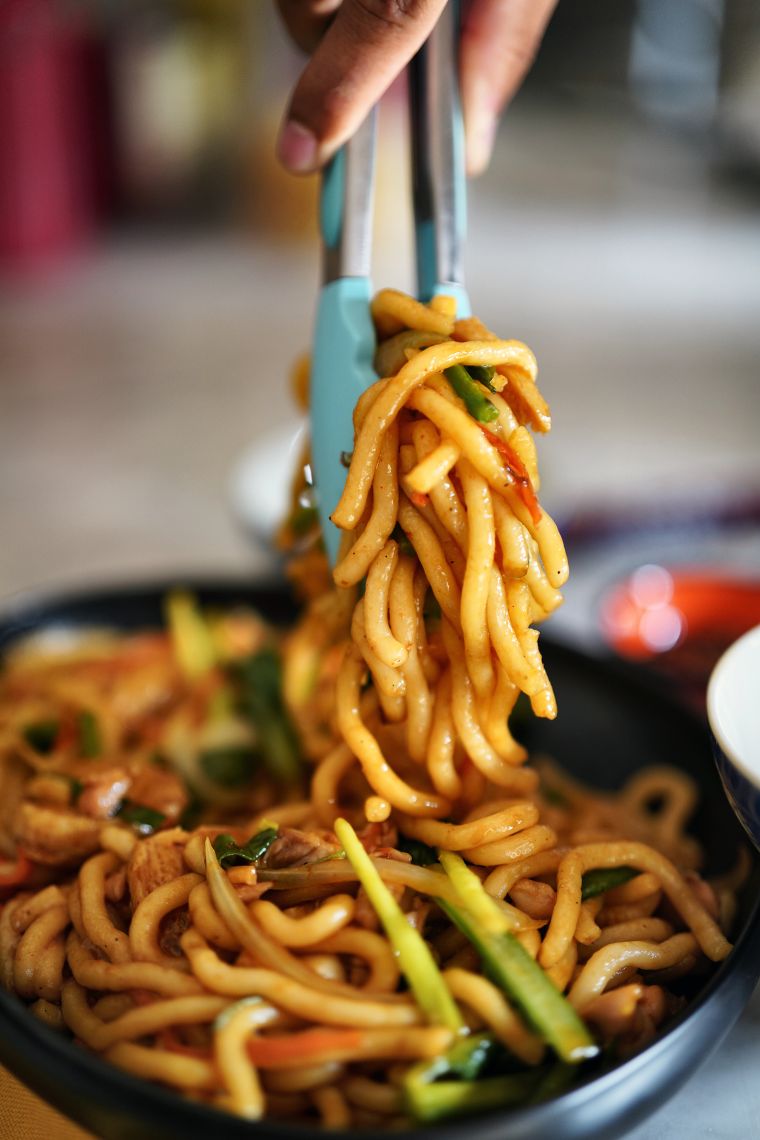
Add the drained udon noodles. Use tongs to lift and fold the noodles gently through the vegetables, taking care not to break the strands.
Let the noodles heat through for approximately 1 minute. - Add the Sauce
Pour the prepared sauce around the hot inner edge of the pan. Let it sizzle briefly, then immediately toss it through the noodles.
Add the green spring onion pieces.
Continue tossing for 1–2 minutes, until the noodles are evenly seasoned and glossy, with very little liquid remaining at the bottom of the pan.
If the noodles are sticking before the sauce is evenly distributed, add 1 tablespoon water and toss again. - Taste and Finish
Taste a noodle together with a piece of vegetable.
Adjust with a little extra black pepper or soy sauce if needed. Add extra salt only after tasting, as the sauce and dashi already provide saltiness.
Remove from the heat as soon as the noodles are hot and evenly coated. - Serve Immediately
Divide among warm serving bowls or plates.
Finish with bonito flakes, pickled red ginger, or finely sliced spring onions, if desired.
Serve immediately while the noodles are chewy and the vegetables still have texture.
Chef’s Notes
- • Best noodles: Frozen udon generally gives the springiest texture. Precooked vacuum-packed udon is convenient, although its texture varies by brand.
• Using dried udon: Use approximately 350–400 g for four main-course servings, or follow the package’s serving guide. Cook until just tender and drain well before stir-frying. Dried and precooked weights are not interchangeable.
• For a lighter vegetable quantity: Reduce the cabbage to 250–300 g if you prefer a higher proportion of noodles.
• Alcohol-free adjustment: For Option A, replace the sake with water or unsalted stock and replace the mirin with 2 teaspoons water plus ½ teaspoon sugar. Check condiment labels if avoiding alcohol completely.
• Vegetarian or vegan version: Replace the chicken with firm tofu, tofu puffs, or additional mushrooms. Use kombu or shiitake dashi, omit bonito flakes, and choose vegan mentsuyu if using Option B.
• Sauce consistency: Yaki udon should be lightly coated and glossy, with no pool of sauce underneath.
From My Kitchen to Yours — Sandra Djohan