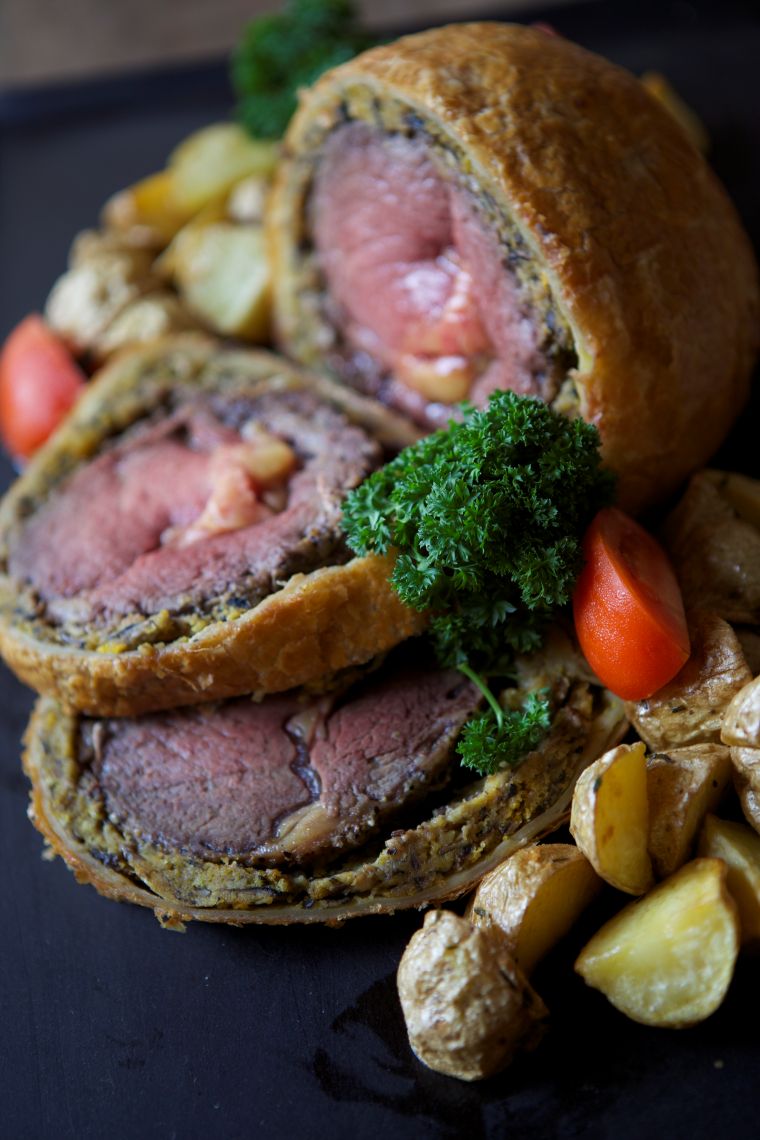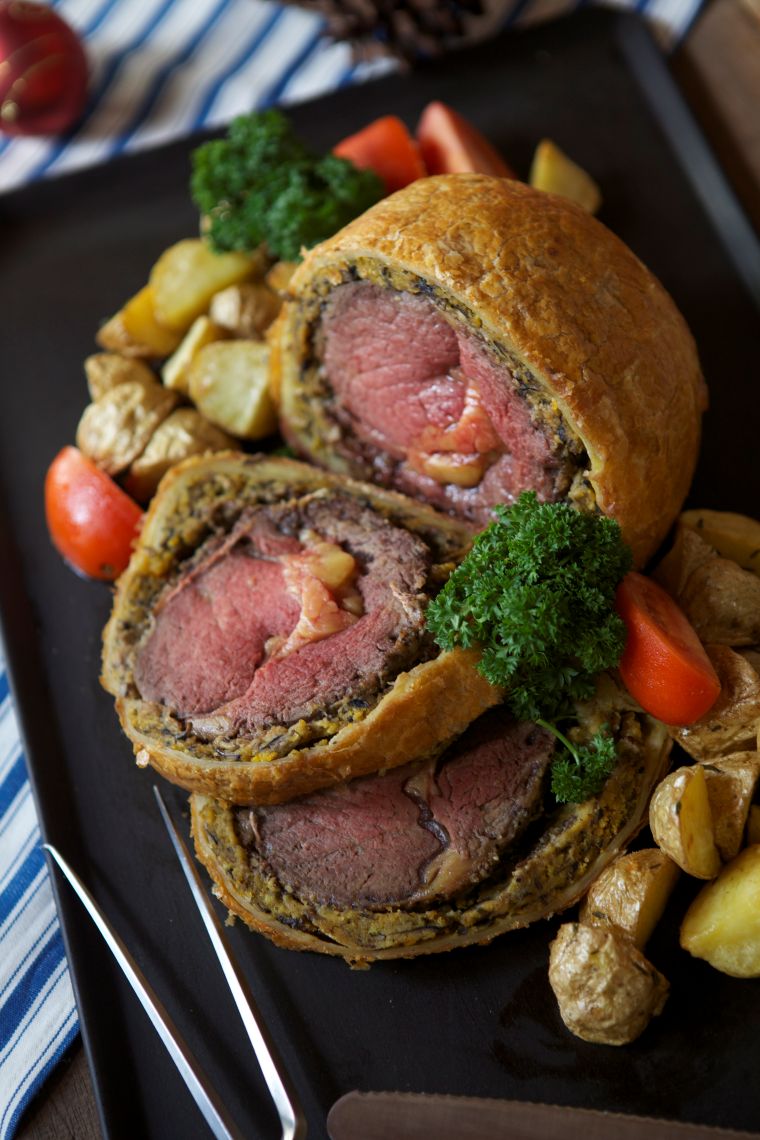
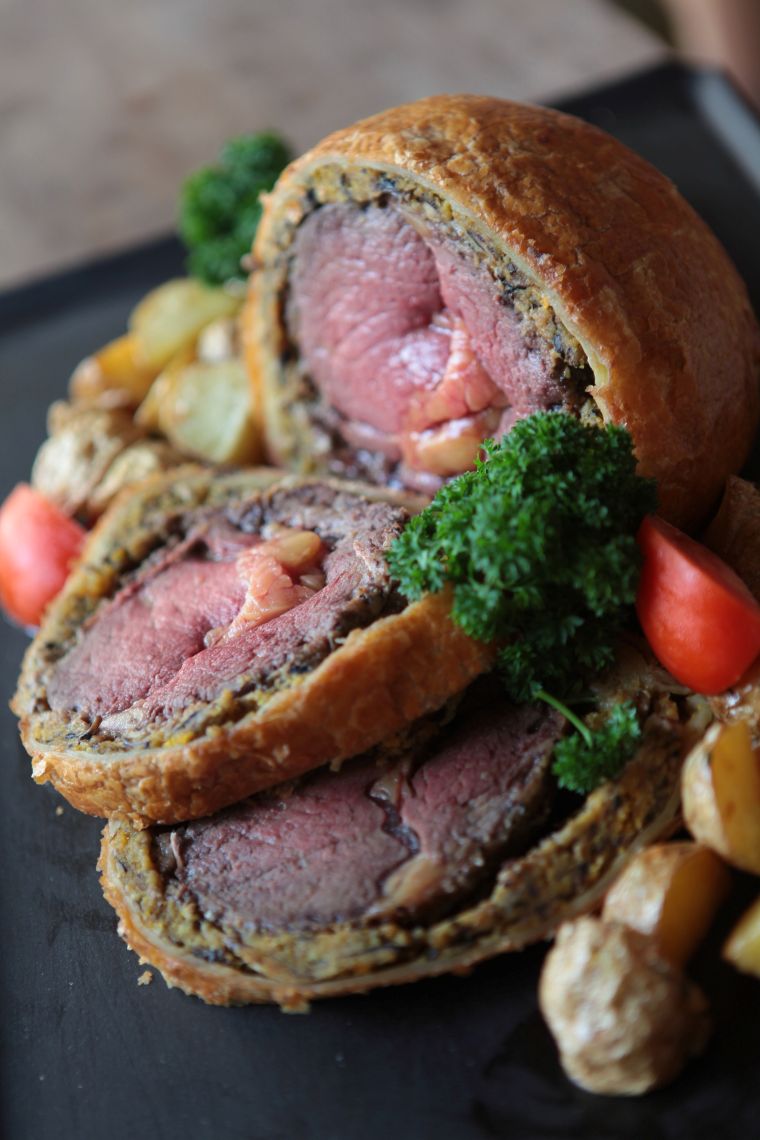
There is something truly special about Beef Wellington. Beneath its beautiful golden pastry lies tender beef, savoury mushroom duxelles, fragrant herbs, and delicate slices of prosciutto, all wrapped together to create a dish that feels both comforting and elegant.
For me, this is the kind of recipe that turns a meal into a memorable occasion. It takes a little patience and attention to detail, but every step has its purpose. The secret is to keep the mushroom filling dry, give the beef a good sear, and allow everything to cool before wrapping it in pastry.
Take your time, enjoy the process, and do not worry about making it perfect on the first try. Once you understand the technique, this classic dish becomes a wonderful recipe to share with the people you love.

Traditional Beef Wellington
Course: Small PlatesDifficulty: Low10
servings1
hour55
minutes60
minutesKeep the screen of your device on
Ingredients
- For the Mushroom Duxelles
600 g white button mushrooms, cleaned and roughly chopped
2 shallots, peeled and roughly chopped
4 cloves garlic, peeled and roughly chopped
2 sprigs fresh thyme, leaves picked
2 tablespoons unsalted butter
2 tablespoons extra-virgin olive oil
Salt and freshly ground black pepper, to taste
- For the Beef Wellington
1.5 kg centre-cut beef tenderloin, trimmed
1–2 tablespoons olive oil, for searing
Salt and freshly ground black pepper, to taste
12 thin slices prosciutto or smoked beef
6 sprigs fresh thyme, leaves picked
2 tablespoons Dijon mustard
Approximately 450 g puff pastry, thawed if frozen
Plain flour, for dusting
2 large eggs, lightly beaten, for egg wash
½ teaspoon coarse sea salt, for finishing
Fresh chives, finely chopped, for garnish
- Green Peppercorn Sauce
A rich, creamy sauce with a gentle peppery warmth is the perfect companion to the tender beef and buttery pastry. 2 tablespoons olive oil
2 shallots, thinly sliced
2 cloves garlic, peeled and lightly crushed
3 sprigs fresh thyme, leaves picked
1 cup brandy
1 litre beef stock
500 ml cream
2 tablespoons wholegrain mustard
½ cup green peppercorns in brine, drained, reserving the brine
Salt and freshly ground black pepper, as needed
- Roasted Fingerling Potatoes with Fresh Herbs and Garlic
1 kg fingerling potatoes, washed and dried
2 sprigs fresh rosemary
2–3 sprigs fresh sage
3 sprigs fresh thyme
6 cloves garlic, unpeeled
3 tablespoons extra-virgin olive oil, plus a little for the tray
Salt and freshly ground black pepper, to taste
- Warm Wilted Winter Greens with Balsamic Honey Dressing
Fresh, slightly bitter greens balance the richness of the beef, pastry, and cream sauce. Pomegranate seeds add a beautiful touch of colour and freshness. - For the greens
3 bunches assorted winter greens, such as Swiss chard, radicchio, and escarole
1 tablespoon olive oil, for wilting
Salt and freshly ground black pepper, to taste
- For the balsamic honey dressing
¼ cup honey
½ cup balsamic vinegar
1 tablespoon wholegrain mustard
Approximately 1 cup extra-virgin olive oil
Salt and freshly ground black pepper, to taste
- For the garnish
½ cup walnuts, roughly chopped
½ cup pomegranate seeds
Parmesan cheese, shaved
1 shallot, finely chopped
Method
- Step 1 — Prepare the mushroom duxelles
1. Place the mushrooms, shallots, garlic, and thyme leaves in a food processor. Pulse until the mixture is finely chopped, but not puréed. If your food processor is small, work in batches.
2. Heat the butter and olive oil in a large frying pan over medium heat.
3. Add the mushroom mixture and cook for 8–15 minutes, stirring regularly. The mushrooms will release quite a lot of liquid at first, so be patient.
4. Continue cooking until the liquid has evaporated and the mixture looks dry, thick, and almost paste-like. You should be able to draw a line through it with your spatula without liquid immediately filling the gap.
5. Season with salt and freshly ground black pepper.
6. Transfer to a shallow dish and allow it to cool completely before using.
Sandra’s kitchen tip: This is one of the most important steps in the recipe. Wet mushrooms can make the pastry soggy, so do not rush the cooking. The duxelles should be moist enough to spread but never watery. - Step 2 — Prepare and sear the beef
1. Pat the beef tenderloin dry with paper towels. If the ends are uneven, tuck the thinner end underneath to create a more even shape.
2. Tie the tenderloin at several intervals with kitchen twine to help it hold a neat cylindrical shape.
3. Season all over with salt and freshly ground black pepper.
4. Heat a heavy-based frying pan until very hot, then add a little olive oil.
5. Sear the beef on all sides, including both ends, for approximately 2–3 minutes per side, until nicely browned. Work in batches if necessary to avoid overcrowding the pan.
6. Transfer the beef to a tray and carefully remove the kitchen twine.
7. While the beef is still warm, brush Dijon mustard evenly over the entire surface.
8. Leave the beef to cool completely before wrapping it. Warm beef can melt the fat in the pastry and make the finished Wellington difficult to handle.
Sandra’s kitchen tip: Searing develops flavour and creates a beautiful crust, but it does not cook the beef through. The final oven cooking will determine the doneness. - Step 3 — Wrap the beef with prosciutto and duxelles
1. Lay a large sheet of plastic wrap on a clean work surface, allowing enough room to roll the entire tenderloin.
2. Arrange the prosciutto slices in overlapping rows to form a rectangle wide enough to wrap around the beef and long enough to cover it from end to end.
3. Using a spatula, spread the cooled mushroom duxelles evenly over the prosciutto.
4. Sprinkle the thyme leaves over the mushroom layer.
5. Place the cooled beef tenderloin along the lower edge of the prosciutto rectangle.
6. Using the plastic wrap to help you, roll the prosciutto and mushroom mixture tightly around the beef. Make sure the beef is 7. completely covered, including the ends.
8. Twist the ends of the plastic wrap to tighten the package into a neat, compact log.
9. Refrigerate for at least 30 minutes, or up to several hours, until firm.
Sandra’s kitchen tip: Keep the filling even and the roll tight. This helps the Wellington hold its shape and gives you beautiful, clean slices when serving. - Step 4 — Prepare the puff pastry
1. Preheat the oven to 220°C (425°F), using conventional oven heat.
2. Lightly dust your work surface and rolling pin with flour.
3. Roll the puff pastry into a rectangle large enough to enclose the beef, approximately 3–5 mm thick. Avoid adding too much flour, as it can make the pastry dry.
4. Remove the beef from the refrigerator and carefully discard the plastic wrap.
5. Place the beef in the centre of the pastry.
6. Brush the pastry edges lightly with beaten egg.
7. Fold the longer sides of the pastry over the beef, overlapping them slightly to create a secure seam. Trim away any excess pastry if needed.
8. Fold the ends neatly underneath, sealing them with egg wash. Make sure the entire beef roll is enclosed without large gaps or thick layers of pastry.
9. Turn the Wellington seam-side down onto a baking tray lined with baking paper.
10. If the pastry has softened, refrigerate the assembled Wellington for another 15–20 minutes before baking.
Sandra’s kitchen tip: Cold pastry puffs better. If the kitchen is warm or the pastry starts feeling sticky, return it to the refrigerator rather than continuing to handle it. - Step 5 — Decorate and bake
1. Brush the entire pastry surface with beaten egg, taking care not to let excess egg pool around the base.
2. If you have reserved pastry scraps, cut them into leaves or simple decorative shapes and place them on top. Brush the decorations lightly with egg wash.
3. Use the tip of a small, sharp knife to make a few shallow slits in the top of the pastry. These allow steam to escape during baking. Do not cut deeply into the filling.
4. Sprinkle lightly with coarse sea salt.
5. Place the Wellington in the preheated oven and bake for approximately 40–55 minutes, depending on the thickness of the tenderloin, the temperature of the beef before baking, and your preferred doneness.
6. Begin checking the internal temperature before the expected finishing time. Insert an instant-read thermometer through the side of the pastry into the centre of the beef, avoiding a large air pocket.
7. When the pastry is deep golden brown and the beef reaches your desired temperature, remove it from the oven.
8. Transfer the Wellington carefully to a board or serving platter and allow it to rest for approximately 10–15 minutes before slicing.
For a medium-rare finish, many cooks aim for approximately 52–54°C (126–129°F) after resting, but carryover cooking and thermometer placement affect the final temperature. For food safety, follow the recommended safe temperature guidance for your location and the needs of your guests. - Step 6 — Slice and serve
Use a long, sharp serrated knife to cut the Wellington into thick slices, wiping the blade between cuts if necessary.
Arrange the slices on a warm serving platter, sprinkle with finely chopped chives, and serve with green peppercorn sauce, roasted fingerling potatoes, and warm wilted winter greens. - Method for Green Peppercorn Sauce
1. After searing the beef, carefully remove any burnt bits from the pan while keeping the browned flavourful residue.
2. Add the olive oil, shallots, garlic, and thyme. Cook over medium heat for 2–3 minutes, stirring until fragrant and softened.
3. Remove the pan from the heat before adding the brandy. Never pour alcohol directly from the bottle into a hot pan.
4. If you wish to flambé, use a long lighter and keep your face, hands, and any flammable items away from the pan. Turn off the extractor if required by your kitchen's safety procedures, and never carry a flaming pan. Alternatively, simply return the pan to low heat and simmer the brandy until reduced; this is the easier and safer method.
5. Add the beef stock and simmer until reduced by approximately half.
6. Strain the liquid into a clean saucepan, discarding the solids.
7. Add the cream and wholegrain mustard. Simmer gently until the sauce thickens enough to coat the back of a spoon, stirring occasionally. Avoid a rapid boil.
8. Stir in the drained green peppercorns and add a little reserved brine to taste.
9. Taste and adjust the seasoning. Add salt cautiously, as the stock and peppercorn brine may already be salty.
10. Keep warm over very low heat until ready to serve.
Sandra’s kitchen tip: A good sauce should be creamy and pourable, not overly thick. If it reduces too much, loosen it with a splash of stock or water just before serving. - Method for Roasted Fingerling Potatoes with Fresh Herbs and Garlic
1. Preheat the oven to 230°C (450°F). Place a sturdy baking tray in the oven while it heats.
2. If the potatoes are small, leave them whole. Halve larger potatoes lengthwise so they cook evenly.
3. Place the potatoes in a bowl with the rosemary, sage, thyme, and unpeeled garlic cloves.
4. Drizzle with olive oil, season with salt and black pepper, and toss until everything is evenly coated.
5. Carefully remove the hot tray from the oven and lightly coat it with olive oil.
6. Spread the potatoes in a single layer, cut-side down where possible. Give them room to roast rather than steam.
7. Return the tray to the oven and reduce the temperature to 220°C (425°F).
8. Roast for approximately 25–35 minutes, turning once halfway through, until golden and crisp outside and tender when pierced with a knife.
9. Transfer to a warm serving dish and spoon over the fragrant oil and roasted garlic.
Sandra’s kitchen tip: Dry potatoes roast better than wet ones. For extra crispness, avoid overcrowding the tray and leave the potatoes undisturbed during the first part of roasting. - Method for Warm Wilted Winter Greens with Balsamic Honey Dressing
1. Wash the greens thoroughly and dry them well. Remove any tough stems, then tear or cut the leaves into manageable pieces.
2. Toast the walnuts in a dry frying pan over medium-low heat for 3–5 minutes, stirring frequently until fragrant. Transfer to a plate to cool.
3. In a small saucepan, combine the honey and balsamic vinegar. Bring to a gentle simmer and cook for approximately 3–5 minutes, stirring occasionally, until slightly syrupy. Remove from the heat and let it cool briefly.
4. Whisk the wholegrain mustard into the warm balsamic mixture.
5. Slowly whisk in the olive oil until the dressing is emulsified. You may not need the full quantity, so add it gradually and taste as you go.
6. Heat 1 tablespoon olive oil in a large frying pan over medium heat.
7. Add the greens in batches, starting with the firmer leaves and stems. Toss for 1–3 minutes, just until slightly wilted but still fresh-looking. If using radicchio, add it towards the end to retain some texture.
8. Season lightly with salt and black pepper.
9. Arrange the warm greens on a serving platter and drizzle with the dressing.
10. Finish with toasted walnuts, pomegranate seeds, shaved Parmesan, and finely chopped shallot. Serve immediately.
Sandra’s kitchen tip: Dress the greens just before serving so they remain vibrant and do not become soggy. You can prepare the dressing, toast the walnuts, and remove the pomegranate seeds ahead of time.