Sate Maranggi
Course: Main, Lunch, DinnerCuisine: IndonesianDifficulty: Intermediate4
servings30
minutes20
minutes500
kcalKeep the screen of your device on
Ingredients
- Part 1 — Beef Satay
500 g beef, preferably sirloin or rump, cut into evenly sized cubes
100 g beef fat, cut into small cubes (optional)
5 large papaya leaves, washed and lightly bruised
Bamboo skewers, as needed
2–3 tbsp sweet soy sauce (kecap manis), for marinating and basting
1 tbsp neutral cooking oil
½ tsp ground black pepper, or to taste
Additional salt, as needed
- Part 2 — Ground Spice Paste (Bumbu Halus)
5 cloves garlic, peeled
5 shallots, peeled
50 g palm sugar, finely chopped
1 tbsp tamarind water
5 cm fresh ginger, peeled and chopped
5 cm galangal, peeled and chopped
1 tsp salt
- Part 3 — Fresh Tomato Sambal
3 medium tomatoes, preferably firm or slightly under-ripe, thinly sliced
10 red bird's-eye chilies, adjusted to taste
½ tsp salt, or to taste
- Part 4 — To Serve
Steamed white rice
Extra sweet soy sauce, if desired
Fresh lime wedges, optional
Directions
- 1. Prepare the bamboo skewers
Soak the bamboo skewers in water for at least 30 minutes before grilling. This helps reduce the risk of the exposed ends burning over the charcoal.
Drain the skewers and set them aside. Prepare all the ingredients before handling the beef so that the tenderising, marinating, and grilling process runs smoothly. - 2. Cut and tenderise the beef
Cut the beef across the grain into cubes approximately 2–3 cm in size. Keeping the pieces uniform helps them cook evenly and makes the satay easier to turn.
Place the beef between the papaya leaves, ensuring that the pieces are covered. Lightly bruise the leaves with your hands before wrapping them around the meat to release their natural enzymes.
Leave the beef wrapped for 30 minutes only. Papaya leaves contain papain, an enzyme that helps break down meat proteins and improve tenderness. Avoid extending this step unnecessarily, as prolonged exposure can make the surface of the beef too soft.
After 30 minutes, remove and discard the leaves. If the beef is excessively wet, pat it lightly with paper towels before marinating. - 3. Prepare the spice paste
Place the garlic, shallots, ginger, galangal, palm sugar, salt, and tamarind water in a food processor or blender. Process until a smooth, thick paste forms.
If using a blender, add only a small amount of water if necessary to help the ingredients blend. Alternatively, grind the ingredients using a mortar and pestle for a more traditional texture.
The finished paste should be aromatic, slightly sweet, savoury, and tangy. Make sure the palm sugar is fully incorporated so that it coats the beef evenly. - 4. Marinate the beef
Place the tenderised beef in a large mixing bowl. Add the ground spice paste, sweet soy sauce, cooking oil, and black pepper.
Mix thoroughly, using clean hands or a spoon to massage the seasoning into the meat. Turn each piece until all sides are evenly coated.
Cover the bowl and refrigerate for 2–4 hours. This resting period allows the aromatics and seasonings to develop throughout the beef.
Keep the beef refrigerated throughout marination. Reserve a small amount of clean sweet soy sauce separately for basting during grilling. Do not use leftover marinade that has contacted raw beef unless it is boiled thoroughly first.
Chef's tip: The palm sugar and sweet soy sauce are important for the characteristic caramelised coating, but they can burn quickly over high heat. A controlled grilling temperature gives the meat time to cook while developing a deep brown colour. - 5. Prepare the grill
Prepare a charcoal grill and allow the coals to develop a steady medium-high heat. The coals should be glowing with a light covering of ash rather than producing large, uncontrolled flames.
If using a gas grill or grill pan, preheat it thoroughly and lightly oil the cooking surface.
Avoid excessively high heat because the sugars in the marinade can char before the beef is cooked through. - 6. Thread the beef onto the skewers
Remove the beef from the marinade, allowing excess paste to drip off. Thread the cubes onto the prepared skewers, leaving a little space between each piece so that the heat can circulate.
If using beef fat, alternate small pieces of fat with the beef. The fat adds richness and helps keep the satay moist as it grills.
Avoid packing the meat too tightly, as this can prevent even browning. - 7. Grill the Sate Maranggi
Arrange the skewers over the prepared grill. Cook for approximately 3–5 minutes per side, depending on the size of the cubes, the heat of the grill, and the desired doneness.
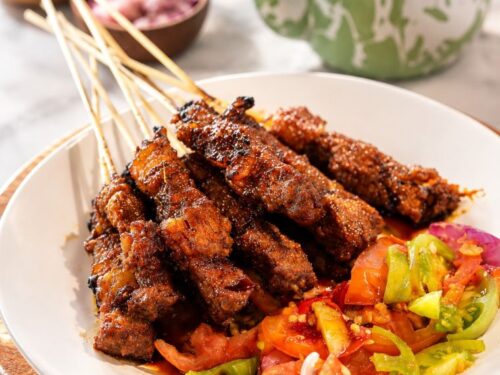
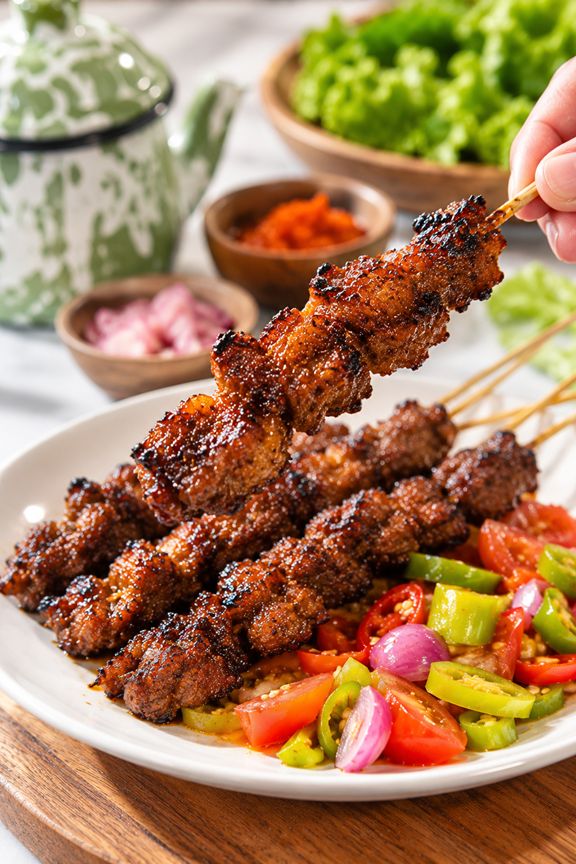
Turn the skewers regularly to brown the meat evenly. As the marinade caramelises, the beef should develop a glossy, deep brown surface with lightly charred edges and a smoky aroma.
During the final few minutes, brush the satay lightly with the reserved clean sweet soy sauce if desired. Apply only a thin coating to prevent excessive burning.
If the meat darkens too quickly, move the skewers to a cooler section of the grill and continue cooking until done. For food safety, whole beef cuts should reach an internal temperature of 63°C followed by a 3-minute rest; ground or mechanically tenderised beef requires more thorough cooking.
Remove the skewers from the grill and rest them for 3–5 minutes before serving. - 8. Prepare the fresh tomato sambal
Place the bird's-eye chilies and salt in a mortar. Pound until the chilies are roughly crushed, releasing their heat and juices.
Add the sliced tomatoes and gently pound or mix them into the chilies. Keep some of the tomato pieces intact to provide freshness and texture.
Taste and adjust the salt or chili level as needed. For the freshest flavour, prepare the sambal shortly before serving. - 9. Plate and serve
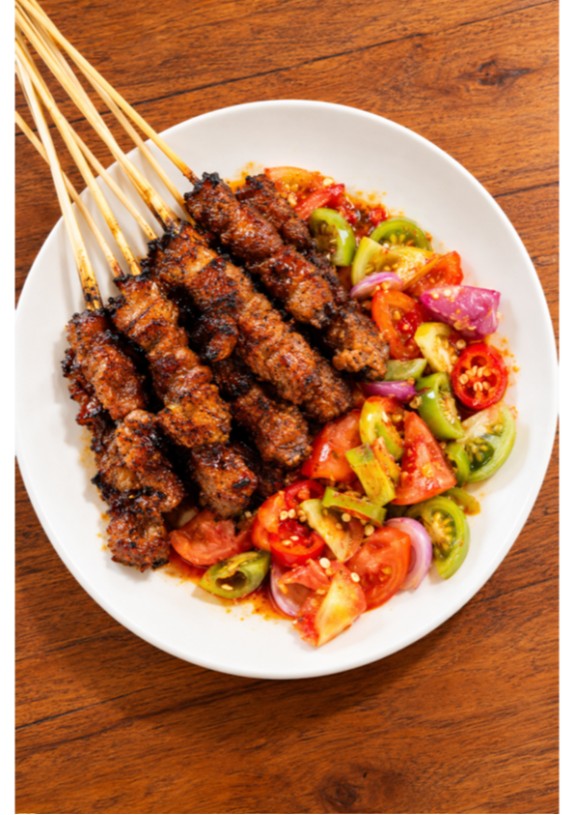
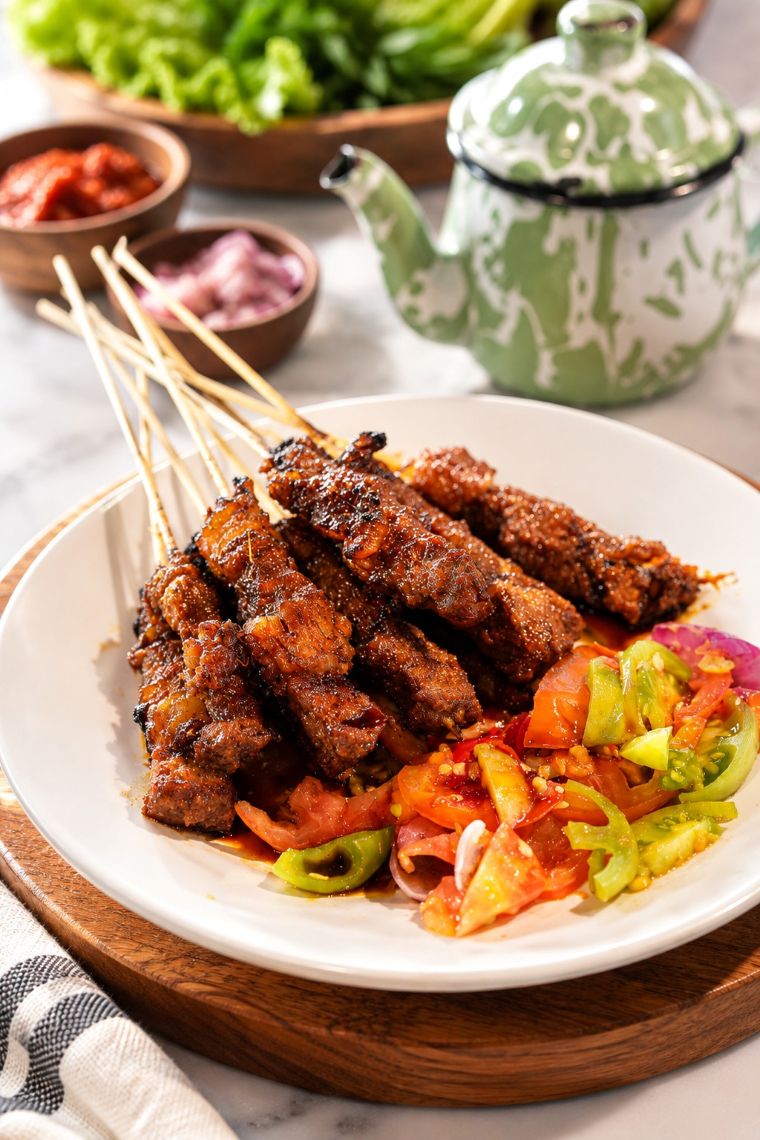
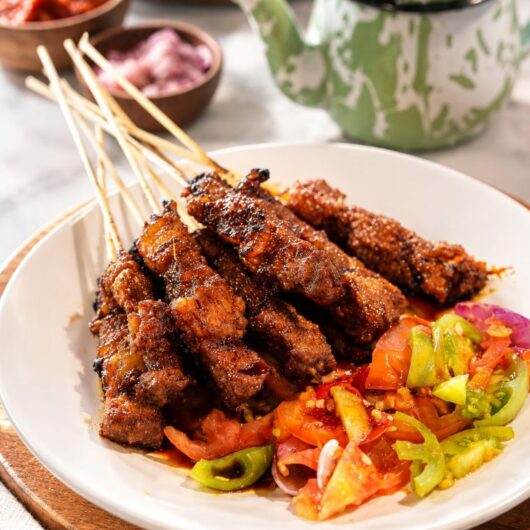
Arrange the grilled satay on a serving plate, allowing the skewers to overlap slightly. Serve immediately while the beef is warm, glossy, and fragrant.
Place the fresh tomato sambal alongside the satay, with steamed white rice and lime wedges if desired. Extra sweet soy sauce may be offered separately, but it is not essential.
The beef should deliver a balance of savoury aromatics, palm sugar sweetness, tamarind tang, and smoky char. The fresh sambal adds acidity and heat, creating a refreshing contrast to the rich, caramelised meat.
Chef Sandra's Notes
- • Choose the right beef: Sirloin and rump are suitable options for quick grilling. Tougher cuts may need a different cooking method.
• Cut evenly: Uniform cubes cook more consistently and help prevent the smaller pieces from drying out.
• Respect the papaya-leaf timing: Thirty minutes is a useful starting point for tenderising. Excessive exposure can soften the exterior too much.
• Control the sweetness: Palm sugar and sweet soy sauce give the satay its characteristic caramelised coating, but both require careful heat management.
• Avoid overcrowding: Leave space between skewers for better browning and more even cooking.
• Make the sambal fresh: Its bright, raw tomato flavour balances the richness of the grilled beef.
Sate Maranggi is a reminder that a great marinade can do the work of a sauce. When the beef is properly seasoned, tender, and grilled over glowing coals, every skewer carries its own depth of flavour, with fresh tomato sambal providing the perfect finishing touch.
From My Kitchen to Yours — Sandra Djohan