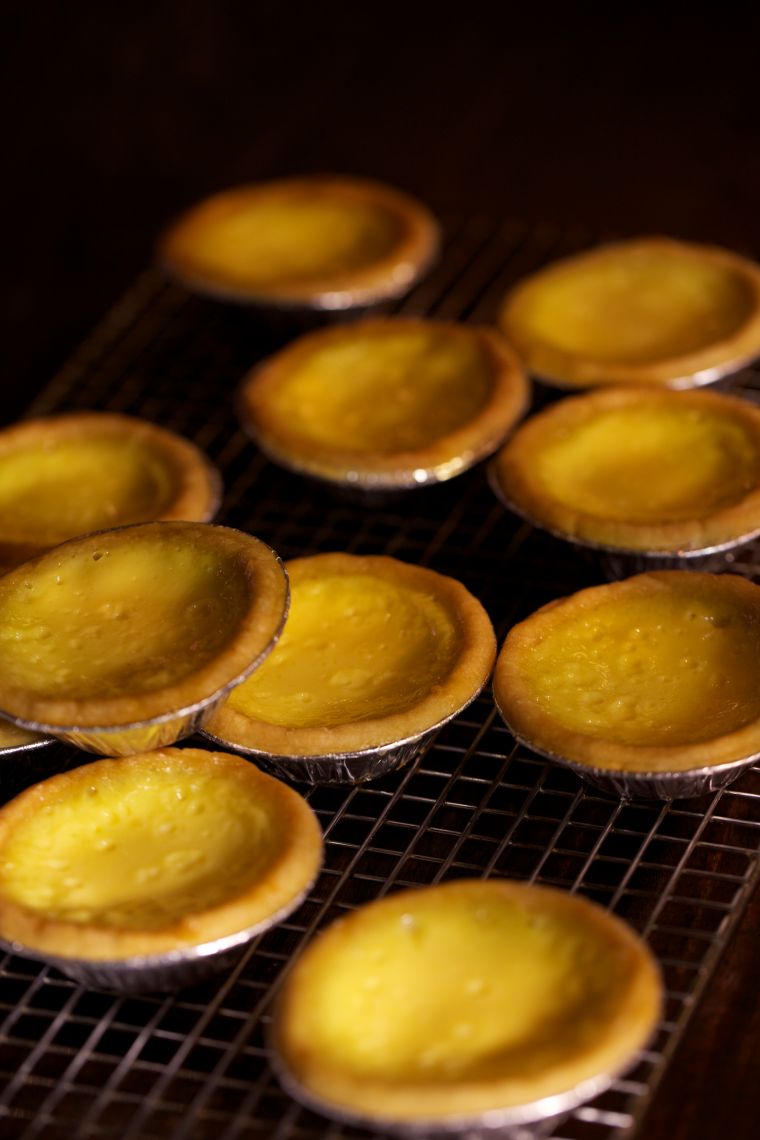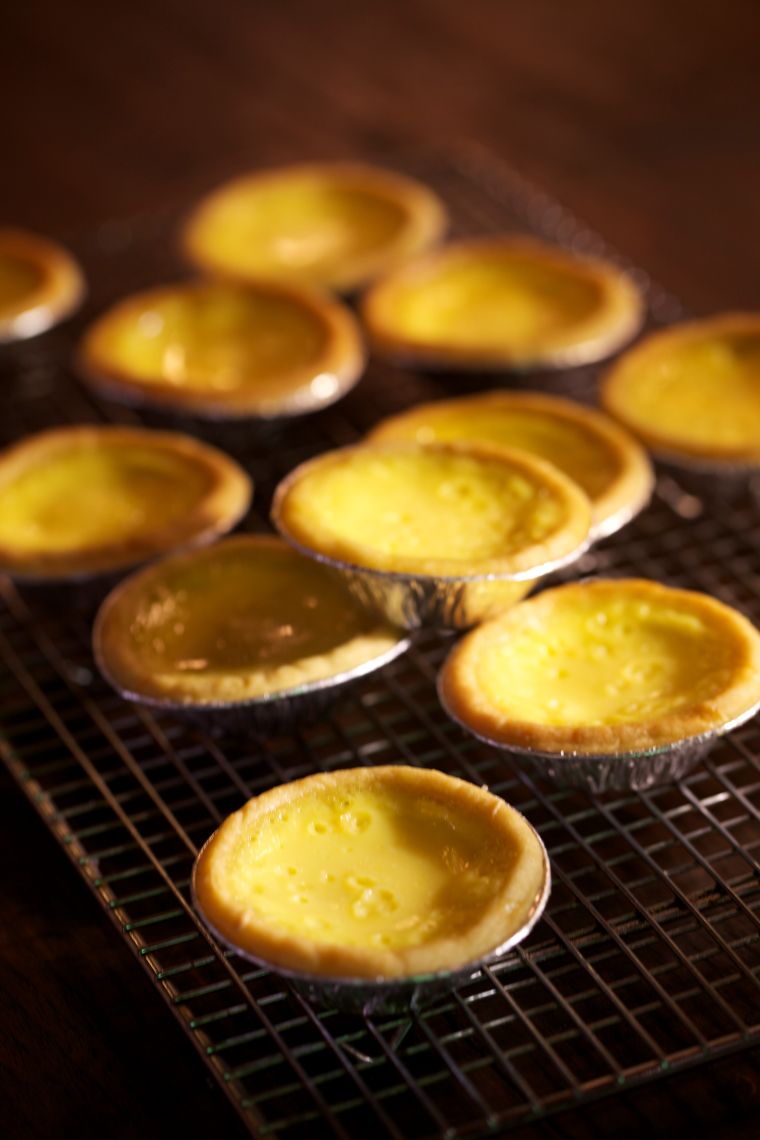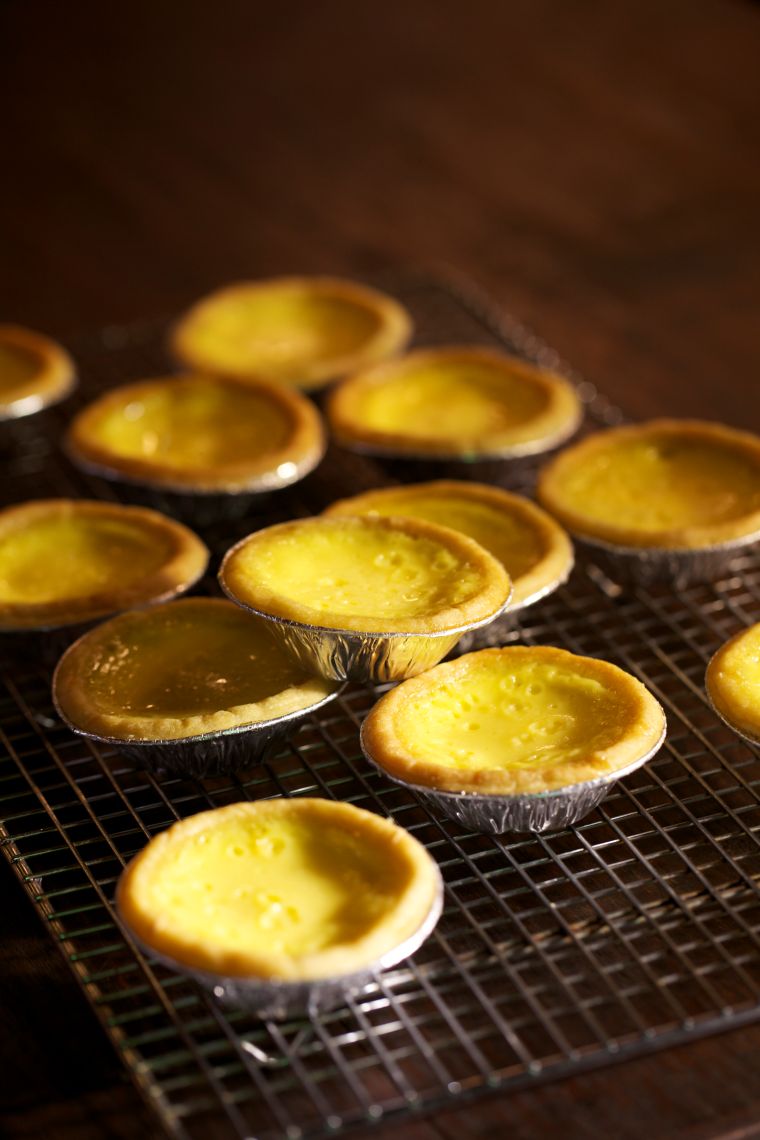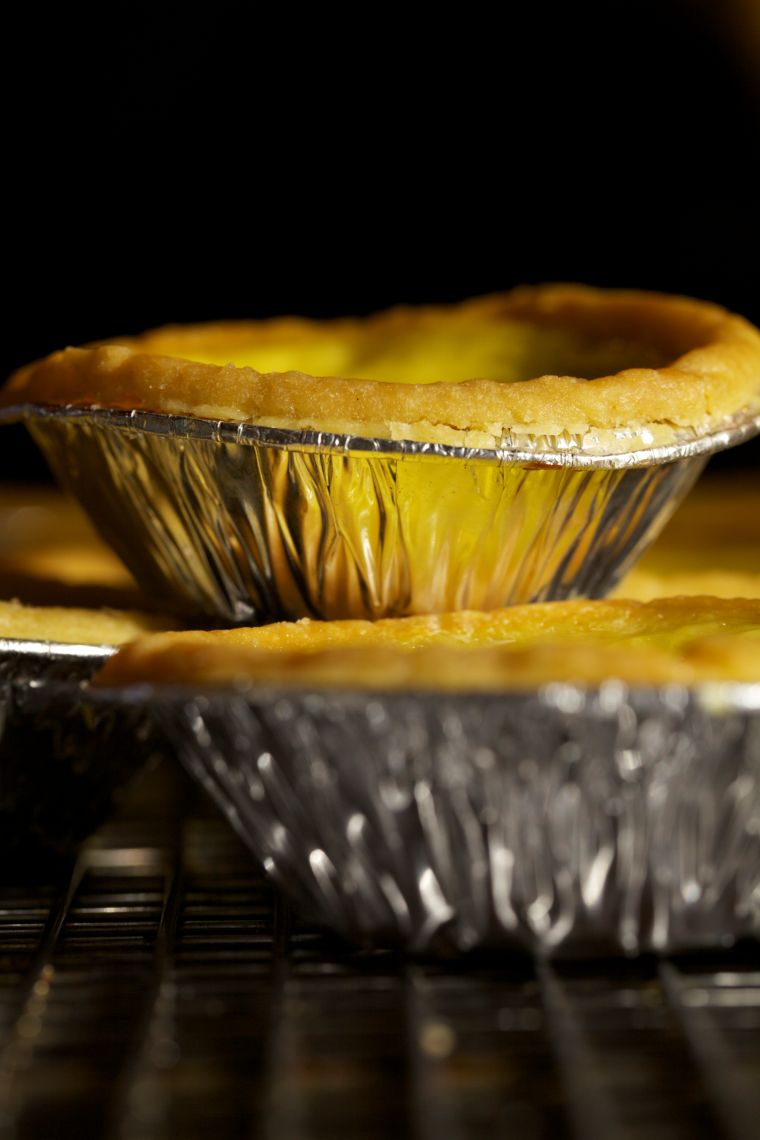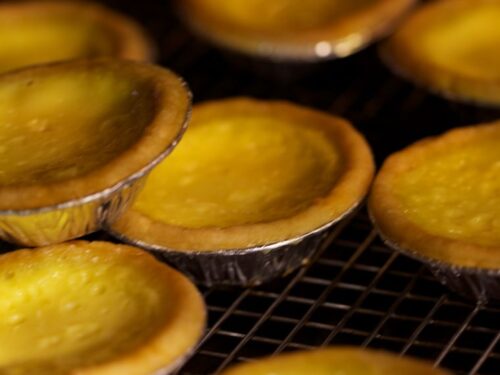
A refined, home-friendly version of the beloved Portuguese custard tart, featuring crisp, flaky pastry and a silky egg custard with beautifully caramelized spots on top. This recipe adapts your original egg tart into a more traditional Portuguese-inspired style, using puff pastry instead of a sweet shortcrust shell and a gently flavored custard.
The secret to excellent pastéis de nata is very hot oven heat, cold pastry, and a smooth custard that is not overcooked. The pastry should be crisp and layered, while the custard remains creamy and delicate.
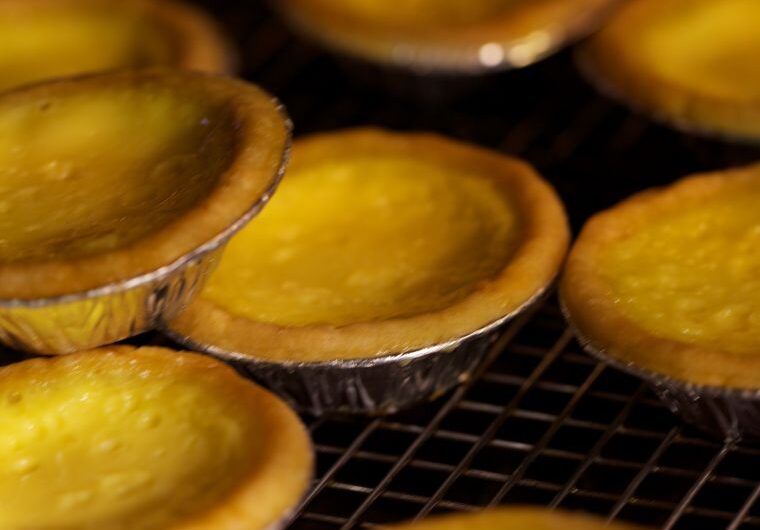
Portuguese Egg Tarts (Pastéis de Nata)
Course: DessertCuisine: PortugueseDifficulty: Moderate, Medium12
servings45
minutes18
minutes300
kcalKeep the screen of your device on
Ingredients
- A. Flaky pastry
500 g ready-made all-butter puff pastry, thawed if frozen
A little flour, for dusting
Soft butter, for greasing the tart molds if needed
Easy adaptation: Good-quality ready-made puff pastry makes this recipe much easier and more reliable. Choose pastry made with butter when available for the best flavor.
- B. Portuguese-style custard filling
250 ml whole milk
200 ml heavy cream
150 g granulated sugar
100 ml water
30 g all-purpose flour
6 large egg yolks
1 teaspoon vanilla extract
2 strips lemon peel, with as little white pith as possible
1 small cinnamon stick
Optional: A tiny pinch of ground cinnamon for serving.
Why use egg yolks? Yolks give the custard its rich color, smooth texture, and delicate flavor. Theoriginal recipe uses whole eggs and evaporated milk, but this version is designed for a richer Portuguese-style custard.
Directions
- Prepare the pastry shells
- Prepare the molds.
Lightly grease 12 standard muffin cups or Portuguese egg tart molds. If using nonstick molds, grease only if necessary. - Prepare the pastry.
Keep the puff pastry cold but flexible. Lightly dust your work surface with flour and roll the pastry into a rectangle approximately 3–4 mm thick, if it is not already rolled. - Roll into a log.
Starting from one long edge, roll the pastry tightly into a log. This creates the characteristic spiral layers that puff up during baking. - Chill the log.
Refrigerate for 15-20 minutes if the pastry has become soft. Cold pastry is easier to cut and holds its layers better. - Cut into portions.
Cut the log into 12 equal pieces, approximately 2–3 cm thick. - Shape the shells.
Place one piece, spiral-side up, into each mold. With damp fingertips, press from the center outward, spreading the pastry across the base and up the sides. Keep the bottom relatively thin and the sides slightly thicker. - Check the edges.
The pastry should reach just above the rim of each mold. Avoid stretching it, as stretched pastry may shrink during baking. - Chill again.
Place the prepared shells in the refrigerator while you make theo custard. This helps the pastry stay crisp and flaky. - Sandra’s kitchen tips
- Do not knead puff pastry like bread dough; this will damage its delicate layers.
- If the pastry sticks to your fingers, chill it for a few minutes rather than adding too much flour.
- A muffin pan is perfectly suitable for a home version, even if the shape is slightly different from bakery-style pastéis de nata. - Make the custard
- Step 1: Prepare the milk infusion
1. Pour the milk and cream into a saucepan.
2. Add the lemon peel and cinnamon stick.
3. Heat gently until steaming, but do not let the mixture boil vigorously.
4. Remove from the heat and leave to infuse for 5–10 minutes.
5. Remove the lemon peel and cinnamon stick. - Step 2: Make the sugar syrup
1. Place the sugar and water in a small saucepan.
2. Heat over medium heat, stirring gently until the sugar dissolves.
3. Bring to a boil and simmer for approximately 2 minutes.
4. Remove from the heat and allow it to cool slightly.
The syrup should remain clear and pourable. There is no need to cook it until thick or caramelized. - Step 3: Prepare the flour mixture
1. Place the flour in a medium heatproof bowl.
2. Add a small amount of the warm infused milk, whisking until smooth.
3. Gradually add the remaining milk mixture, whisking continuously to prevent lumps. - Step 4: Cook the custard base
1. Return the milk-and-flour mixture to the saucepan.
2. Cook over low to medium-low heat, whisking constantly.
3. Continue until it thickens slightly, resembling a thin pastry cream.
4. Remove from the heat and gradually whisk in the sugar syrup.
5. Let the mixture cool for several minutes until warm rather than hot - Step 5: Add the egg yolks
1. Place the egg yolks in a separate bowl and whisk gently until combined.
2. Slowly pour a little of the warm milk mixture into the yolks, whisking as you pour. This gradually warms the eggs and helps prevent scrambling.
3. Gradually whisk in the remaining milk mixture.
4. Stir in the vanilla extract.
5. Pass the custard through a fine-mesh sieve into a jug to remove any lumps or strands of cooked egg.
The finished custard should be smooth and pourable. It will look thinner than a fully cooked pastry cream; it will set further in the oven.
Sandra’s kitchen tips
- Never add the yolks directly to a boiling-hot mixture.
- Whisk gently rather than beating vigorously. Too much foam can create bubbles on the finished custard.
- Straining is worth the extra minute. It helps create a more delicate, professional finish. - Fill and bake
- Preheat the oven. Set the oven to its highest suitable baking temperature, ideally 240–250°C conventional heat, or around 230–240°C fan-assisted. Preheat thoroughly for at least 20–30 minutes. Check your oven's maximum temperature and use an appropriate temperature for your equipment.
- Prepare the tray. Place the chilled pastry shells on a baking tray if your molds are separate. If using a muffin pan, position it securely in the oven.
- Fill the shells. Pour the custard into each pastry shell, leaving approximately 5 mm of space below the rim. Do not overfill, as the custard will puff during baking.
- Bake until caramelized. Bake for approximately 12–18 minutes, depending on your oven and mold size. The pastry should be deeply golden and crisp, while the custard develops dark golden-brown spots.
- Watch the final minutes. The custard may puff up during baking and then settle as it cools. This is normal. If your oven has uneven heat, rotate the tray carefully near the end of baking.
- Check for doneness. The pastry should be cooked through and golden underneath. The custard should be set around the edges with a slight wobble in the center, rather than looking liquid.
- Cool briefly. Leave the tarts in their molds for about 5–10 minutes, then carefully remove them and place them on a wire rack.
Important baking note: Traditional Portuguese egg tarts are baked at very high temperatures to achieve the signature dark spots. Home ovens vary considerably, so use the highest temperature your equipment safely supports and judge the tarts by their color and texture, not the timer alone. If your oven cannot reach 240°C, bake at its highest suitable temperature and allow additional time. - Serving
- Serve warm or at room temperature, ideally on the day they are baked.
- Dust lightly with cinnamon or a little confectioners' sugar if desired.
- For a classic Portuguese-inspired finish, serve with coffee or espresso.
The best tart has a crisp, layered shell, a creamy custard center, and a lightly caramelized surface. The contrast between the flaky pastry and smooth custard is what makes it so special. - Troubleshoting
- Problem
Pastry is soggy underneath
How to improve it
Preheat the oven thoroughly, keep the shells cold before baking, and bake until the pastry is deeply golden. - Problem
Custard has lumps
How to improve it
Whisk the flour into the milk gradually and strain the finished filling before pouring. - Problem
Custard tastes eggy
How to improve it
Use fresh eggs, avoid overbaking, and include the lemon peel and cinnamon infusion. - Problem
Custard is too pale
How to improve it
Increase the oven temperature within the safe limits of your equipment, or bake slightly longer. - Problem
Pastry shrinks
How to improve it
Avoid stretching it during shaping and chill the filled shells before baking if necessary. - Problem
Custard spills over
How to improve it
Leave space at the top of each shell and fill carefully.
Notes
- Portuguese egg tarts are a wonderful reminder that a few simple ingredients can become something extraordinary when handled with care. I have adapted this recipe to make it easier for home cooks, without losing the qualities that make these little tarts so irresistible: buttery layers, a delicate custard, and that beautifully caramelized top.
My advice is to keep the pastry cold, strain the custard, and allow your oven to become thoroughly hot before baking. Do not worry if every tart has a slightly different pattern on top. Those golden marks are part of their charm.
From My Kitchen to Yours — Sandra Djohan