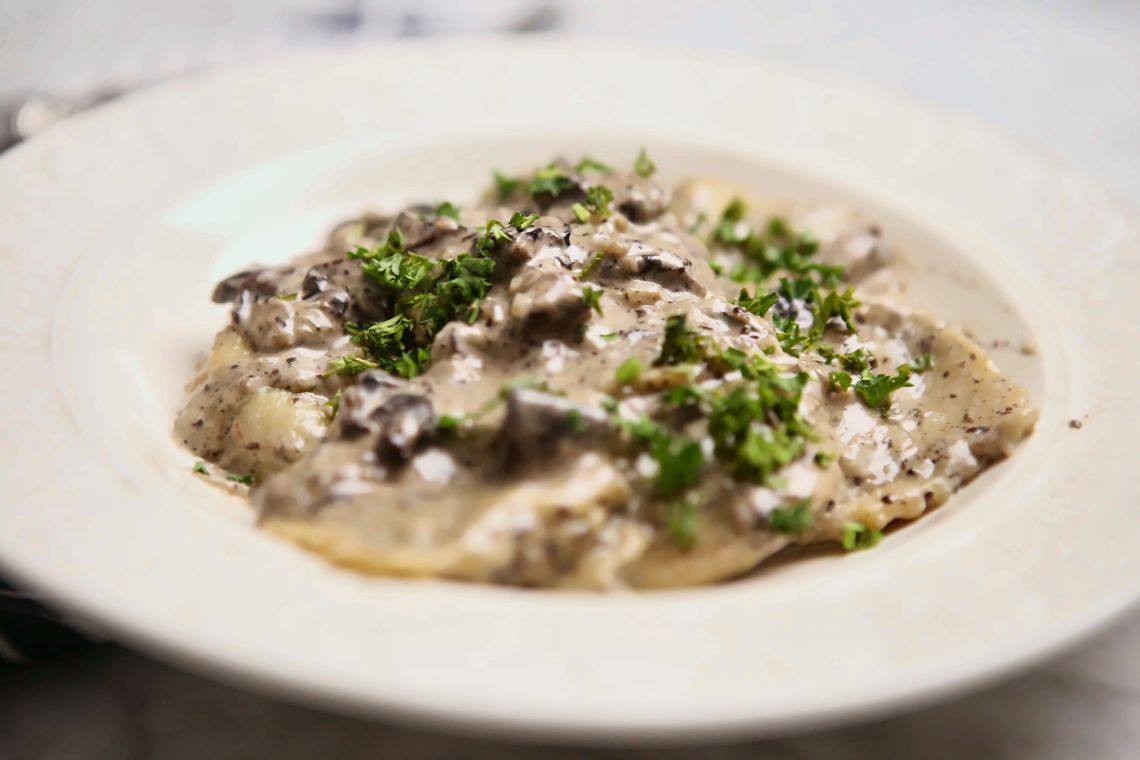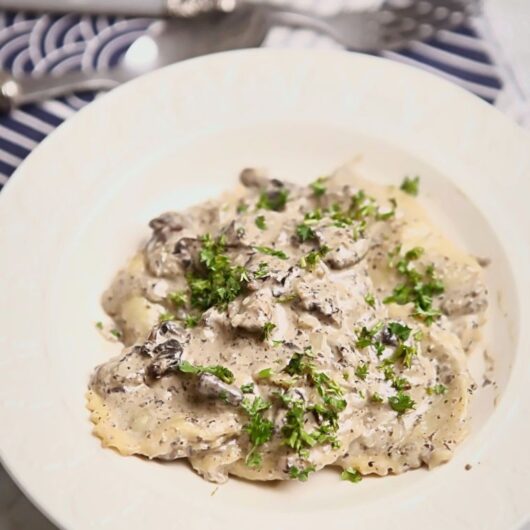
Porcini, Mushroom Truffle Ravioli
Course: MainCuisine: ItalianDifficulty: Intermediate2
servings1
hour45
minutes30
minutesKeep the screen of your device on
Ingredients
- For the Pasta Dough
200 g Italian “00” flour, plus extra for dusting
2 large eggs
2 tbsp olive oil
- For the Mushroom and Truffle Filling
2 medium shallots, finely chopped
230 g chestnut mushrooms, cleaned and trimmed
30 g dried mushrooms, such as porcini or mixed woodland mushrooms
1 garlic clove, finely minced
15 g unsalted butter, for cooking the shallots
30 g finely grated Parmesan or vegetarian Parmesan-style cheese
2 tbsp mascarpone, approximately 30 g
Up to 1 tbsp truffle paste, adjusted to taste
Fine salt, to taste
Freshly ground black pepper, to taste
- For the Brown Butter Sauce and Spinach
100 g unsalted butter
100 g baby spinach, washed and drained
30 g walnuts, roughly chopped
60–120 ml reserved pasta cooking water, as needed
- For Shaping and Finishing
Approximately 100 g semolina, for dusting the tray; you may not need it all
1 tbsp finely chopped flat-leaf parsley
1 tbsp finely chopped chives
20 g finely grated Parmesan or vegetarian Parmesan-style cheese
Salt, for the pasta cooking water
Directions
- Make the Pasta Dough
1. Tip the flour onto a clean work surface and make a wide well in the centre. Keep the flour walls high enough to contain the eggs.
2. Crack the eggs into the well and add the olive oil.
3. Using a fork, beat the eggs and oil together. Gradually draw small amounts of flour from the inside edges into the liquid.
4. Continue mixing until a thick paste forms, then use your hands or a dough scraper to incorporate the remaining flour.
5. Knead for 8–10 minutes, pressing the dough away with the heel of your hand, folding it back and rotating it regularly.
6. The finished dough should feel smooth, firm and supple. If it remains sticky, dust with a little flour. If it is too dry to come together, wet your hands lightly and continue kneading before adding more water.
7. Wrap tightly and refrigerate for at least 30 minutes. If very firm after chilling, let it sit at room temperature for 10–15 minutes before rolling. - Rehydrate the Dried Mushrooms
1. Place the dried mushrooms in a heatproof bowl and cover generously with boiling water.
2. Leave for 20–30 minutes, or until fully softened.
3. Lift the mushrooms out of the soaking liquid so any grit stays at the bottom of the bowl.
4. Check for grit and rinse briefly if necessary, then squeeze out excess moisture.
5. Finely chop the soaked and fresh mushrooms, or pulse them together in a food processor until finely minced. Avoid processing them into a paste. - Cook the Mushroom Filling
1. Melt the 15 g butter in a wide frying pan over medium-low heat.
2. Add the shallots and cook for 4–5 minutes, stirring occasionally, until softened without browning.
3. Add the garlic and cook for approximately 30 seconds, until fragrant.
4. Increase the heat to medium-high and add the mushrooms.
5. Cook for 10–15 minutes, stirring frequently. The mushrooms will release liquid; continue cooking until this has evaporated and the mixture looks concentrated and fairly dry.
6. Remove from the heat and allow to cool until just warm.
7. Stir in the Parmesan and mascarpone. Add a little truffle paste, taste, then increase gradually to suit its strength.
8. Season with salt and pepper. The filling should hold its shape on a spoon without releasing liquid.
9. Spread onto a shallow plate and cool completely before filling the pasta.
Chef’s tip: A wet filling makes ravioli difficult to seal and can soften the pasta. Cook off the mushroom liquid thoroughly before adding the cheese. - Toast the Walnuts
1. Place the walnuts in a dry frying pan over medium-low heat.
2. Toast for 3–5 minutes, stirring frequently, until fragrant and lightly golden.
3. Transfer immediately to a plate to prevent further browning. Set aside. - Roll the Pasta
1. Divide the rested dough into four equal pieces. Work with one piece at a time, keeping the others covered.
2. Flatten the first piece into a small rectangle and dust lightly with flour.
3. Pass it through the widest setting of the pasta machine.
4. Fold into thirds, like a letter, then pass through the widest setting again. Repeat once more to make a smooth, even sheet.
5. Reduce the machine setting one step at a time, passing the dough through each setting.
6. Aim for a sheet approximately 0.6–0.8 mm thick, thin enough to see the shadow of your hand through it. The finest setting is not necessary on every machine.
7. Lay the sheet on a lightly floured surface and fill it promptly so it stays pliable.
Without a pasta machine: Roll from the centre outward with a long rolling pin, rotating the dough regularly until evenly thin. - Fill and Seal the Ravioli
1. Lightly scatter semolina over a baking tray.
2. Cut an even number of circles from the pasta using a 7–8 cm cutter.
3. Place approximately 1 level teaspoon of cold filling in the centre of half the circles, leaving a generous border.
4. If the dough feels dry, lightly moisten the border with a fingertip dipped in water. Avoid soaking it.
5. Place a second circle over each filled base.
6. Gently press around the filling first, pushing trapped air outward, then press the edges firmly together.
7. Check that each raviolo is fully sealed and transfer to the prepared tray in a single layer.
8. Repeat with the remaining dough and filling. Keep finished ravioli loosely covered with a clean, dry tea towel while working.
Chef’s tip: Avoid overfilling. Trapped air and weak seams can cause ravioli to burst during cooking. - Wilt the Spinach
1. Place the spinach in a pan over medium heat with a tablespoon of water.
2. Toss for 1–2 minutes, just until wilted.
3. Drain well and press out excess water gently.
4. Season lightly and keep warm. - Prepare the Brown Butter
1. Bring a large saucepan of water to the boil. Add approximately 7–10 g salt per litre of water.
2. Meanwhile, place the 100 g butter in a wide, preferably light-coloured frying pan over medium heat.
3. Let it melt and foam, swirling the pan occasionally.
4. Watch the milk solids closely. When they turn golden brown and smell nutty, remove the pan from the heat. This usually takes 3–5 minutes.
5. Do not allow the solids to turn black; residual heat will continue cooking them. - Cook the Ravioli
1. Reduce the boiling water to a gentle, steady simmer.
2. Lower the ravioli into the water in batches, leaving enough room for them to move freely.
3. Cook for approximately 3–5 minutes, depending on pasta thickness and size.
4. Test one raviolo: the pasta around the sealed edge should be tender, and the filling hot. Floating alone does not confirm that the pasta is cooked.
5. Reserve a mug of cooking water before lifting out the ravioli with a slotted spoon. - Finish the Sauce
1. Let the brown butter cool briefly, then carefully add 2–3 tablespoons of hot pasta water; it may splutter.
2. Return to low heat and swirl or stir until the sauce becomes lightly emulsified and glossy.
3. Add the cooked ravioli and gently spoon the sauce over them for 30–60 seconds.
4. Add a little more pasta water if needed. The sauce should coat the pasta without becoming heavy.
5. Stir in the parsley and taste before adding any further salt. - Plate and Serve
1. Divide the warm, well-drained spinach between warmed plates.
2. Arrange the ravioli over the spinach.
3. Spoon over the brown butter sauce.
4. Finish with toasted walnuts, Parmesan and chopped chives.
5. Serve immediately.
Notes
- Make-Ahead and Storage
• Pasta dough: Refrigerate tightly wrapped for up to 24 hours.
• Mushroom filling: Refrigerate in a covered container for up to 2 days.
• Freshly shaped ravioli: Cook the same day or freeze promptly to prevent the filling from softening the dough.
• To freeze: Arrange uncooked ravioli separately on a semolina-dusted tray. Freeze until firm, then transfer to a freezer container for up to 1 month for best quality.
• To cook from frozen: Add directly to gently simmering water without thawing. Allow approximately 1–3 extra minutes and check an edge for tenderness.
• Cooked leftovers: Refrigerate promptly and use within 2 days. Reheat gently with a splash of water; the pasta will be softer.
From My Kitchen to Yours — Sandra Djohan