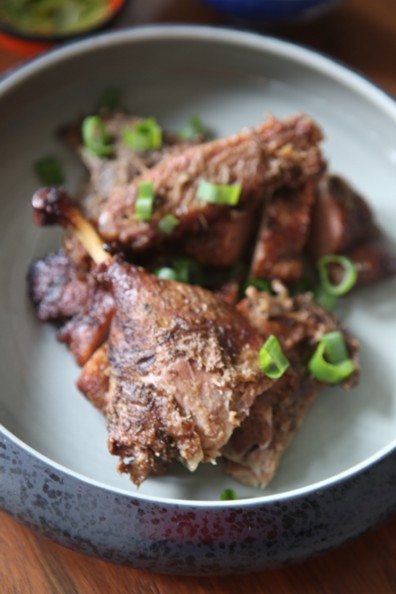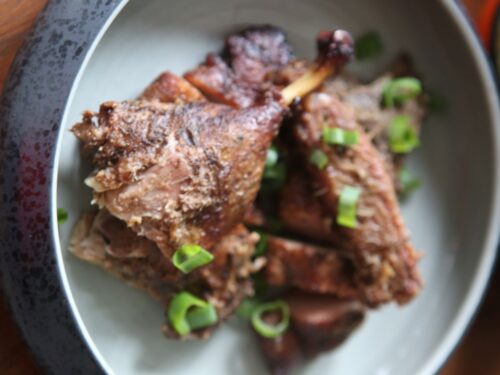

A delicious alternative to traditional Peking duck, this oven-roasted five-spice DUCK captures the irresistible flavors of Chinese roast poultry in a more accessible home-cooking version. The chicken is marinated in light and dark soy sauce, aromatic ginger, sugar, and Chinese five-spice powder, then slowly roasted until tender and juicy, with beautifully browned skin and a glossy, sweet-savory glaze. You can always replace Duck with CHICKEN
The secret to a flavorful roast is allowing enough time for the marinade to penetrate the chicken, roasting it on a rack for even heat circulation, and applying the sweet glaze toward the end of cooking to achieve a rich, caramelized finish without burning.

Oven-Roasted Five-Spice Peking Duck
Course: Main, Lunch, DinnerCuisine: Asian, ChineseDifficulty: Low4
servings20
minutes1
hour30
minutesKeep the screen of your device on
Ingredients
- For the Chicken
1 whole chicken/DUCK, approximately 1.5–1.8 kg (3.3–4 lb), giblets removed
½ teaspoon Chinese five-spice powder, for seasoning the cavity
5–6 slices fresh ginger, reserved from the marinade
- For the Marinade
¼ cup light soy sauce
2 tablespoons dark soy sauce
1 tablespoon granulated sugar
5–6 slices fresh ginger
1 teaspoon Chinese five-spice powder
- For the Basting Sauce
Reserved marinade, thoroughly cooked
2 tablespoons maple syrup or honey
1–2 tablespoons neutral cooking oil, only if needed for the initial basting
Method
- Step 1: Prepare the Chicken
1. Remove the duck from its packaging. Remove the giblets, if present, and check the cavity for any remaining parts.
2. Pat the duck thoroughly dry with paper towels, both inside and outside. Dry skin helps the duck roast more evenly and encourages better browning.
3. Lightly sprinkle ½ teaspoon of five-spice powder inside the cavity. Rub it gently over the interior.
4. If the duck is particularly wet, allow it to sit uncovered in the refrigerator for a few hours before marinating, or simply make sure it is thoroughly dried before proceeding. - Step 2: Make the Marinade
1. In a large bowl, combine the light soy sauce, dark soy sauce, sugar, five-spice powder, and ginger slices.
2. Stir until the sugar is mostly dissolved.
3. Place the chicken in a large food-safe container or resealable bag. Pour the marinade over the duck, making sure the entire surface is coated.
4. Rub the marinade over the breast, thighs, legs, and wings. If possible, gently loosen the skin over the breast and rub a little marinade underneath without tearing the skin.
5. Cover and refrigerate for at least 4 hours, preferably overnight. Turn the chicken occasionally to help it absorb the seasoning evenly.
Chef's tip: Light soy sauce provides saltiness and seasoning, while dark soy sauce gives the chicken its deeper reddish-brown color. Five-spice powder adds the characteristic fragrance of Chinese roast poultry. - Step 3: Prepare the Chicken for Roasting
1. Remove the duck from the refrigerator approximately 20–30 minutes before roasting while preparing the oven and tray. Do not leave raw duck at room temperature for an extended period.
2. Remove the duck from the marinade and allow excess liquid to drip off. Pat the surface lightly with paper towels if it is very wet; this helps prevent the skin from steaming rather than roasting.
3. Reserve the marinade separately for the basting sauce.
4. Place the ginger slices from the marinade inside the chicken cavity.
5. Set a roasting rack inside a sturdy roasting tray. Position the duck breast-side up on the rack so hot air can circulate around the bird.
6. If you do not have a rack, arrange several firmly crumpled pieces of aluminum foil beneath the duck to elevate it above the tray.
7. For more accurate cooking, insert an oven-safe meat thermometer into the thickest part of the thigh without touching the bone. - Step 4: Prepare the Basting Sauce
1. Pour the reserved marinade into a small saucepan.
2. Bring it to a boil, stirring occasionally, then reduce the heat and simmer for 5–10 minutes, ensuring it is thoroughly cooked. Because the marinade has been in contact with raw duck, it must never be used as a basting sauce without cooking it first.
3. Stir in the maple syrup or honey. Simmer briefly until the sauce becomes slightly glossy and syrupy.
4. Remove from the heat and set aside.
Chef's tip: The sweetener helps create the shiny, caramelized finish associated with Chinese-style roast poultry. Add it toward the end of roasting rather than at the beginning, as sugar can burn during prolonged exposure to oven heat. - Step 5: Roast the Chicken
1. Preheat the oven to 350°F (177°C). Allow the oven to reach the correct temperature before placing the duck inside.
2. Place the roasting tray on the middle rack of the oven. Roast the duck uncovered for approximately 20 minutes.
3. After the first 20 minutes, check whether fat and juices have collected in the tray. If sufficient fat is available, carefully spoon some over the duck. If the tray is dry, lightly brush the skin with a small amount of neutral cooking oil.
4. Continue roasting, basting lightly with the rendered fat or oil every 20 minutes during the first hour. Avoid repeatedly opening the oven for too long, as this lowers the temperature and slows cooking.
5. After approximately 60 minutes, begin brushing the duck with the prepared five-spice basting sauce.
6. Apply a thin, even coating every 10–15 minutes during the final 20–30 minutes of roasting. Allow each coating to set before applying the next. Watch the skin carefully; if it darkens too quickly, loosely cover the affected areas with foil.
7. Continue roasting until the thickest part of the breast and the innermost part of the thigh reach a safe internal temperature of 165°F (74°C), avoiding contact between the thermometer and bone. Check more than one location because different parts of the chicken cook at different rates.
8. Depending on the duck’s weight, oven accuracy, and starting temperature, the total roasting time may be shorter or longer than 1 hour 30 minutes. Use the thermometer rather than time alone to determine doneness.
Chef's tip: For a more evenly browned finish, rotate the roasting tray if your oven has hot spots. Do not apply thick layers of glaze too early, as the sugar and soy sauce can darken before the meat is fully cooked. - Step 6: Rest and Carve
1. Transfer the roasted duck to a cutting board or serving platter.
2. Let it rest for 10–15 minutes before carving. Resting allows the juices to redistribute and makes the meat easier to slice.
3. Remove the ginger from the cavity. Carve the legs, thighs, wings, and breast into serving portions.
4. Arrange the duck on a warm platter and spoon any suitable pan juices over the meat. Serve immediately while the skin is still glossy and the meat is juicy.
SERVING SUGGESTIONS
Serve the five-spice Peking duck with steamed jasmine rice, egg-fried rice, stir-fried vegetables, or simple Chinese greens. For a more traditional Peking-inspired presentation, accompany it with thinly sliced cucumber, spring onions, and Chinese pancakes, allowing the chicken to be wrapped with the fresh accompaniments.
A little extra glaze served on the side adds a lovely sweet-savory finish.
Chef's Notes
- For the best flavor: Marinate overnight whenever possible. The additional time allows the soy sauce, ginger, and five-spice powder to develop a deeper flavor throughout the chicken.
For better skin: Dry the Duck thoroughly before roasting and elevate it on a rack. This allows hot air to circulate and helps prevent the underside from becoming soggy.
For a deeper color: Dark soy sauce contributes color, while the final honey or maple syrup glaze gives the skin its characteristic shine.
For juicy meat: Use a thermometer and avoid relying exclusively on the estimated cooking time. Check both the breast and thigh.
For safe basting: Always cook the reserved marinade thoroughly before using it. Keep any sauce that has contacted raw duck separate from the finished dish.
For leftovers: Refrigerate within 2 hours of cooking in a covered container and consume within 3–4 days. Reheat thoroughly before serving.
From My Kitchen to Yours — Sandra Djohan