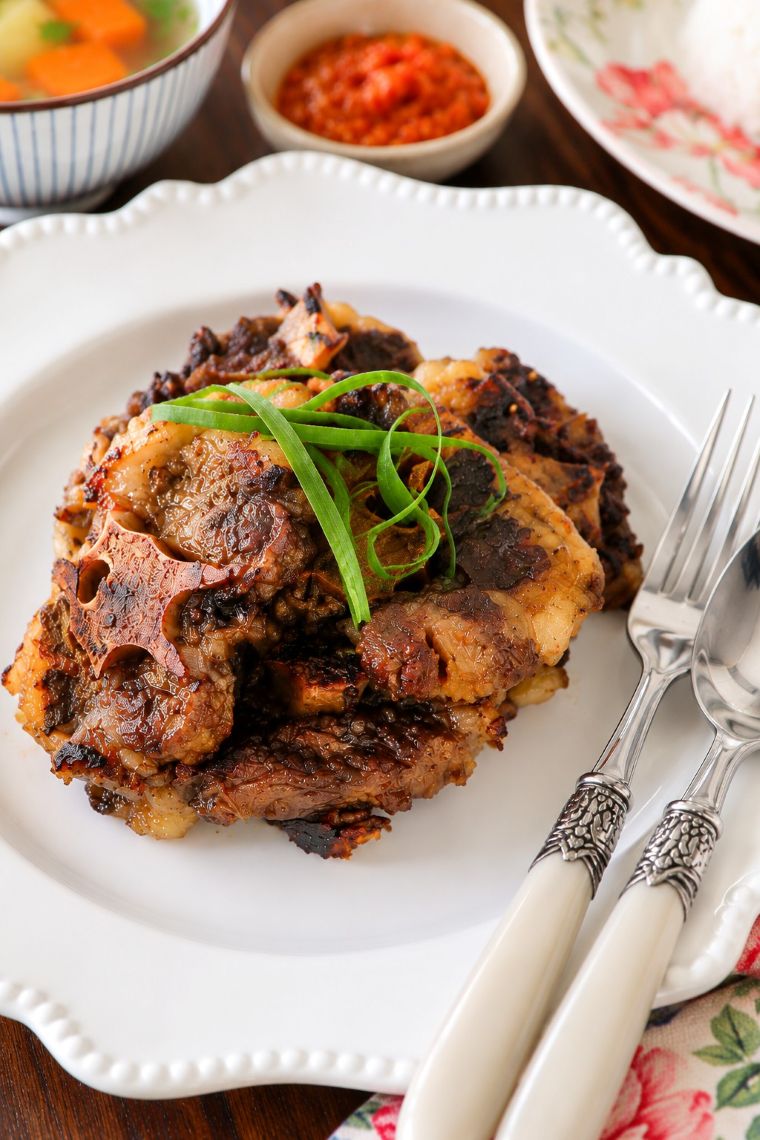
About Sop Buntut Bakar Madu
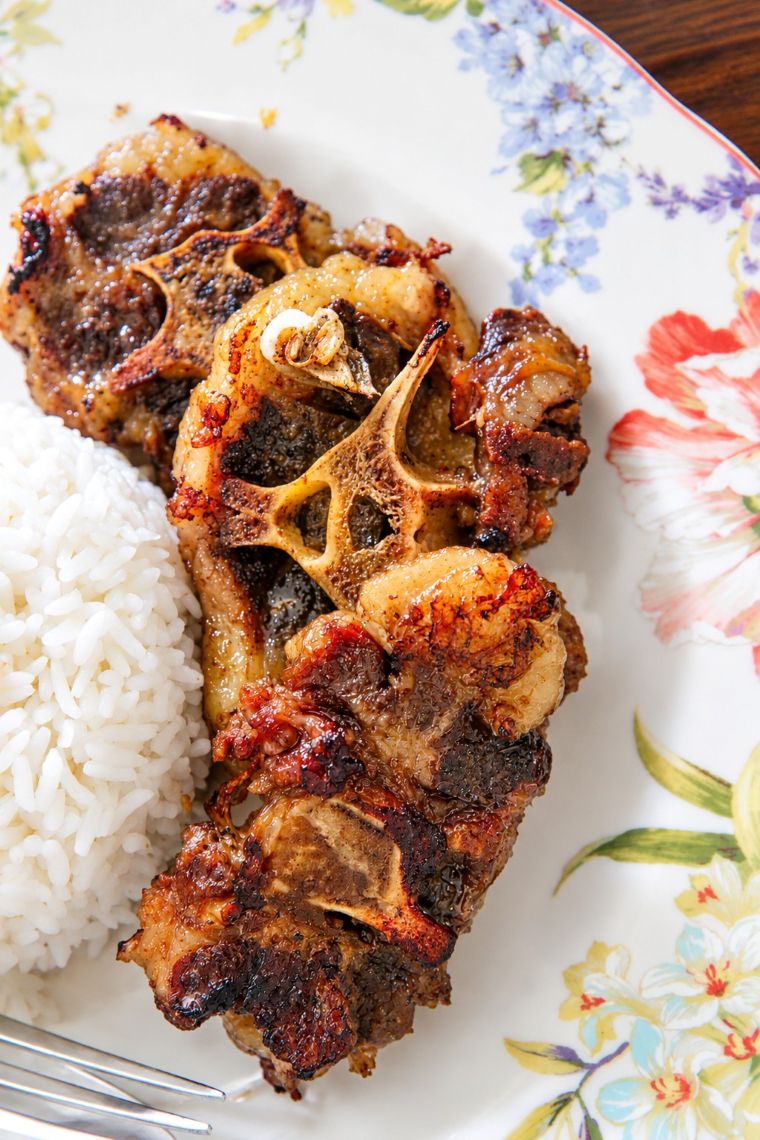
Honey Glazed Oxtail Soup
Course: Main, Lunch, DinnerCuisine: IndonesianDifficulty: Intermediate10
servings45
minutes20
minutes900
kcalThe original ingredient list is a restaurant-scale recipe. The quantities below retain the original proportions for the main broth, Bangkok sauce, and honey glaze. Because the original recipe does not specify a final broth yield, the finished number of portions will depend on how much liquid is reduced during cooking.
Keep the screen of your device on
Ingredients
- Part 1 — Sop Buntut: Oxtail Soup Base
2 kg beef oxtail, cut into joints
1,150 g yellow onions, peeled and roughly chopped
10 g whole cloves
600 g spring onions, roughly cut
30 g kaffir lime leaves
300 g celery stalks and leaves, roughly chopped
30 g Indonesian bay leaves (daun salam)
30 g cardamom pods
450 g galangal, bruised and sliced
30 g star anise
25 litres water, as specified in the original restaurant recipe
300 g fine salt, as listed in the original recipe; do not add all at once
300 g granulated sugar, as listed in the original recipe; add gradually to taste
450 g beef stock powder, as listed in the original recipe; add gradually according to the product's salt content
500 g potatoes, peeled and cut into chunks
500 g carrots, peeled and cut into chunks
150 g spring onions, thinly sliced and reserved for finishing
Important seasoning note: The quantities of salt, sugar, and beef stock powder are substantial. They may be intended for a large-volume commercial batch. Start with a fraction of the listed seasoning, taste the broth as it develops, and increase only as needed. For a home-sized batch, reduce the entire recipe proportionally.
- Part 2 — Saos Bangkok: Bangkok-Style Sweet-Chili Sauce
You can prepare this sauce from scratch or use a good-quality bottled Bangkok-style sweet-chili sauce as a shortcut.
200 ml water
60 g garlic, peeled
60 g fresh coriander leaves
200 g red curly chilies (cabai merah keriting)
100 ml vinegar
25 g fine salt, or to taste
5 tbsp tomato ketchup
30 tbsp chili sauce, as specified in the original recipe
300 ml plum sauce
10 tbsp lemon juice
500 g brown sugar, as specified in the original recipe; adjust to taste
Chef's note: The original recipe contains a high proportion of chili sauce and brown sugar. For a more balanced homemade sauce, add the chili sauce, salt, and sugar gradually, tasting as you go. The finished sauce should be sweet, tangy, mildly spicy, and savoury, with enough acidity to balance the honey.
- Part 3 — Saos Madu: Honey Glaze
500 ml honey
500 ml prepared Bangkok-style sauce
Combine in equal parts by volume. This produces approximately 1 litre of glaze before any reduction.
- Part 4 — Garnishes and Accompaniments
Emping, fried until crisp
Fresh lime (jeruk limo), for tossing with the emping
Fried shallots (bawang goreng)
Steamed white rice
Reserved oxtail broth, served hot
Directions
- 1. Prepare and clean the oxtail
Rinse the oxtail briefly under cold running water and trim away any excessive external fat, leaving enough to contribute flavour to the broth.
Place the oxtail in a large stockpot and cover with fresh water. Bring to a boil and cook for 20 minutes. During this time, foam, blood residue, and impurities will rise to the surface.
Drain the oxtail and discard the first batch of water. Rinse the pieces and wash the pot before continuing.
This preliminary step helps produce a cleaner-tasting broth. It is particularly useful when preparing oxtail soup for a restaurant-style presentation. - 2. Build the aromatic broth
Return the cleaned oxtail to the pot. Add the fresh water, yellow onions, cloves, spring onions, kaffir lime leaves, celery, Indonesian bay leaves, cardamom, galangal, and star anise.
Bring the liquid to a gentle boil, then reduce the heat immediately to a low simmer.
Skim off any foam or excess fat that rises to the surface during the early stages of cooking. Avoid a vigorous boil, as this can make the broth cloudy and cause the meat to cook unevenly.
Add a conservative initial amount of beef stock powder, salt, and sugar. The original quantities should be treated as the full-batch reference rather than added automatically, especially if using a concentrated commercial stock powder. - 3. Slowly braise the oxtail until tender
Cover the pot partially and simmer gently for approximately 2½–4 hours.
Check the oxtail periodically. The exact cooking time will depend on the size of the pieces, the age of the animal, and the temperature of the simmer.
The oxtail is ready when a fork slides easily into the meat and the meat begins to pull away from the bone. The connective tissue should have softened, giving the meat a tender, almost gelatinous texture.
If the liquid reduces too much before the oxtail is tender, add hot water to maintain sufficient coverage.
Why slow cooking matters: Oxtail contains substantial connective tissue. A long, gentle braise converts this tissue into gelatin, producing tender meat and a broth with a rich mouthfeel. - 4. Add the potatoes and carrots
When the oxtail is nearly tender, add the potatoes and carrots to the pot.
Continue simmering for approximately 15–25 minutes, or until the vegetables are cooked through but still hold their shape.
Adding them too early can cause the vegetables to break apart during the extended braising time.
Stir in the reserved 150 g of sliced spring onions near the end of cooking, or reserve some for garnishing the finished dish. - 5. Strain and season the soup base
Carefully remove the oxtail and vegetables from the pot. Set them aside while you strain the broth through a fine-mesh sieve if you prefer a cleaner presentation.
Remove the whole spices and spent aromatics. Skim off excess fat from the surface, leaving a little behind for flavour.
Taste the broth and adjust the salt, sugar, and beef stock seasoning as needed. The soup should be savoury and aromatic, with the spices complementing rather than dominating the flavour of the oxtail.
Keep the broth hot for serving. If preparing ahead, cool it promptly and refrigerate it safely. - 6. Prepare the Bangkok-style sauce
Place the water, garlic, coriander leaves, and red chilies in a blender. Blend until smooth.
Transfer the mixture to a saucepan. Add the vinegar, tomato ketchup, chili sauce, plum sauce, lemon juice, brown sugar, and an initial portion of salt.
Bring the mixture to a gentle simmer over medium-low heat, stirring regularly to prevent the sugar from sticking to the bottom.
Cook for approximately 10–20 minutes, until the sauce becomes glossy and slightly thickened. Taste and adjust the sweetness, acidity, saltiness, and heat.
The sauce should have enough acidity from the vinegar and lemon juice to balance the sweetness of the sugar and, later, the honey.
Allow the sauce to cool slightly before combining it with the honey. - 7. Make the honey glaze
Measure equal quantities of honey and Bangkok-style sauce into a saucepan.
Stir over low heat until fully combined and smooth. Do not boil the mixture aggressively, as excessive heat can darken the honey and cause the sauce to become too thick.
The glaze should coat the back of a spoon while remaining fluid enough to brush onto the oxtail.
If it is too thick, add a small amount of water. If it is too thin, simmer gently for a few minutes until it reaches the desired consistency.
Reserve a portion of the glaze separately for serving, rather than using all of it for brushing the meat. - 8. Prepare the oxtail for grilling
Remove the braised oxtail from the broth and allow excess liquid to drain away.
Pat the surface gently with paper towels. This helps the glaze adhere and encourages browning instead of steaming.
Arrange the oxtail on a tray and brush all sides with a thin, even coating of honey glaze.
Avoid applying a very thick layer at this stage. Honey contains natural sugars that can burn quickly over intense heat, so several thin layers give better control. - 9. Grill the oxtail until caramelised
Preheat a grill, grill pan, or oven broiler to medium-high or high heat.
Arrange the glazed oxtail in a single layer, leaving a little space between the pieces.
Grill for approximately 5–10 minutes in total, turning the pieces carefully and brushing with additional glaze as needed. Watch the meat closely, as the sugar can darken rapidly.
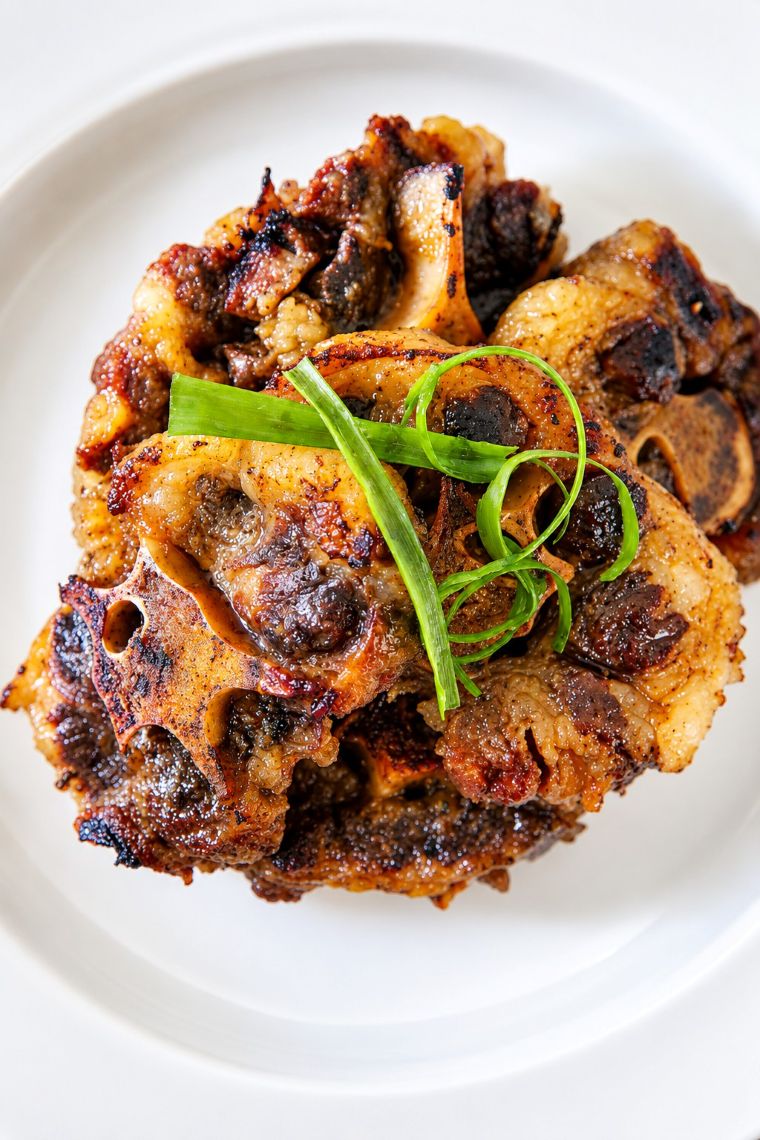
The oxtail is ready when the surface becomes glossy, deep brown, and lightly charred at the edges.
Because the meat has already been braised, the purpose of grilling is to develop colour, caramelisation, and a more concentrated flavour rather than to cook the meat from raw.
Allow the finished oxtail to rest briefly before plating so the glaze can settle onto the surface. - 10. Prepare the emping garnish
Fry the emping according to the package instructions until crisp, then drain on paper towels.
Allow it to cool slightly before tossing it with a small amount of fresh jeruk limo juice. Use only enough juice to give it a subtle citrus fragrance without making it soggy.
Keep the emping separate until serving to preserve its crisp texture. - 11. Plate and serve
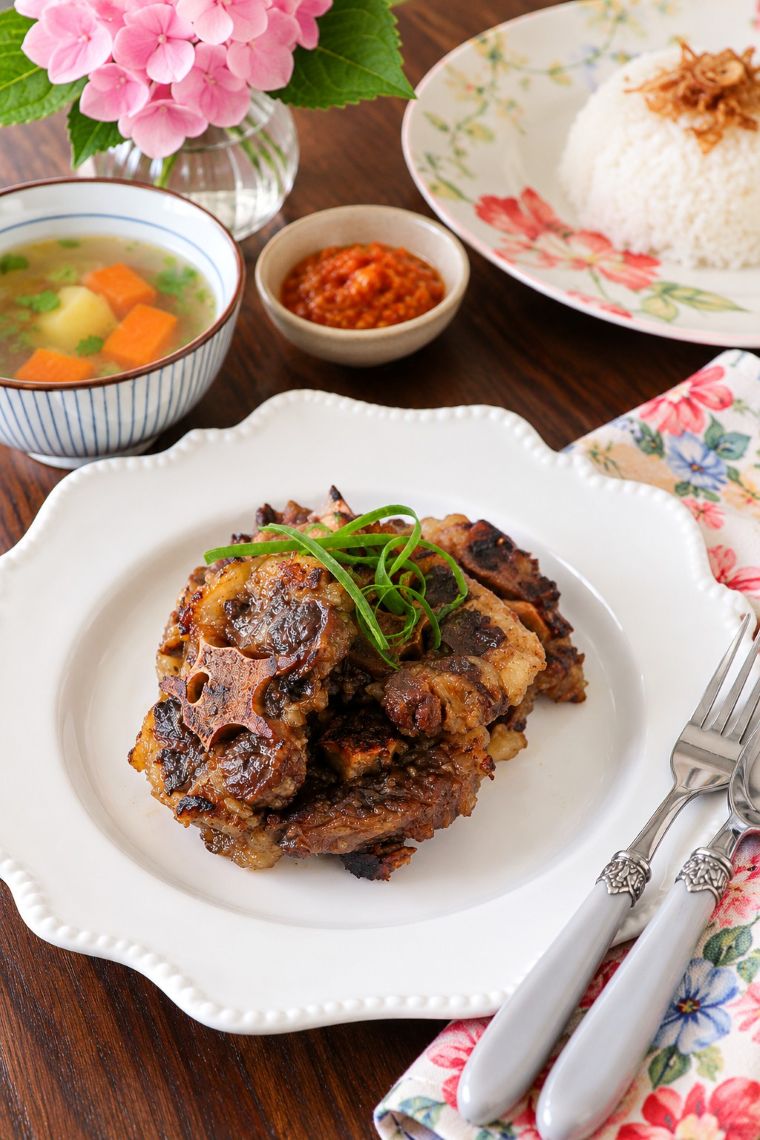
Arrange the honey-glazed oxtail on a warm serving plate. Brush lightly with a final layer of glaze for a glossy finish.
Sprinkle with fried shallots and sliced spring onions. Place the emping alongside the meat or serve it separately.
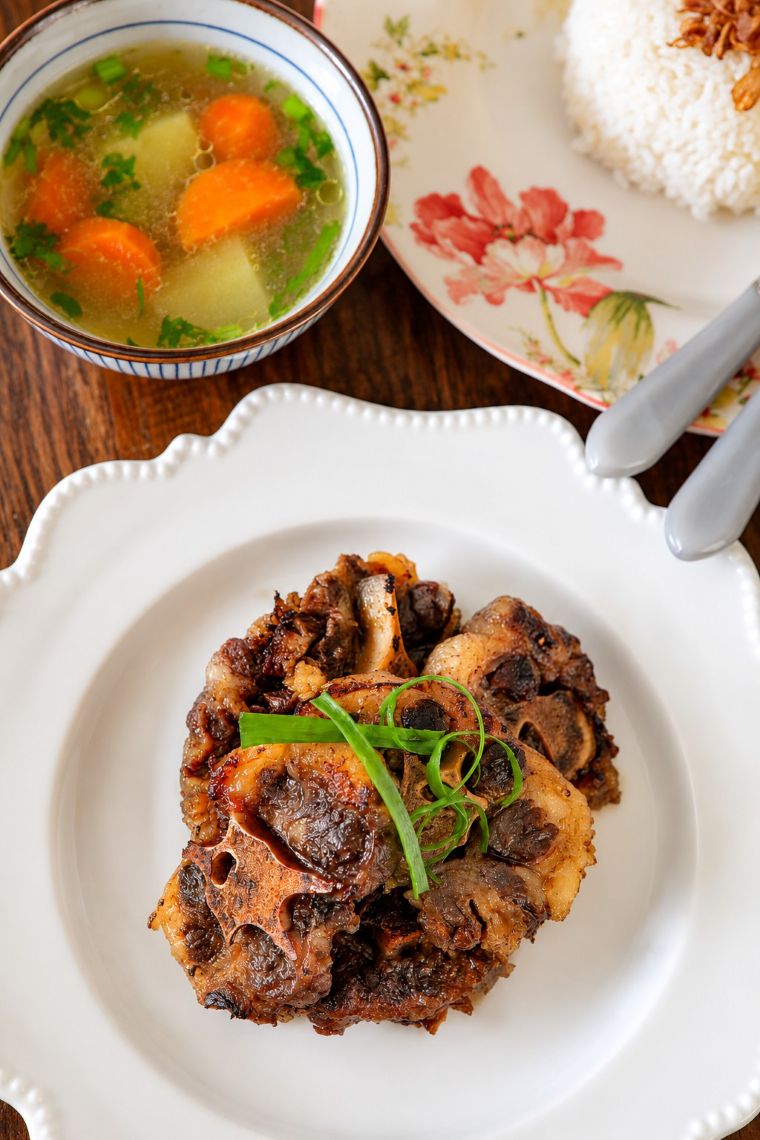
Serve the hot oxtail broth in a separate bowl, with the cooked vegetables if desired. Accompany the dish with freshly steamed white rice.
The ideal plate brings together three distinct elements: the richness of the tender oxtail, the sweet-tart caramelised glaze, and the comforting warmth of the aromatic soup.
Notes
- Chef's note on the "bakar" finish.
The instructions above cover the sauté-and-sauce finish as written. For the full honey-grilled ("bakar madu") presentation many restaurants serve, brush the braised oxtail with Saos Madu and finish it briefly under a hot broiler or open flame until the glaze caramelises and lightly chars before plating — a common technique for this style of dish, worth trying alongside the stovetop version. - On scale.
As written, this is a restaurant batch — 25 litres of broth from 2 kg of oxtail is built for volume, not a single family dinner. Everything here scales down proportionally; for a home pot, quartering every quantity gets you to a manageable weeknight-sized batch.
A personal recipe, adapted from restaurant kitchen notes.