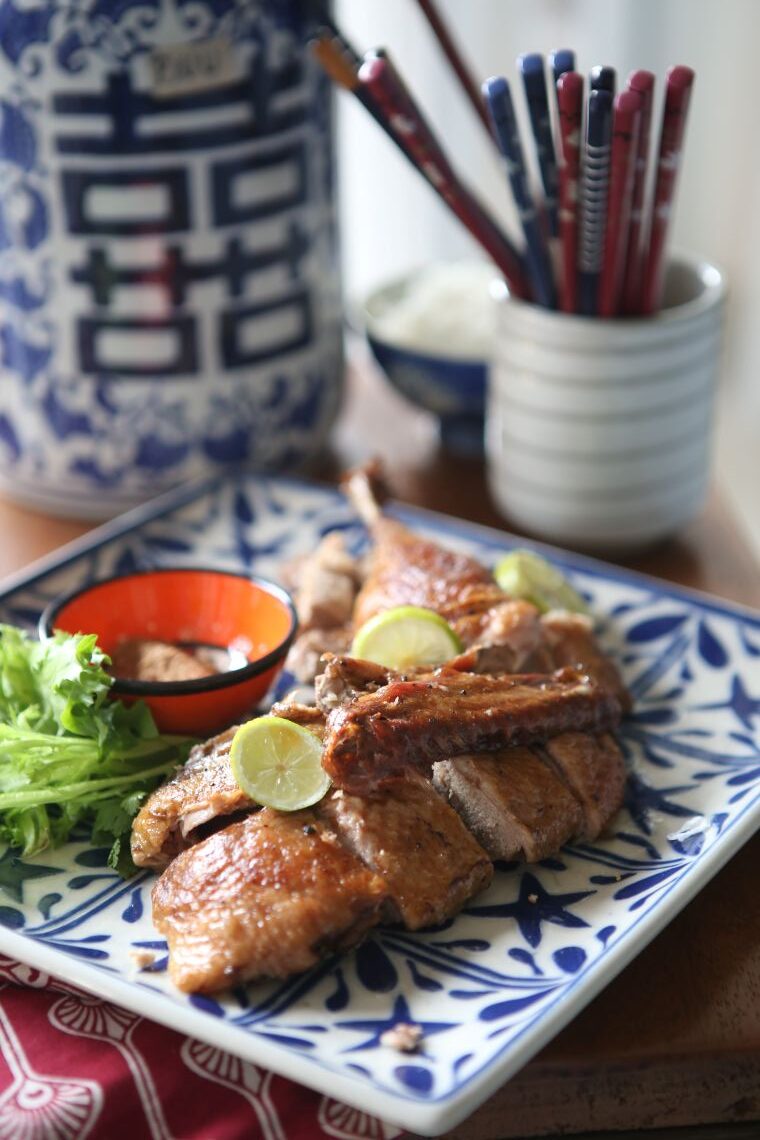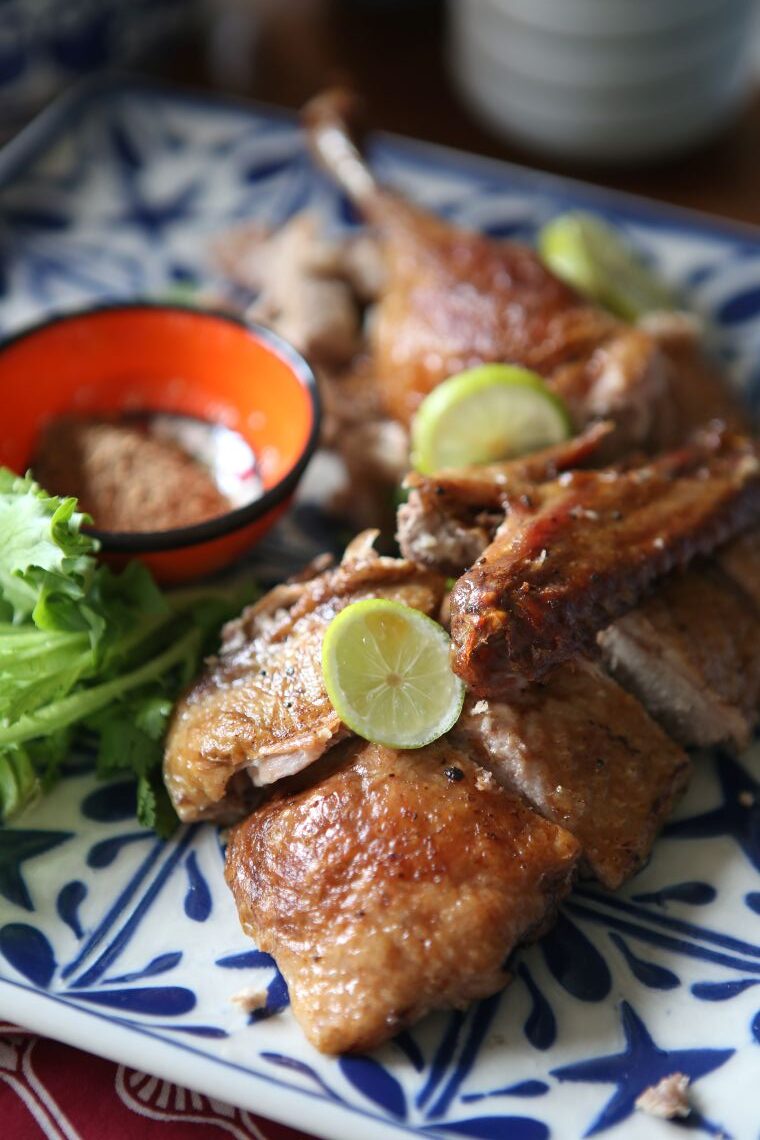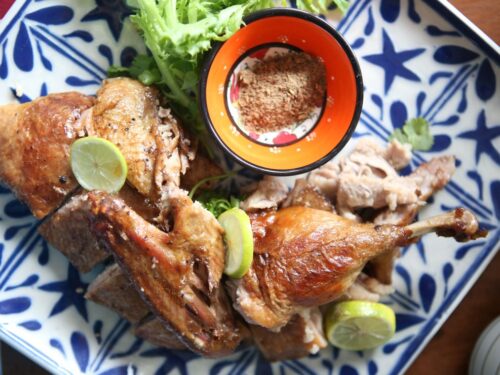
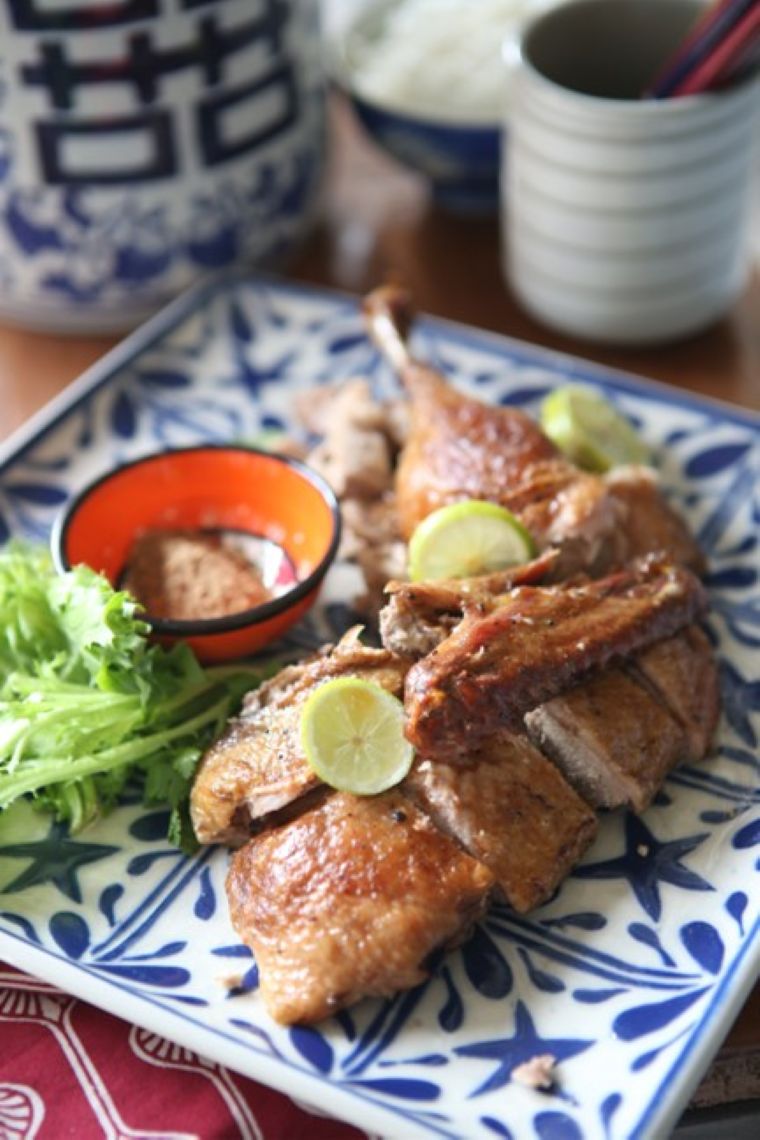

Fragrant Crispy Duck With Sichuan Pepper Salt
Course: Appetizer, MainCuisine: ChineseServings
2
servingsPrep time
40
minutesCooking time
45
minutesCook Mode
Keep the screen of your device on
Ingredients
- Part 1 — Duck and Aromatic Rub
2 duck legs, approximately 400 g total
¼ teaspoon salt
⅛ teaspoon freshly ground white pepper
½ teaspoon Sichuan peppercorns, lightly crushed
2 teaspoons Shaoxing wine
1 piece cassia bark, approximately 4 × 4 cm, broken into smaller pieces
1 whole star anise, broken into smaller pieces
1 scallion, cut into 2.5 cm lengths
½-inch (1.3 cm) piece fresh ginger, thinly sliced
- Part 2 — Sichuan Pepper Salt
1 teaspoon Sichuan peppercorns, approximately 2.5 g
¾ teaspoon salt, approximately 5 g
- Part 3 — For Frying
Approximately 480 ml vegetable oil, or enough to create a pool at least 2.5 cm deep in a suitable wok or frying pan
Choose a neutral oil with a high smoke point, such as peanut, canola, or sunflower oil.
Directions
- Step 1 — Prepare and Marinate the Duck
Preparation: 10 minutes · Marinating: 30 minutes
1. Pat the duck legs dry with paper towels. Trim away any loose excess fat around the edges, but retain the skin, as this is what will become beautifully crisp during frying.
2. In a small bowl, combine the salt, white pepper, Sichuan peppercorns, and Shaoxing wine. Stir until the mixture forms a lightly seasoned paste.
3. Rub the mixture evenly over the flesh side of each duck leg. If the skin is still intact, avoid rubbing too much liquid onto it, as a dry surface is important for achieving a crisp finish.
4. Place the duck legs on a plate, cover, and marinate for 30 minutes. Keep the duck refrigerated if marinating beyond the time needed for immediate preparation.
Chef's tip: Shaoxing wine adds a gentle, fragrant depth and helps round out the richness of the duck. Sichuan peppercorns contribute a distinctive citrusy aroma that complements the warm spices used during steaming. - Step 2 — Steam the Duck with Aromatics
Cooking time: Approximately 40 minutes
1. Prepare a steamer with sufficient water and bring it to a steady boil.
2. Arrange the duck legs skin-side down on a heatproof plate that fits comfortably inside the steamer. Keeping the skin facing down during steaming helps protect it from direct exposure to the steam while allowing the meat to cook gently.
3. Scatter the cassia bark and broken star anise over the flesh side of the duck. Add the scallion and ginger slices around and over the meat, avoiding the skin as much as possible.
4. Carefully place the plate inside the steamer. Cover and steam over high heat for approximately 40 minutes, or until the duck is cooked through and the meat is tender.
5. Check the thickest part of the meat with a thermometer, avoiding the bone. Duck legs should reach at least 74°C for food safety; for a more tender, braised-style texture, the legs may benefit from additional cooking until the connective tissue softens.
6. Carefully remove the plate from the steamer. Take care when lifting the lid, as the escaping steam can cause burns.
Chef's tip: Steaming allows the duck to become tender before frying. The cassia bark, star anise, ginger, and scallion infuse the meat with a deep, warm fragrance without requiring a long braising process. - Step 3 — Cool and Dry the Duck
Preparation: 10–15 minutes, plus additional drying time if needed
1. Transfer the duck legs to a wire rack and allow excess moisture to drain away.
2. Once cool enough to handle, gently remove the cassia bark, star anise, scallion, ginger, and loose peppercorns from the duck. Discard the aromatics.
3. Pat the duck legs thoroughly dry with paper towels, especially the skin. Work gently to avoid tearing the skin, which should remain intact for frying.
4. Allow the duck to cool until it is no longer steaming. If time permits, refrigerate the cooked legs uncovered on a rack until the skin is noticeably dry.
Why this step matters: Moisture is the enemy of crisp skin. Drying the surface helps the duck brown quickly in hot oil instead of steaming or spluttering excessively. Chilling the duck uncovered also helps dry the skin further, although it will add to the total preparation time. - Step 4 — Prepare the Sichuan Pepper Salt
Cooking time: 3 minutes
1. Place the Sichuan peppercorns in a dry frying pan over low heat.
2. Toast for approximately 2 minutes, shaking the pan frequently, until the peppercorns become aromatic. They should smell fragrant and citrusy without becoming black or burnt.
3. Transfer the peppercorns to a plate and let them cool completely.
4. Add the salt to the same dry pan and heat over low heat for approximately 1 minute, stirring gently to remove surface moisture. Transfer to a small bowl.
5. Grind the cooled Sichuan peppercorns into a fine powder using a spice grinder or mortar and pestle.
6. Mix the ground peppercorns with the salt. Taste a tiny pinch and adjust the ratio if you prefer a stronger peppery aroma.
7. Set aside until ready to serve.
Chef's tip: Toasting the peppercorns releases their fragrant essential oils and enhances their citrusy, numbing character. Grind them only after cooling to preserve their aroma and avoid clumping. - Step 5 — Fry the Duck Until Golden and Crispy
Cooking time: Approximately 2–4 minutes per batch
1. Select a sturdy wok or deep frying pan. Add the vegetable oil, ensuring the oil level is sufficient for frying while leaving plenty of space at the top to prevent overflow.
2. Heat the oil to 200°C (390°F), using a thermometer to check the temperature. Ensure the duck is completely dry before frying, and keep water away from the hot oil.
3. Carefully lower the duck legs into the oil, skin-side down first if possible. Work in small batches if the pan is not large enough to accommodate both legs comfortably.
4. Fry for approximately 1 minute on the first side, then turn and fry for another minute, or until the skin is crisp and deep golden brown. Adjust the heat if the skin darkens too quickly.
5. Use tongs to transfer the duck to a wire rack or a plate lined with paper towels. Allow excess oil to drain briefly.
6. Let the oil return to the target temperature before frying another batch.
Important frying tip: The duck is already cooked during steaming, so frying is primarily intended to crisp and brown the skin. Because the duck contains moisture and the oil is very hot, lower the legs gently and never drop them into the pan. If the oil splatters aggressively, step back and reduce the heat. - Step 6 — Cut and Serve
1. Transfer the duck to a stable cutting board and allow it to rest for 2–3 minutes so the juices settle slightly.
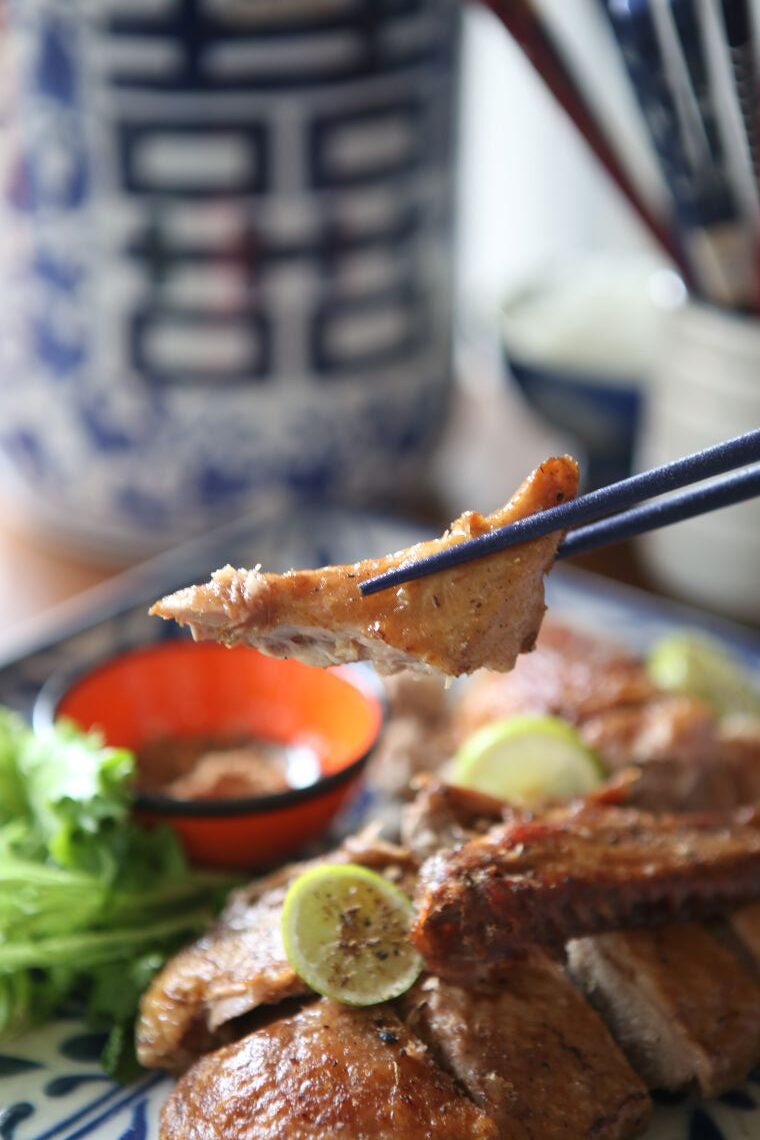
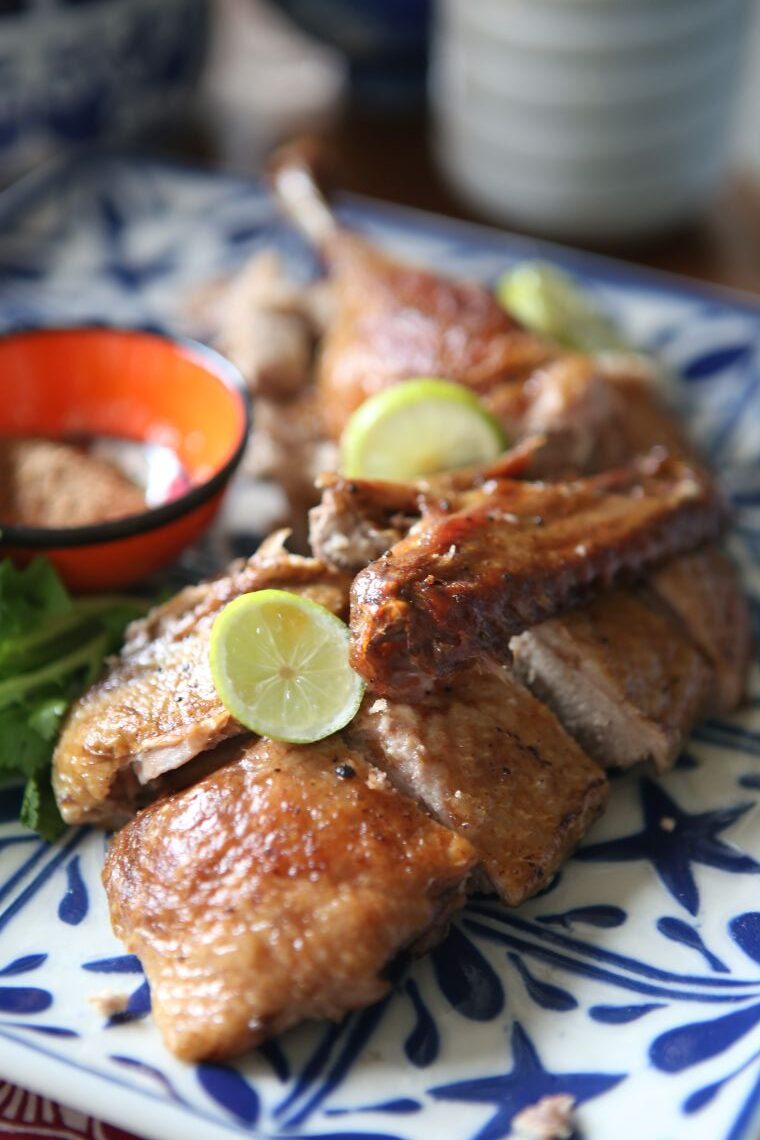
2. Using a sturdy cleaver or sharp heavy knife, cut each duck leg crosswise into manageable pieces, approximately 2.5 cm wide. Cut carefully through the joints and bones, keeping your fingers clear of the blade.
3. Arrange the pieces on a warm serving plate with the golden skin facing upward.
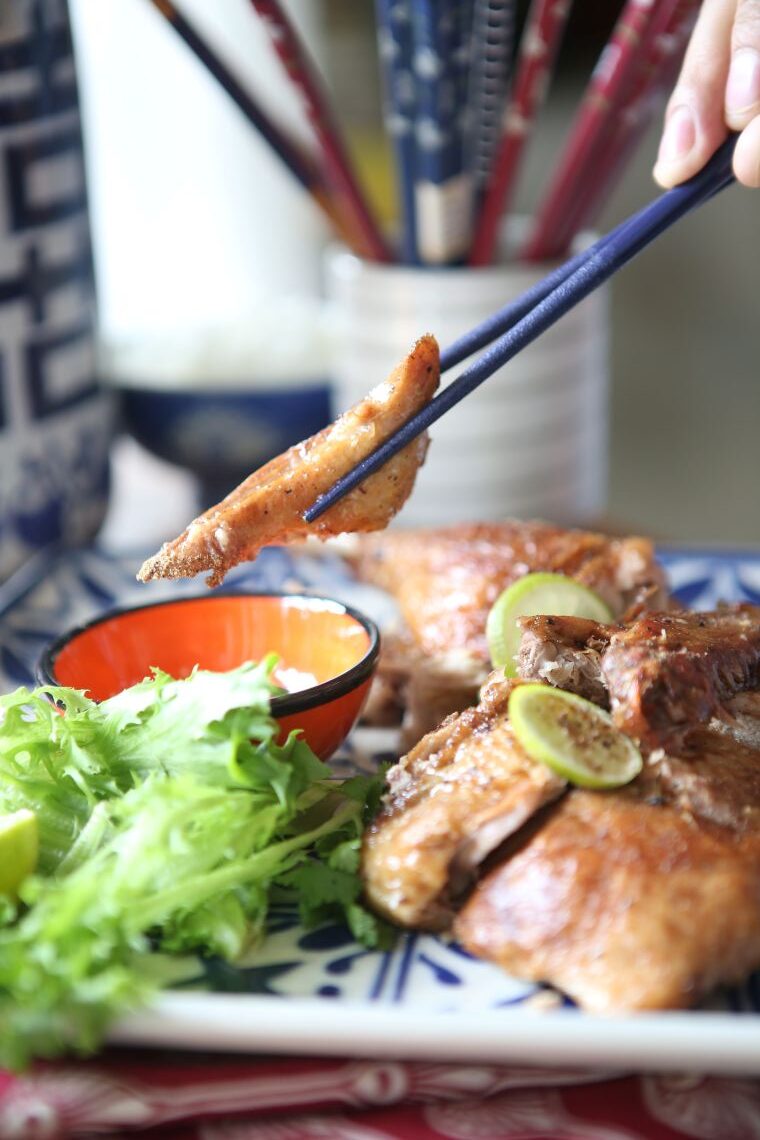
4. Serve immediately with the Sichuan pepper salt on the side, allowing each person to dip or sprinkle the seasoning over the duck to taste.
Chef Sandra's Notes
- For the crispiest skin: Dry the duck thoroughly after steaming. If preparing ahead, refrigerate the cooked duck uncovered on a rack, then fry just before serving.
• For deeper flavor: Allow the duck enough time to absorb the wine, salt, and pepper before steaming. Do not skip the cassia bark, star anise, ginger, and scallion; together, they create the characteristic fragrance of this dish.
• For balanced seasoning: Keep the Sichuan pepper salt separate rather than coating the duck too heavily. This preserves the crisp skin and lets diners control the intensity.
• For the best texture: Serve straight from the fryer after a brief draining period. Covering the duck or stacking the pieces while hot traps steam and softens the skin.
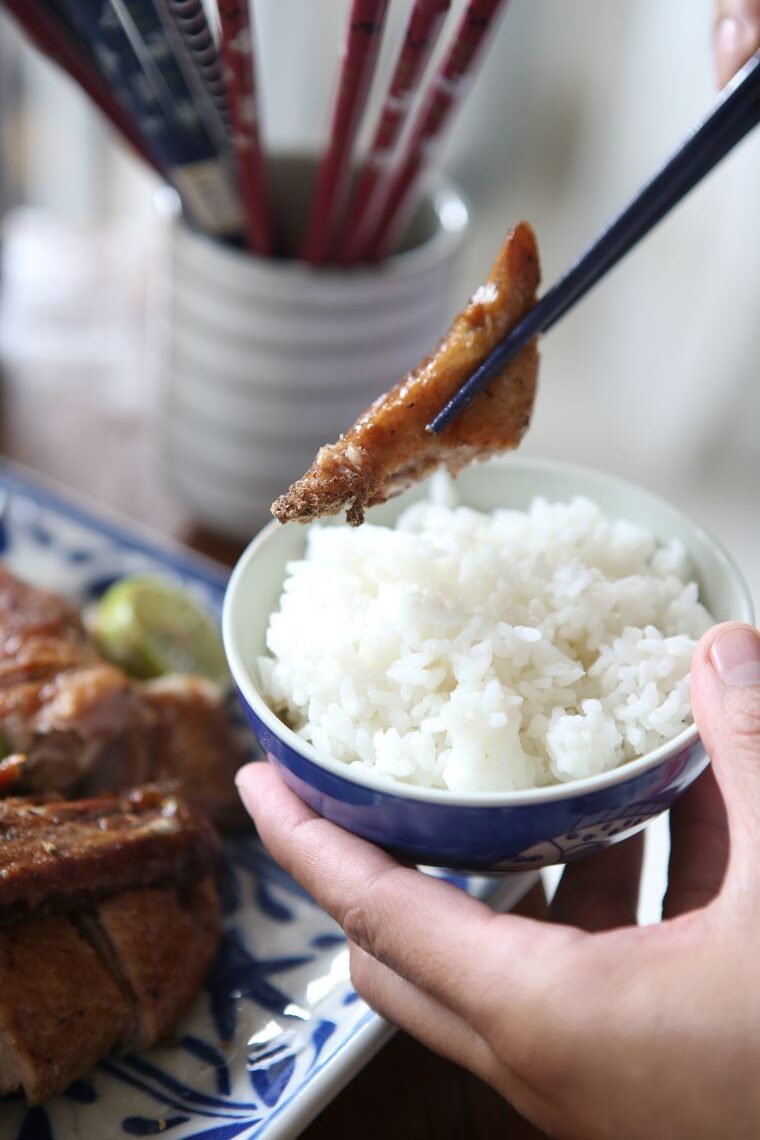
• For serving: Pair with steamed jasmine rice, stir-fried greens, or a light cucumber salad to balance the richness of the duck.
The secret to this dish is the contrast between tender, aromatic meat and crisp, golden skin. The final sprinkle of Sichuan pepper salt brings everything together with a clean, fragrant heat that makes this Chinese-style duck especially satisfying.
From My Kitchen to Yours — Sandra Djohan