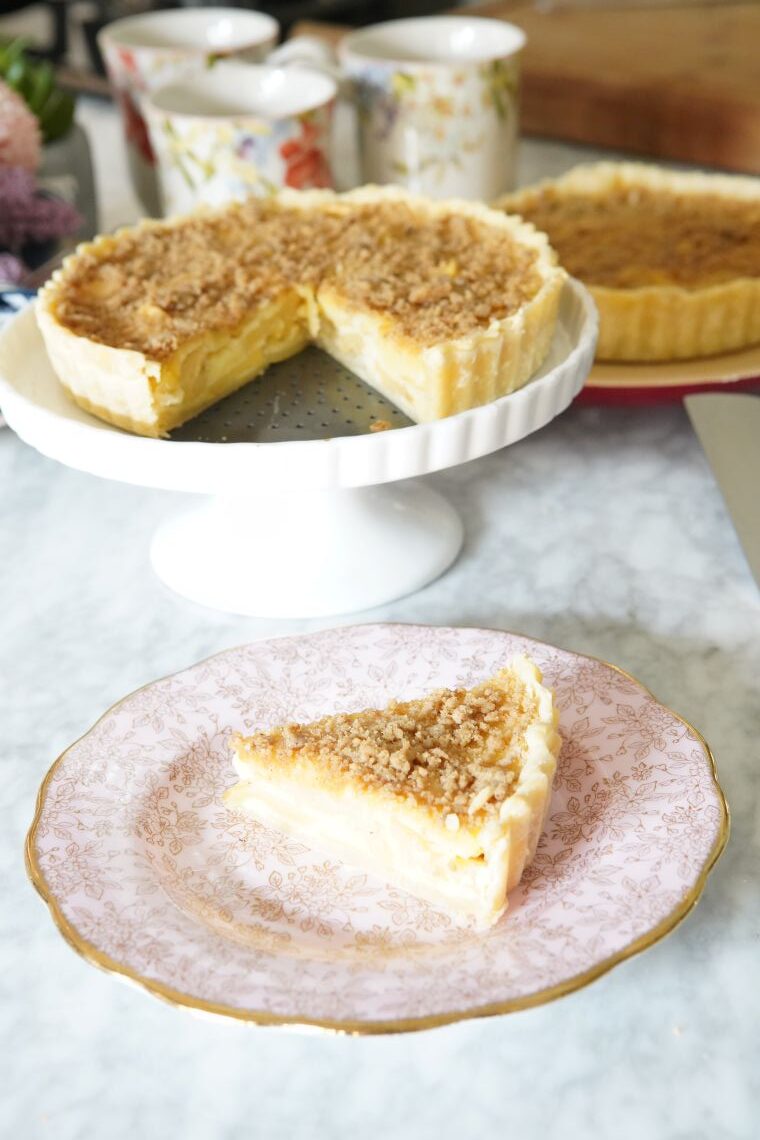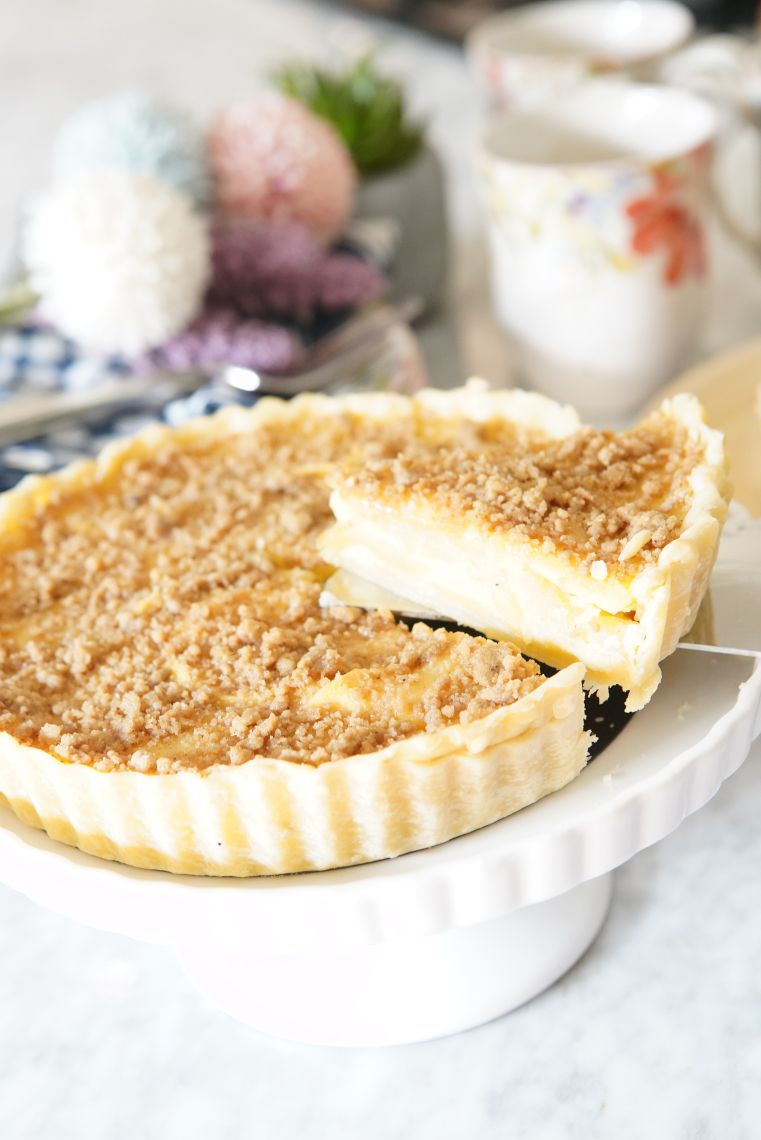
This comforting apple pie combines three beautiful textures in one dessert: tender apples gently cooked in fragrant brown butter, a creamy vanilla custard filling, and a golden cinnamon crumb topping nestled inside a flaky homemade pie crust.
Browning the butter before cooking the apples adds a wonderful nutty aroma that deepens the flavor of the fruit and complements the cinnamon, nutmeg, and ginger. The custard brings everything together with a delicate creaminess, while the crumb topping adds a sweet, buttery crunch.
Serve this pie slightly warm for a comforting dessert, or chill it completely for neater slices and a firmer custard filling. A scoop of vanilla ice cream or a little softly whipped cream makes a lovely finishing touch.

Brown Butter Apple Custard Crumb Pie
Course: DessertCuisine: American8
servings40
minutes55
minutes300
kcalKeep the screen of your device on
Ingredients
- A. Single 9-Inch Homemade Pie Crust
1¼ cups (160 g) all-purpose flour
½ teaspoon salt
1 teaspoon granulated sugar
½ cup (113 g) unsalted butter, very cold and cut into small cubes
3–5 tablespoons (45–75 ml) ice-cold water
- B. For the Brown Butter Apples
4 medium firm, tart apples, peeled, cored, and sliced (approximately 5 cups or 600–700 g prepared)
¼ cup (57 g) unsalted butter
1 teaspoon ground cinnamon
½ teaspoon ground nutmeg
¼ teaspoon ground ginger
- C. For the Vanilla Custard Filling
1 cup (240 ml) heavy cream
⅔ cup (135 g) granulated sugar
1 large egg
4 tablespoons (30 g) all-purpose flour
1 teaspoon pure vanilla extract
¼ teaspoon salt
- D. For the Cinnamon Crumb Topping
½ cup (65 g) all-purpose flour
½ cup (100 g) packed brown sugar
1 teaspoon ground cinnamon
3 tablespoons (42 g) cold unsalted butter, cut into small cubes
Method
- Step 1: Make the Homemade Pie Crust
1. In a large mixing bowl, combine the flour, salt, and sugar. Whisk briefly to distribute the ingredients evenly.
2. Add the cold butter cubes. Using a pastry cutter, two knives, or your fingertips, work the butter into the flour until the mixture resembles coarse crumbs, with some pea-sized pieces of butter remaining.
3. Gradually add 3 tablespoons of ice-cold water, mixing gently with a fork after each addition.
4. Add more water, 1 tablespoon at a time, only until the dough begins to hold together when pressed. The dough should not feel wet or sticky.
5. Gather the dough into a rough ball and gently flatten it into a disc. Avoid kneading, as excessive handling can develop gluten and make the crust tough.
6. Wrap the dough and refrigerate for at least 30 minutes. Chilling allows the flour to hydrate, firms the butter, and makes the dough easier to roll.
Chef's tip: Keep the butter cold throughout this process. Small pieces of butter create flaky layers as the crust bakes. If the dough becomes soft or sticky at any stage, return it to the refrigerator before continuing. - Step 2: Roll Out and Fit the Pie Crust
1. Lightly flour a clean work surface and rolling pin.
2. Roll the chilled dough from the center outward, rotating it occasionally to maintain an even circle approximately 12 inches (30 cm) in diameter and about ⅛ inch (3 mm) thick.
3. Carefully transfer the dough into a 9-inch pie pan. Ease it into the bottom and corners without stretching it.
4. Trim excess dough, leaving approximately ½ inch (1.3 cm) beyond the rim. Fold the extra dough underneath itself and crimp the edges with your fingers or press them with a fork.
5. Refrigerate the prepared crust while you make the filling. Keeping the crust cold helps it retain its shape during baking.
Important: This pie uses a raw crust that bakes together with the filling. Blind baking is not necessary for this method, provided the crust is kept cold and the pie is baked until the bottom crust is fully cooked. - Step 3: Prepare the Brown Butter Apples
1. Peel, core, and slice the apples into even slices approximately 5 mm thick. Consistent slices help the fruit cook evenly.
2. Place the butter in a medium-sized saucepan over medium heat. Allow it to melt completely.
3. Continue cooking, stirring or swirling the pan frequently. The butter will foam, then gradually develop golden-brown specks at the bottom and a warm, nutty aroma.
4. Watch the butter carefully. Once it turns golden amber and smells nutty, remove the pan from the heat briefly to prevent the milk solids from burning.
5. Add the cinnamon, nutmeg, and ginger. Stir for a few seconds to release their aromas in the warm butter.
6. Add the sliced apples carefully and toss until they are coated in the spiced butter.
7. Return the pan to medium heat and cook for approximately 5 minutes, stirring gently. The apples should soften slightly but still retain their shape; they will continue cooking in the oven.
8. Remove the pan from the heat and allow the apples to cool for a few minutes before assembling the pie.
Chef's tip: Brown butter adds a deeper, toasted flavor that ordinary melted butter cannot provide. Look for golden-brown specks and a nutty fragrance rather than a dark brown or burnt appearance. If the apples release a lot of liquid, avoid transferring excessive liquid into the pie, as it can make the filling watery. - Step 4: Prepare the Vanilla Custard
1. In a medium mixing bowl, whisk the egg until the yolk and white are fully combined.
2. Add the heavy cream and vanilla extract. Whisk until smooth.
3. In a separate small bowl, combine the sugar, flour, and salt, breaking up any lumps.
4. Gradually whisk the dry ingredients into the cream mixture.
5. Continue whisking until the custard is smooth and free of visible flour lumps.
6. Set aside while preparing the crumb topping.
Chef's tip: Whisk the flour thoroughly into the custard mixture so it thickens evenly during baking. Do not beat excessively once the cream has been added; the goal is a smooth filling rather than a foamy mixture. - Step 5: Make the Cinnamon Crumb Topping
1. In a medium bowl, combine the flour, brown sugar, and cinnamon.
2. Add the cold butter cubes.
3. Using your fingertips, rub the butter into the dry ingredients until the mixture resembles coarse, uneven crumbs.
4. Stop when the mixture forms clusters ranging from small crumbs to pea-sized pieces. Avoid mixing until it becomes a smooth dough.
5. If the butter begins to soften too much, refrigerate the topping for 10 minutes before using.
Chef's tip: Cold butter helps the topping maintain its crumbly texture during baking. The brown sugar caramelizes gently, creating a crisp, golden finish that complements the tender apples and creamy custard. - Step 6: Assemble the Pie
1. Preheat the oven to 375°F (190°C). Position a rack in the lower-middle section of the oven to encourage the bottom crust to bake properly.
2. Remove the prepared pie crust from the refrigerator.
3. Arrange the cooled brown butter apples evenly over the bottom of the crust.
4. Pour the custard mixture slowly over the apples, distributing it evenly throughout the pie. Tap the pan gently on the work surface to help the custard settle between the apple slices.
5. Sprinkle the cinnamon crumb topping evenly over the surface of the custard. Cover the filling generously, but do not press the crumbs down.
6. Place the pie on a sturdy baking tray to make it easier to transfer and catch any filling that might bubble over.
Important: Allow the apples to cool slightly before adding the custard. Adding very hot apples can partially cook the egg before the pie enters the oven. - Step 7: Bake the Pie
1. Place the pie in the preheated oven and bake for approximately 40–45 minutes initially.
2. Check the pie as it approaches the end of this period. The crumb topping should be golden brown, and the outer crust should be visibly baked and lightly browned.
3. Look for gentle bubbling around the edges of the filling. The center should appear set around the edges but may retain a slight, gentle wobble.
4. If the topping browns too quickly before the custard has set, loosely cover the top with aluminum foil and continue baking.
5. Continue baking for approximately 5–10 minutes if needed, checking the crust and custard carefully. Total baking time will generally be around 45–55 minutes, depending on your oven, apple moisture, and pie pan.
6. If the pie crust edges brown before the center is ready, protect the edges with a pie shield or strips of aluminum foil.
7. Remove the pie from the oven once the crust is baked, the topping is crisp, and the custard has set sufficiently. The center should not look liquid or slosh when the pan is moved gently.
Chef's tip: The custard continues to firm as it cools. Avoid waiting until the center becomes completely rigid in the oven, as excessive baking can make an egg-based custard dry or grainy. If using a thermometer, the custard center should reach approximately 175–185°F (79–85°C) for a set, sliceable filling; avoid allowing it to boil vigorously. - Step 8: Cool and Serve
1. Transfer the pie to a wire rack.
2. Allow it to cool for at least 2 hours so the custard can finish setting and the filling becomes easier to slice.
3. For the cleanest slices, refrigerate the cooled pie until thoroughly chilled before cutting.
4. Slice with a sharp knife, wiping the blade between cuts if needed.
5. Serve at room temperature or gently warmed, with vanilla ice cream or softly whipped cream if desired.
SERVING SUGGESTIONS
- Classic American dessert: Serve slightly warm with a scoop of vanilla bean ice cream.
- Coffee-table presentation: Dust lightly with powdered sugar just before serving and arrange the slices on simple dessert plates.
- For a richer finish: Drizzle each slice with a little warm caramel sauce.
- For afternoon tea: Serve chilled or at room temperature with freshly brewed coffee or black tea.
STORAGE AND MAKE-AHEAD TIPS
- Refrigeration: Once completely cooled, cover and refrigerate for up to 3–4 days because the pie contains a dairy-and-egg custard filling.
- Reheating: Warm individual slices in a 300°F (150°C) oven for approximately 10–15 minutes. The crumb topping may regain some crispness.
- Make ahead: Prepare the pie dough up to 2 days ahead and refrigerate it well wrapped. The crumb topping can also be prepared in advance and refrigerated separately.
- Freezing: For best texture, this pie is enjoyed fresh or refrigerated. Freezing is possible, but the custard may become less smooth after thawing.
Chef's Notes
- Choosing the apples: Firm, tart varieties such as Granny Smith are particularly good because their acidity balances the sweet custard and crumb topping. Braeburn or Pink Lady apples are also suitable.
Avoiding a soggy bottom: Keep the crust chilled before filling, avoid adding excessive liquid from the cooked apples, and bake on the lower-middle oven rack. A metal pie pan can also help the bottom crust brown more efficiently than a thick ceramic dish.
Getting the best crumb texture: Keep the topping cold until assembly and scatter it loosely over the custard. The uneven pieces create a more attractive and satisfying texture.
Balancing the sweetness: The apples, custard, and topping each contribute sweetness. Using tart apples is the easiest way to balance the overall flavor without changing the recipe.
For neat slices: The pie must cool sufficiently before cutting. If you prefer especially clean slices, chill it completely and use a sharp knife.
From My Kitchen to Yours — Sandra Djohan