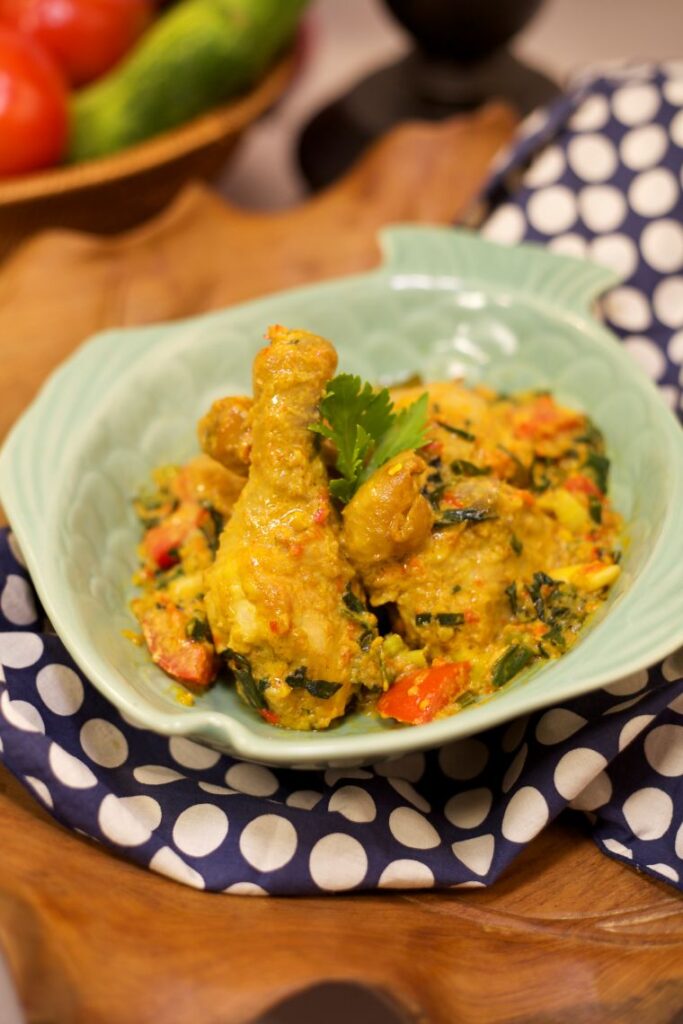
Manado-Style Fragrant Chicken in Spiced Herb Broth
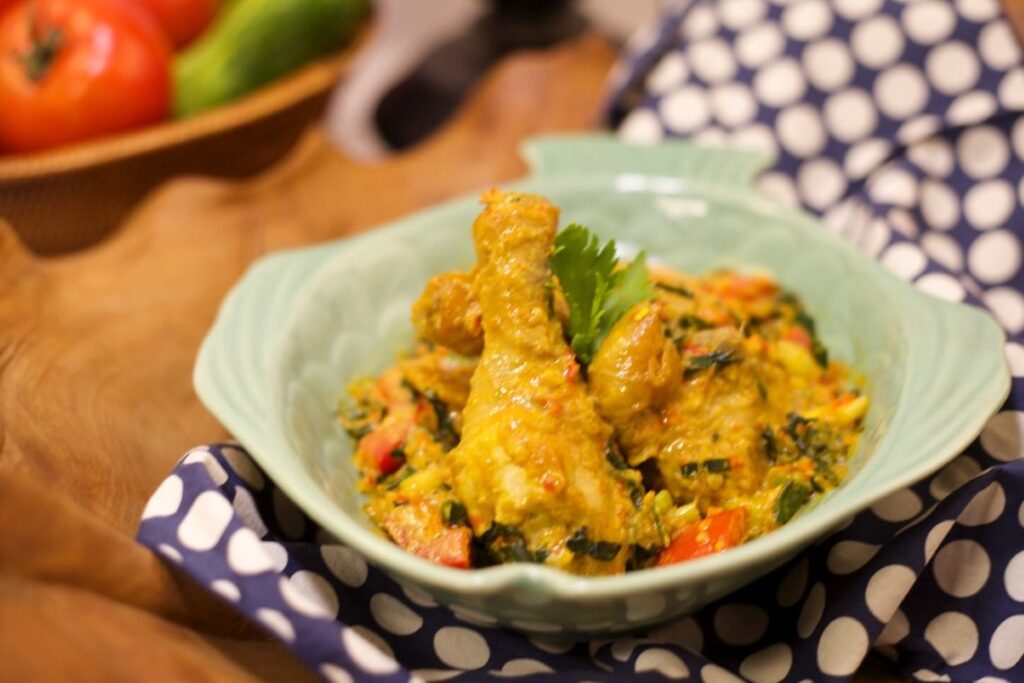
From My Kitchen to Yours — Sandra DjohanAyam Woku is a celebrated traditional chicken dish from Manado, North Sulawesi, Indonesia, known for its vibrant spices, fresh herbs, and bold, aromatic flavours. The dish brings together the warmth of turmeric and ginger, the fragrance of lemongrass and makrut lime leaves, the distinctive aroma of pandan and turmeric leaves, and the fresh, peppery notes of basil.
Unlike a rich coconut-based curry, Ayam Woku is traditionally cooked in a fragrant, spiced broth that allows the freshness of the herbs and the natural flavour of the chicken to shine. The result is a dish that is savoury, gently spicy, aromatic, and wonderfully refreshing.
In my kitchen, I like to begin by brining the chicken before cooking. This simple preparation helps season the meat more evenly, retain moisture during cooking, and develop a deeper flavour from within. When combined with the aromatic Woku spice paste, every piece of chicken becomes tender, juicy, and full of character.
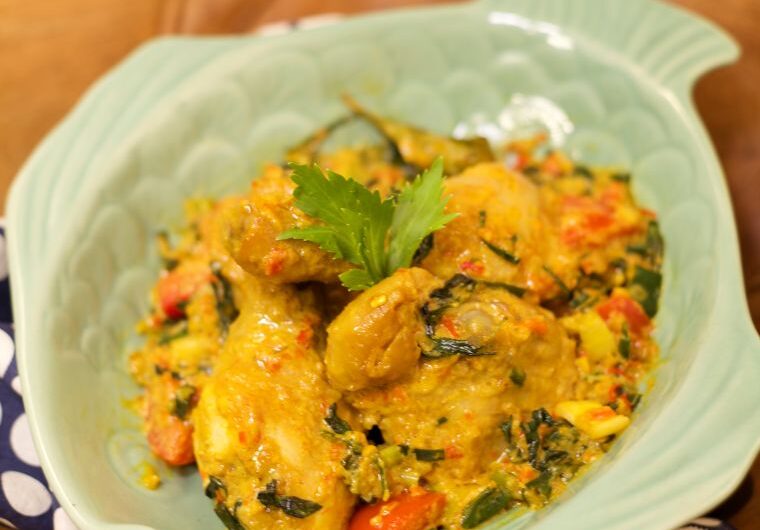
Ayam Woku
Course: Lunch, DinnerCuisine: Indonesian, Manado, North SulawesiDifficulty: Low4
servings25
minutes43
minutesKeep the screen of your device on
Ingredients
- A. For the Chicken Brine
½ whole chicken, approximately 600–800 g, cut into 6 pieces
1 litre cold water
30 g fine salt
10 g granulated sugar
2 slices fresh ginger, optional
- B. For the Woku Spice Paste
5 shallots, peeled
3 large red chillies, deseeded if preferred
2 curly red chillies
4 candlenuts, dry-roasted until lightly golden
2 cm fresh turmeric, approximately 15 g, lightly charred or toasted
2 cm fresh ginger, approximately 15 g
- C. For the Woku Aromatics
3 makrut lime leaves, central veins removed
1 pandan leaf, finely sliced
1 turmeric leaf, finely sliced, if available
2 stalks lemongrass, tender parts thinly sliced on the diagonal
2 tablespoons neutral cooking oil
500 ml water or unsalted chicken stock
- D. For Seasoning and Finishing
1 medium tomato, cut into wedges
1 spring onion, cut into 1 cm lengths
5 sprigs lemon basil or Indonesian kemangi, leaves picked
1 teaspoon salt, or to taste
½ teaspoon granulated sugar, or to taste
Chef's note: The original recipe uses Indonesian kemangi, which has a distinctive, highly aromatic flavour. If unavailable, Thai basil is a suitable alternative, although the aroma will be slightly different.
Method
- STEP 1 — Brine the Chicken for Deeper Flavour
1. In a large bowl, combine the cold water, salt, and sugar. Stir until the salt and sugar have completely dissolved. Add the ginger slices if using.
2. Remove any excess fat or loose skin from the chicken, then add the chicken pieces to the brine. Make sure all the pieces are completely submerged.
3. Cover the bowl and refrigerate for 2–4 hours. For smaller chicken pieces, 2 hours is sufficient; larger pieces benefit from the longer brining time.
4. Once brined, remove the chicken from the liquid and discard the brine. Briefly rinse only if needed to remove excess surface salt, then pat the chicken thoroughly dry with paper towels.
Why brine the chicken first?
Brining gives the chicken a more evenly seasoned flavour instead of relying solely on the seasoning in the cooking liquid. The salt helps the meat retain moisture during cooking, while the small amount of sugar balances the seasoning. This is especially useful for Ayam Woku, where the chicken simmers in a fragrant broth and needs to remain juicy while absorbing the flavours of the spice paste.
Brining does not replace the Woku spices; rather, it creates a well-seasoned foundation that allows the aromatics to complement the natural flavour of the chicken.
Important: Keep the chicken refrigerated throughout brining. Do not leave it at room temperature. - STEP 2 — Prepare the Woku Spice Paste
1. Place the shallots, large red chillies, curly red chillies, roasted candlenuts, turmeric, and ginger in a food processor or mortar.
2. Grind or blend into a smooth, thick paste. Add a tablespoon of water only if needed to help the ingredients blend.
3. Scrape down the sides of the processor and blend again to ensure that the candlenuts and aromatics are evenly incorporated.
4. Set aside.
Chef's tip: Roasting the candlenuts enhances their nutty aroma and helps give the spice paste a fuller, rounded flavour. Never use candlenuts raw without cooking them thoroughly. - STEP 3 — Build the Aromatic Base
1. Heat the cooking oil in a heavy-based saucepan or deep sauté pan over medium heat.
2. Add the ground spice paste and sauté for 5–8 minutes, stirring frequently. Cook until the paste becomes fragrant, loses its raw smell, and begins to deepen slightly in colour.
3. Add the sliced makrut lime leaves, pandan leaf, turmeric leaf, and lemongrass.
4. Continue cooking for another 2–3 minutes, stirring gently to release the essential oils from the leaves and lemongrass.
The spice paste should smell fresh, citrusy, and warmly spiced. Avoid rushing this step, as properly cooking the paste is essential for a well-rounded Woku sauce. - STEP 4 — Coat and Sear the Chicken
1. Add the brined and dried chicken pieces to the pan.
2. Turn the chicken gently through the spice paste, ensuring that every piece is well coated.
3. Cook for 5–7 minutes, turning occasionally, until the surface of the chicken changes colour and the spices cling to the meat.
4. Allow the chicken to cook in the aromatic paste for a few minutes before adding the liquid. This brief cooking stage helps the flavours adhere to the chicken and creates a more fragrant foundation for the broth.
The chicken does not need to be fully cooked at this stage; it will finish cooking in the simmering liquid. - STEP 5 — Simmer Until Tender
1. Pour in the 500 ml water or unsalted chicken stock. Stir gently to loosen any spice paste from the bottom of the pan.
2. Add the salt and sugar, beginning with slightly less than the stated amounts because the chicken has already been brined.
3. Bring the liquid to a gentle simmer, then reduce the heat to medium-low.
4. Cover partially and simmer for approximately 20–30 minutes, turning the chicken occasionally so that the pieces cook evenly.
5. Check the liquid as the chicken cooks. If it reduces too quickly before the chicken is tender, add a little hot water. If the sauce is too thin near the end, simmer uncovered for several minutes to concentrate the flavours.
6. Check that the thickest part of the chicken reaches an internal temperature of 74°C. Adjust the seasoning only after the chicken has cooked and the broth has reduced slightly.
The finished broth should be fragrant and flavourful, with a light coating consistency rather than a thick curry sauce. - STEP 6 — Add the Fresh Finishing Ingredients
1. Add the tomato wedges and sliced spring onion during the final 3–5 minutes of cooking.
2. Simmer gently until the tomatoes soften slightly but retain their shape.
3. Taste the broth and adjust the salt, sugar, or chilli balance as needed.
4. Turn off the heat and fold in the fresh kemangi leaves. Let the residual heat wilt the leaves gently without cooking away their delicate aroma.
5. Allow the dish to rest for 3–5 minutes before serving. This brief resting period allows the flavours to settle and the chicken to absorb a little more of the aromatic broth.
Notes
- On flavour: A good Ayam Woku should be fragrant before it is spicy. The lemongrass, lime leaves, pandan, and turmeric leaf provide the distinctive herbal character, while the spice paste gives the broth warmth and depth.
On the chicken: Brining is a small step that makes a noticeable difference. The seasoning penetrates beyond the surface, and the meat is less likely to become dry during simmering. Because the chicken is brined first, always taste the sauce before adding more salt.
On the chilli: For a gentler version, remove the seeds from the large red chillies and reduce the curly red chillies. For a more traditional fiery character, adjust the quantity of hot chillies to your preference.
On the herbs: Fresh turmeric leaf and kemangi are particularly valuable for the signature Manado aroma. If turmeric leaf is unavailable, omit it rather than replacing it with a large quantity of another herb. Add the basil at the very end to preserve its freshness.
On preparation ahead: The spice paste can be prepared a day in advance and refrigerated in an airtight container. The chicken can also be brined ahead, but keep it refrigerated and cook it after brining. For the freshest herbal flavour, add the kemangi just before serving.
TO SERVE
Serve Ayam Woku piping hot with steamed white rice to soak up the aromatic broth. For a complete Manado-style meal, accompany it with sautéed water spinach, fresh sliced cucumber, or a spicy sambal.
The beauty of this dish lies in the balance of fresh herbs, warming spices, tender chicken, and a lively, fragrant broth. It is a wonderful expression of North Sulawesi cooking: bold, colourful, and full of life.
From My Kitchen to Yours — Sandra Djohan
Clarify the chicken quantity and servings. Resolve the brining and cooking timeline