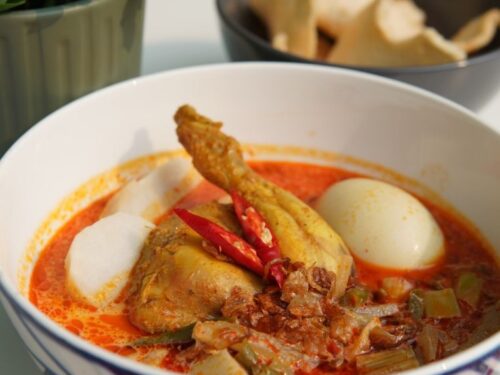
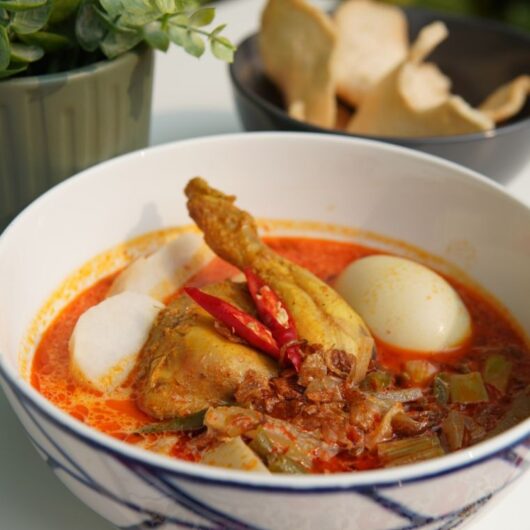
Rice Cake Sayur With Chicken Curry
Course: MainCuisine: IndonesianDifficulty: Easy6
servings30
minutes1
hourKeep the screen of your device on
Ingredients
- Chicken
1 whole chicken, about 750 g, cut into 10–12 bone-in pieces
1 tsp salt
1 tbsp lime juice
- Toasted spice paste
10 small shallots, peeled
4 garlic cloves, peeled
3 candlenuts
2 large red chilies, deseeded if you prefer a milder curry
2 cm piece fresh turmeric, peeled and sliced
2 cm piece fresh ginger, peeled and sliced
1 tbsp dried shrimp (ebi), briefly rinsed, drained, and patted dry
2–3 tbsp water, as needed for blending
- Coconut broth and aromatics
3–4 tbsp cooking oil
2 cm piece galangal, bruised
2 stalks lemongrass, white parts only, bruised
8 makrut lime leaves, lightly torn
2 Indonesian bay leaves (daun salam)
2 tbsp curry powder
1.5 liters medium-thick coconut milk, divided into 1.2 liters and 300 ml
2 tbsp plain, unsweetened Dancow milk powder
1 tomato, cut into 6 wedges
1 tbsp finely shaved palm sugar
1 tsp ground pepper
½ tsp seasoning powder, optional
½–1 tsp salt, or to taste
- Vegetables
300 g chayote, weighed after peeling and removing the seed, cut into matchsticks
150 g jicama (bengkuang), peeled and cut into matchsticks
100 g carrots, peeled and cut into matchsticks
100 g green beans, trimmed and cut into 2–3 cm lengths
- To serve
4 medium ready-made lontong, sliced about 2 cm thick
4–6 telur pindang (Indonesian spiced boiled eggs), halved
Fried shallots
Red Padang crackers (kerupuk merah)
Ready-to-use ground soybean powder, optional
Chili sambal, optional
Directions
- Marinate the chicken and prepare the vegetables
Rub the chicken pieces evenly with the salt and lime juice. Cover and refrigerate for 30 minutes. While the chicken marinates, prepare the spice paste and vegetables.
Cut the chayote, jicama, and carrots into matchsticks about 3 mm thick so they cook evenly. Keep the vegetables in separate bowls because they go into the broth at different times. If the peeled chayote feels particularly sticky, gently rub it with a little salt, then rinse and drain well. - Dry-toast and blend the spice paste
Heat a dry skillet over low heat. Toast the candlenuts first, turning them regularly until lightly golden and fragrant. Transfer them to a plate.
Add the shallots, garlic, chilies, turmeric, and ginger to the same skillet. Turn them frequently for about 4–6 minutes, until fragrant, lightly browned in spots, and the shallots begin to soften. Remove any smaller pieces early if they start to brown faster.
Toast the dried shrimp last. Stir for 30–60 seconds, just until fragrant, then take it out of the pan. Let the toasted ingredients cool slightly before blending them into a smooth paste. Add water one tablespoon at a time, only as needed to get the blades moving. - Fry the aromatics and spice paste
Heat the oil in a heavy-bottomed pot over medium heat. Add the galangal, lemongrass, lime leaves, and daun salam. Stir for 1–2 minutes until fragrant.
Add the blended spice paste and fry for 7–10 minutes, scraping the bottom of the pot regularly. The paste is ready when it thickens, loses its raw onion smell, and a little oil begins to show around the edges. Stir in the curry powder and cook for another 30–60 seconds, just until fragrant. - Simmer the chicken in coconut milk
Lift the chicken out of the marinade and add it to the pot. Turn the pieces in the spice paste for 4–5 minutes, until evenly coated and the outside of the chicken changes color.
Gradually pour in 1.2 liters of coconut milk, stirring along the bottom to loosen the cooked paste. Heat until small bubbles appear around the edges. Reduce the heat and add the palm sugar, ground pepper, and optional seasoning powder.
Simmer gently for 20–25 minutes, stirring occasionally. You can also lift the broth with a ladle and pour it gently back into the pot to keep it moving. Keep the heat low enough for a steady, gentle simmer. - Add the vegetables in stages
Once the chicken is starting to turn tender, add the vegetables in the following order. Start timing each addition once the broth returns to a gentle simmer.
1. Carrots and jicama. Simmer for 4–5 minutes.
2. Chayote and tomato. Add them to the pot and simmer for another 5–7 minutes, until the chayote is nearly tender.
3. Green beans. Add them last and simmer for 3–4 minutes, until bright green with a slight bite.
Taste a piece of chayote. It should be tender enough to bite through and still hold its shape. If the vegetables are ready before the chicken, lift them out with a slotted spoon and return them just before serving. If using a thermometer, check that the thickest part of the chicken reaches 74°C (165°F) without the probe touching bone. - Finish with milk powder and adjust the seasoning
Take about 100 ml from the remaining 300 ml of coconut milk and whisk it with the milk powder until smooth. Strain the mixture if any lumps remain.
Pour the milk mixture and the rest of the coconut milk into the pot, stirring gently. Heat over low heat for 3–5 minutes until the broth is hot and the flavors come together. Taste before adding extra salt. The dried shrimp, curry powder, and seasoning powder can already contribute saltiness. - Assemble and serve
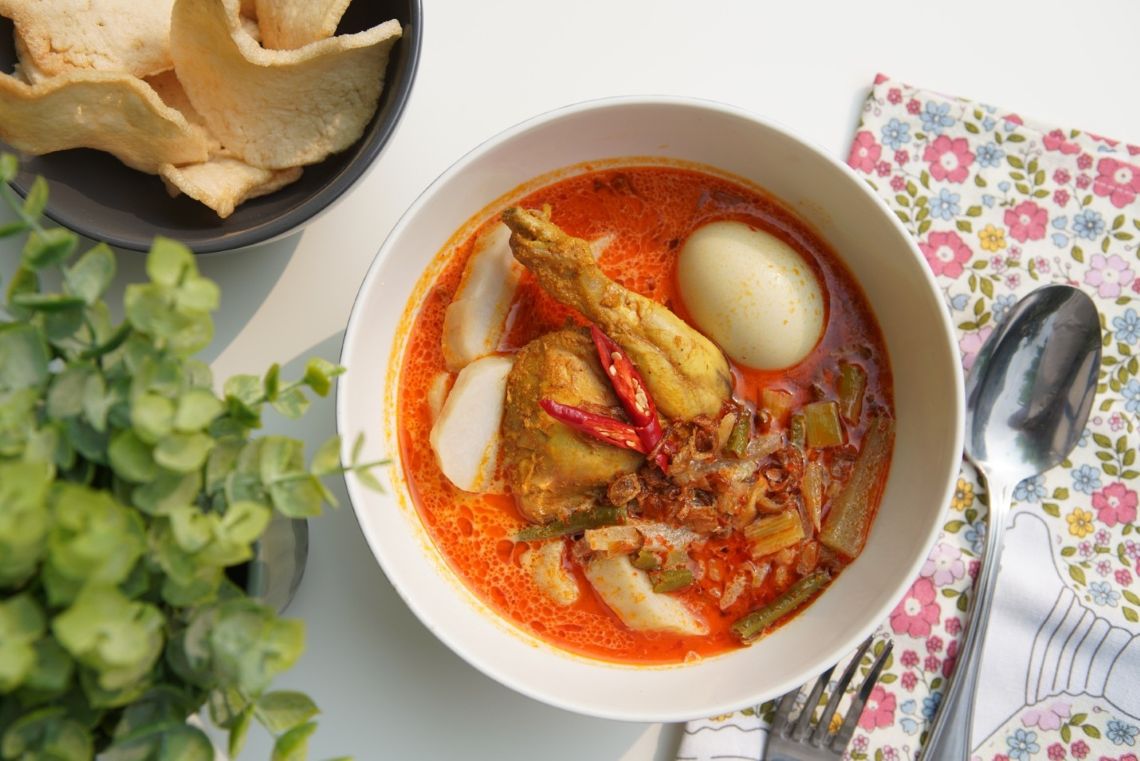
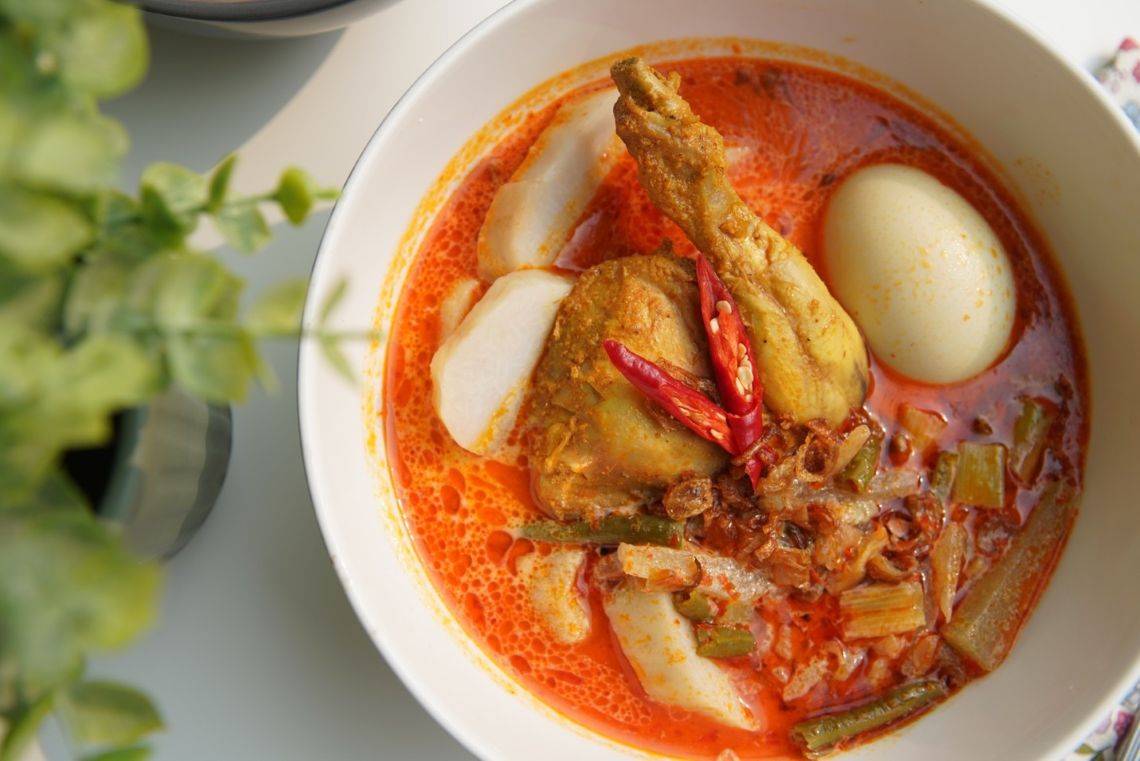
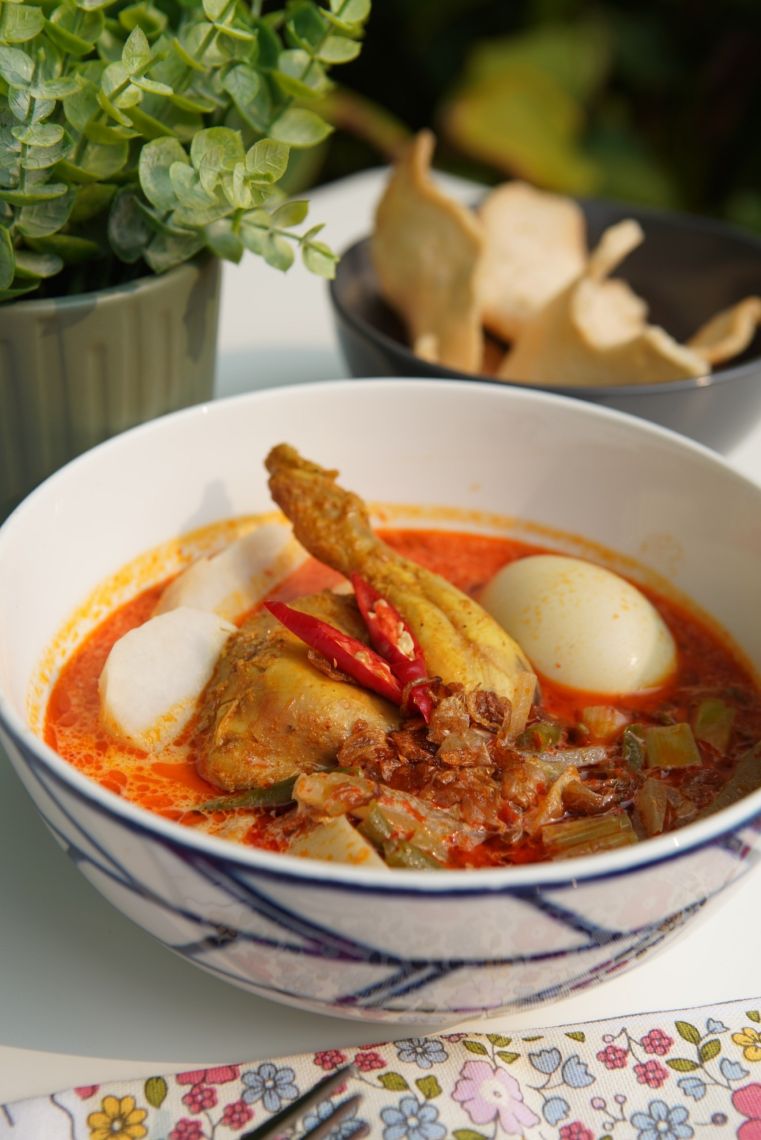
Arrange the lontong slices in shallow bowls. Add the chicken and vegetables, then ladle the hot coconut broth over the rice cakes. Top with halved telur pindang and a generous sprinkle of fried shallots. Serve the red Padang crackers on the side so they stay crisp. Add a light dusting of ground soybean powder or a spoonful of sambal if you like.