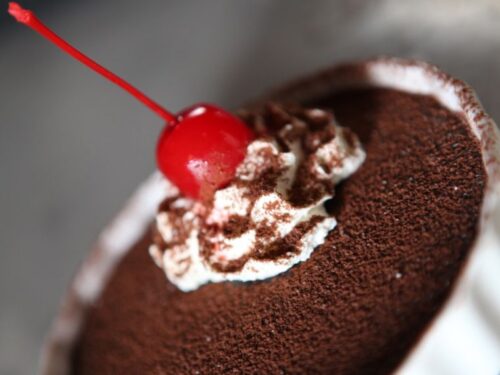
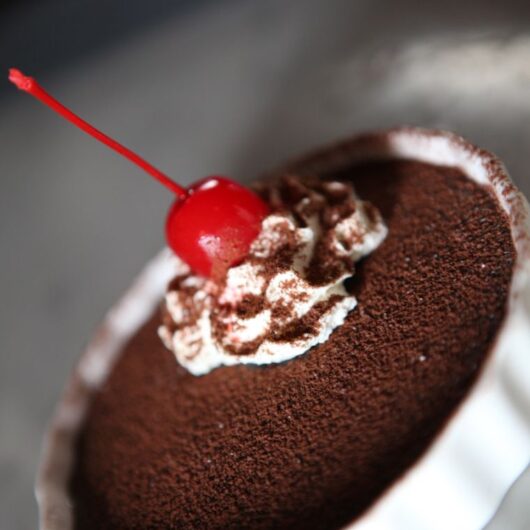
Death By Chocolate
Course: DessertCuisine: FrenchDifficulty: IntermediateServings
6
servingsPrep time
25
minutesCooking time
15
minutesCook Mode
Keep the screen of your device on
Ingredients
- For the chocolate base
190 g dark chocolate, preferably 65–70% cocoa, finely chopped
15 g unsalted butter, cut into small pieces
A small pinch of fine salt
- For the sabayon
2 large whole eggs, approximately 100 g without shells
3 large egg yolks, approximately 50–55 g
55 g caster sugar
30 ml water
1 teaspoon vanilla extract
- For the whipped cream
250 ml cold whipping cream, 35–40% fat
- For decoration, optional
Lightly whipped cream
Dark chocolate shavings
Fresh raspberries
- Equipment
Digital kitchen thermometer
Heatproof mixing bowls
Small saucepan
Electric hand mixer or balloon whisk
Flexible spatula
6 small dessert glasses or ramekins
Directions
- 1. Prepare your equipment and ingredients
Arrange six dessert glasses on a tray so they are easy to move into the refrigerator.
Fill a saucepan with approximately 3 cm of water. Choose a heatproof bowl that rests securely over the saucepan without its base touching the water.
Bring the water to a gentle simmer, then reduce the heat. The water should release gentle steam, without boiling vigorously.
Measure all ingredients before beginning; the final mixing works best when everything is ready. - 2. Melt the chocolate and butter
Place the chopped chocolate, butter and salt in a dry heatproof bowl.
Set it over the gently simmering water and stir occasionally until almost melted. Remove the bowl and continue stirring until completely smooth.
Keep steam and splashes out of the chocolate.
Set aside while preparing the remaining components. Aim for a temperature of 40–45°C when combining it with the sabayon: warm and fluid, without being hot. - 3. Whip the cream to soft peaks
Pour the cold cream into a chilled bowl.
Beat on medium speed until it thickens and forms soft peaks. When you lift the whisk, the tip should fold over gently, and the cream should remain smooth and supple.
Do not whip until stiff; softly whipped cream blends more easily into the chocolate base.
Refrigerate briefly while you make the sabayon. - 4. Whisk the eggs and sugar
Place the whole eggs, egg yolks, caster sugar and water in a clean heatproof bowl.
Whisk immediately until evenly combined and slightly foamy. Do not leave the sugar sitting on the yolks before mixing. - 5. Cook the sabayon over the water bath
Set the bowl over the gently simmering water.
Whisk continuously, reaching around the sides and across the bottom, until the mixture becomes pale, thick and voluminous. This generally takes 7–10 minutes, depending on your equipment and heat.
Use a thermometer to check the mixture in several places, without touching the bowl. Bring it to 74°C / 165°F, then remove it from the heat immediately. Keep whisking throughout to prevent the eggs from scrambling.
Temperature matters as well as appearance: the American Egg Board identifies 165°F as an endpoint for cooking eggs safely. American Egg Board - 6. Whip briefly off the heat
Add the vanilla.
Using an electric mixer, beat the warm sabayon for approximately 3–5 minutes, until thick, glossy and cooled to around 35–40°C.
When lifted, the whisk should leave a ribbon on the surface that remains visible briefly before sinking back into the mixture.
Do not cool it completely; a cold sabayon can make the chocolate thicken too quickly. - 7. Combine the sabayon and chocolate
Check that the melted chocolate is still fluid, ideally 40–45°C. If necessary, warm it briefly over the water bath.
Whisk approximately one-third of the sabayon into the chocolate until smooth. This first addition loosens the chocolate, so a little loss of air is expected.
Add the remaining sabayon in two additions, folding gently with a spatula.
Sweep down through the centre, along the bottom and up the side of the bowl, turning the bowl as you work. Continue until evenly combined. - 8. Fold in the whipped cream
The chocolate mixture should now be slightly warm, approximately 32–35°C, and still supple.
Fold in one-third of the whipped cream to lighten it.
Add the remaining cream in two batches, folding gently until the mousse has an even colour and no visible cream streaks.
Scrape the bottom of the bowl to incorporate any heavier chocolate mixture. Stop once combined; unnecessary mixing reduces the aeration. - 9. Portion and chill
Immediately spoon or pipe the mousse into six dessert glasses.
Cover and refrigerate for at least 6 hours, preferably overnight, until set.
The finished mousse should hold its shape on a spoon while remaining soft and creamy. - 10. Decorate and serve
Just before serving, top with a small spoonful of whipped cream and chocolate shavings. Add raspberries if desired.
For a slightly softer texture, remove the glasses from the refrigerator 5–10 minutes before serving.
Chef’s Notes
- • Why use sabayon? Whisking the eggs with sugar over gentle heat creates a thick foam that gives the mousse structure and a smooth mouthfeel. Whipped cream adds further lightness.
• No separate egg whites are needed. Adding the original raw whipped whites would reintroduce uncooked eggs and change the balance of this recipe.
• Choose chocolate that melts smoothly. Couverture or a good-quality dark chocolate bar works well. Avoid chocolate chips formulated to hold their shape.
• Use temperatures as a guide. Chocolate that is too cold may form small flecks; a base that is too hot will soften the whipped cream and reduce volume.
• Fold by appearance, not a fixed count. Stop when the mixture is uniform, rather than following a strict number of folds.
• This is a reformulated adaptation. Its texture and yield differ from the supplied raw egg recipe; the method has not been kitchen-tested here.
Storage
Keep covered in the refrigerator at 4°C or colder and enjoy within 2–3 days. Add decorations shortly before serving for the best presentation.
From My Kitchen to Yours — Sandra Djohan