A Little Taste of Japan, From My Kitchen to Yours

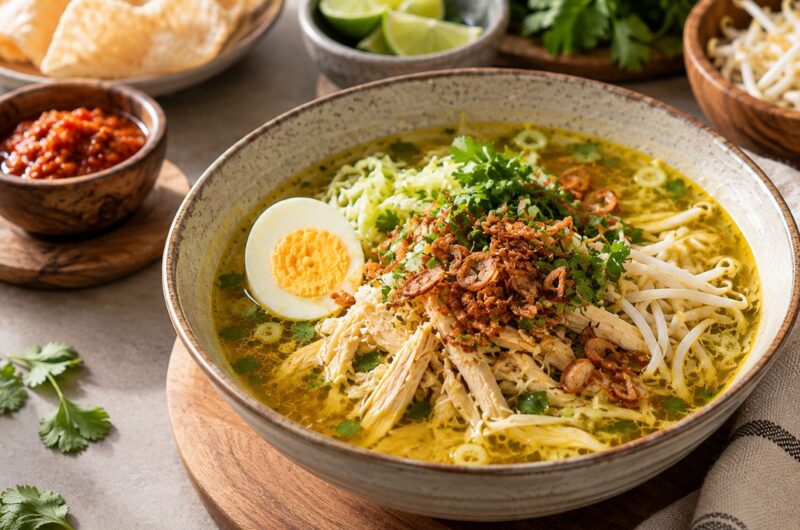
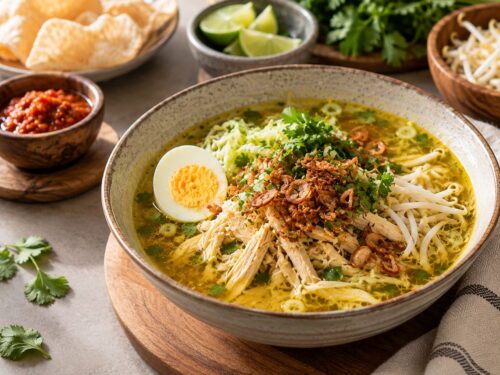
Soto Ayam Ambengan
Course: Main, Lunch, DinnerCuisine: IndonesianDifficulty: Easy, ModerateServings
15
servingsPrep time
1
hourCooking time
45
minutesCook Mode
Keep the screen of your device on
Ingredients
- Part 1: MAIN
1/2 whole chicken (broiler), cut into pieces
3 tbsp vegetable oil
2 stalks lemongrass, bruised
3 leaves kaffir lime leaf
2 leaves bay leaf (daun salam)
3 tbsp powdered chicken stock
1 tsp granulated sugar
- Part 2: GROUND SPICES PASTE
7 Bulbs Shallotts
5 cloves garlic
2 candlenuts (kemiri)
3 cm turmeric
1 cm ginger
2 tsp salt
- Part 3: FILLING
200 gr bean sprouts, blanched in hot water and drained
100 gr dried glass noodles (soun), soaked in hot water until soft
2 hard-boiled eggs, peeled and cut into pieces
- Part 4: ACCOMPANIMENTS
to taste fried shallots
to taste chopped celery leaves
to taste bird's eye chili sambal
to taste lime wedges
to taste sweet soy sauce (kecap manis)
to taste koya (recipe below)
Directions
- Part 1: Prepare the spice paste
1. Prepare and grind the aromatics.
Peel the shallots, garlic, turmeric, and ginger. Cut them into smaller pieces to make blending easier.
Place the shallots, garlic, candlenuts, turmeric, ginger, and salt in a blender or food processor. Blend until a smooth paste forms. If necessary, add a small amount of oil to help the ingredients blend evenly.
A smooth paste allows the spices to distribute throughout the broth without leaving large pieces of aromatics.
Chef's tip: Fresh turmeric provides the characteristic golden-yellow color of Soto Ayam Ambengan and a more vibrant aroma than dried turmeric powder. - Part 2: Prepare the chicken broth
2. Simmer the chicken.
Bring 2.5 - 3 liters of water to a boil in a large pot. Add the chicken pieces and reduce the heat to maintain a gentle simmer.
Cook for approximately 20–30 minutes, occasionally skimming off any foam that rises to the surface. This helps produce a cleaner-tasting broth.
The chicken does not need to be completely cooked at this stage because it will continue simmering after the spice paste is added.
Chef's tip: Avoid boiling the chicken vigorously. A gentle simmer helps keep the broth clearer and the meat tender. - Part 3: Cook the spice paste
3. Sauté the ground spices.
Heat the vegetable oil in a separate frying pan over medium heat.
Add the ground spice paste and sauté for 5–8 minutes, stirring frequently. Continue cooking until the paste becomes fragrant, slightly darker in color, and no longer smells raw.
Properly cooked spice paste develops a deeper flavor and prevents the broth from tasting harsh or undercooked.
4. Add the aromatic leaves and lemongrass.
Add the bruised lemongrass, kaffir lime leaves, and Indonesian bay leaves to the spice paste.
Sauté for another 1–2 minutes until the aromatics release their fragrance. Add the chicken stock powder and sugar, stirring until evenly combined.
The lemongrass and kaffir lime leaves provide a fresh citrus aroma, while the Indonesian bay leaves add a distinctive herbal note. - Part 4: Combine and simmer the soup
5. Add the spice mixture to the broth.
Transfer the cooked spice paste and aromatics into the pot containing the simmering chicken broth.
Stir gently to distribute the spices evenly. Continue cooking over low to medium-low heat for another 20–30 minutes, or until the chicken is completely tender and the broth has developed a rich, aromatic flavor.
Check the liquid level occasionally and add hot water if the broth reduces too much.
Taste and adjust the seasoning with additional salt, chicken stock powder, or a small amount of sugar if necessary.
The finished broth should be savory, aromatic, and gently balanced, with a clear turmeric fragrance and no overpowering sweetness.
Optional for a deeper broth: Once the chicken is cooked, remove it from the pot. Return the bones to the broth and simmer for another 10–15 minutes, then strain or remove the bones before serving. - Part 5: Prepare the chicken and fillings
6. Shred the chicken.
Remove the cooked chicken from the broth and allow it to cool until easy to handle.
Separate the meat from the bones, discard the bones and any unwanted skin, and shred the meat into bite-sized pieces.
Set the shredded chicken aside and keep it warm. For an alternative texture, you may briefly fry the shredded chicken until the edges are lightly golden before serving.
7. Prepare the bean sprouts.
Clean the bean sprouts and blanch them in boiling water for approximately 20–30 seconds.
Drain immediately to preserve their fresh flavor and slight crunch. Avoid overcooking, as soft bean sprouts can lose their texture in the hot soup.
8. Prepare the glass noodles.
Soak the dried glass noodles in hot water according to the package instructions until soft.
Drain thoroughly and cut into shorter lengths if necessary. Do not soak them for too long, as over-softened noodles may become mushy when covered with hot broth.
9. Prepare the eggs.
Peel the hard-boiled eggs once cooled and cut them into halves or quarters.
Set aside until serving. The eggs add richness and protein while complementing the tender chicken and delicate noodles. - Part 6: Make the koya
10. Prepare the prawn crackers.
If using uncooked prawn crackers, fry them until fully expanded and crisp. Alternatively, use ready-to-eat fried prawn crackers.
Allow the crackers to cool completely before grinding.
11. Grind the koya ingredients.
Place the crispy prawn crackers and fried garlic in a blender or food processor. Grind until they form a fine, even powder.
Add a small pinch of mushroom stock powder or other seasoning if desired, then mix thoroughly.
Transfer the koya to a dry, airtight container until ready to serve.
Why is koya important?
Koya is the signature finishing ingredient of Soto Ayam Ambengan. The prawn crackers contribute a distinctive seafood savoriness, while the fried garlic provides a warm, roasted aroma. When sprinkled over the hot soup, the powder blends into the broth, enriching its flavor and giving it a slightly fuller texture. - Part 7: Assemble and serve
12. Arrange the soup fillings.
Place a portion of glass noodles, bean sprouts, shredded chicken, and egg pieces in each serving bowl.
Arrange the ingredients neatly so that the chicken and egg remain visible on top.
13. Ladle in the hot broth.
Pour the hot, seasoned chicken broth over the fillings until they are sufficiently covered.
Add fried shallots and chopped celery leaves for fragrance and texture.
14. Finish with koya and accompaniments.
Sprinkle koya generously over the soup just before serving.
Serve immediately with lime wedges, bird's-eye chili sambal, and sweet soy sauce on the side. Each person can adjust the acidity, heat, and sweetness according to taste.
For the best experience, add the koya at the last moment so its aroma remains fresh and its flavor blends beautifully with the hot broth.
Notes
- Chef Sandra's kitchen notes
• Take time to cook the spice paste. Properly sautéed spices give the broth a deeper flavor and eliminate the raw aroma of garlic and turmeric.
• Keep the broth at a gentle simmer. This helps develop the chicken flavor without making the soup unnecessarily cloudy.
• Balance the seasoning carefully. The soup should taste savory and aromatic. Sugar is used to balance the spices rather than make the broth sweet.
• Do not skip the koya. It is the defining feature that distinguishes Soto Ayam Ambengan from many other Indonesian chicken soups.
• Keep the garnishes separate until serving. This preserves the crunch of the bean sprouts and prevents the glass noodles from absorbing too much broth.
• Serve piping hot. Hot broth releases the fragrance of the spices and allows the koya to blend naturally into the soup. - Storage and reheating
• Chicken and broth: Store separately or together in airtight containers in the refrigerator for up to 3 days.
• Noodles and bean sprouts: Store separately to preserve their texture.
• Koya: Keep in a dry, airtight container in a cool place. Use a clean, dry spoon to prevent moisture from entering.
• Reheating: Reheat the broth until boiling and ensure the chicken is thoroughly heated. Assemble each bowl immediately before serving.
From My Kitchen to Yours — Sandra Djohan