
Indonesian Chicken and Tenggiri Fish Siomay with Spicy Peanut Sauce
Course: AppetizerCuisine: IndonesianDifficulty: Moderate30
servings35
minutes40
minutes460
kcalKeep the screen of your device on
Ingredients
- A. Chicken and fish siomay
250 g boneless chicken thigh fillets
300 g tenggiri fish fillet (Spanish mackerel), skinless and boneless
90 g chayote, finely grated and squeezed dry
2 tsp salt
2 tbsp granulated sugar
2 tsp chicken stock powder or MSG, according to preference
½ tsp ground white pepper
1 egg white
2 tbsp fish sauce
1 tbsp finely minced garlic
3 stalks spring onions, finely sliced
3 tbsp neutral cooking oil
100–150 ml ice water or crushed ice
220 g tapioca starch
40 g medium-protein wheat flour
- B. Spicy peanut sauce
100 g roasted peanuts
5 cloves garlic
7 shallots
10 curly red chilies
3 candlenuts (kemiri)
2 bird's-eye chilies
80 ml neutral cooking oil
80 g Indonesian palm sugar, chopped
3 tbsp tamarind water
3 kaffir lime leaves
550 ml water
3 tbsp chili sauce
1 tbsp rice flour
1 tsp salt, or to taste
- C. To serve
Fresh calamansi or Indonesian lime (jeruk limau), halved
Directions
- Part 1: Prepare the vegetables
1. Grate and squeeze the chayote.
Peel the chayote and grate it finely. Place the grated chayote in a clean kitchen towel or fine-mesh strainer and squeeze firmly to remove excess moisture. Measure 90 g after squeezing.
Removing excess water is important because too much moisture can make the siomay mixture loose and difficult to shape. The chayote adds moisture and tenderness without making the dumplings watery.
2. Sauté the spring onions.
Finely slice the spring onions. Heat the 3 tablespoons of cooking oil in a small frying pan over medium-low heat. Add the spring onions and sauté for 30–60 seconds, just until fragrant and slightly softened. Avoid browning them.
Remove from the heat and set aside, including the oil. Allow the mixture to cool slightly before adding it to the dumpling mixture. - Part 2: Prepare the siomay mixture
3. Process the first portion of chicken.
Cut the chicken thigh into small pieces. Place half of the chicken in a food processor with the minced garlic, salt, sugar, chicken stock powder or MSG, and white pepper.
Process until the mixture becomes smooth, sticky, and cohesive. This initial processing helps develop the protein structure that binds the ingredients together, giving the finished siomay a springy texture.
4. Add the remaining chicken and fish.
Add the remaining chicken, tenggiri fish, egg white, fish sauce, and some of the ice water or crushed ice. Process again until smooth and evenly combined, scraping down the sides of the bowl when necessary.
Add the remaining ice water gradually, stopping when the mixture reaches the desired consistency. The mixture should be moist and sticky but not runny.
Keep the ingredients cold during processing. A cold mixture helps preserve the texture of the fish and chicken and prevents the mixture from becoming greasy or overly soft.
5. Incorporate the chayote, spring onions, and flour.
Transfer the processed mixture to a large mixing bowl. Add the squeezed chayote, sautéed spring onions together with their oil, wheat flour, and tapioca starch.
Mix thoroughly with a spatula until everything is evenly distributed. The mixture should be thick, sticky, and easy to scoop.
Avoid adding all the water automatically if the mixture is already soft enough. If it feels too loose to hold its shape, refrigerate it for 15–20 minutes before forming the dumplings. - Part 3: Shape and steam the siomay
6. Prepare the steamer.
Fill a steamer with water and bring it to a steady boil. Lightly brush the steamer tray with cooking oil or line it with perforated parchment paper to prevent sticking.
Keep the heat at a level that produces consistent steam throughout the cooking process.
7. Shape the dumplings.
Using two spoons, scoop the mixture into rounded portions of approximately 30–35 g each. Arrange the portions on the prepared steamer tray, leaving a little space between them so the steam can circulate evenly.
Use a lightly oiled spoon or fork to neaten the sides and gently texture the tops. Try to keep the dumplings similar in size so they cook at the same rate.
8. Steam until fully cooked.
Place the tray in the steamer and cover with a lid. Steam over medium heat for approximately 20 minutes, depending on the size of the dumplings.
Avoid opening the lid frequently, as this may interrupt the cooking process. The siomay should become firm while remaining tender and moist.
For food safety, check that the center of a dumpling reaches 74°C. If the dumplings are larger than the suggested size, allow additional cooking time as needed.
Remove from the steamer and keep warm while preparing the peanut sauce. - Part 4: Prepare the spicy peanut sauce
9. Prepare the aromatics.
Peel and roughly chop the garlic and shallots. Lightly crush the candlenuts. Slice the curly red chilies and bird's-eye chilies.
For a milder sauce, reduce the bird's-eye chilies or remove some of the chili seeds. The curly red chilies provide color and flavor, while the bird's-eye chilies contribute a sharper heat.
10. Sauté the aromatics.
Heat the 80 ml of cooking oil in a saucepan over medium heat. Add the shallots, garlic, and candlenuts. Sauté for approximately 2–3 minutes, stirring frequently, until fragrant and softened.
Add the curly red chilies and bird's-eye chilies. Continue sautéing for another 2 minutes until the chilies have softened.
Avoid burning the garlic, as this can introduce bitterness into the peanut sauce.
11. Blend the peanut mixture.
Transfer the sautéed aromatics to a blender. Add the roasted peanuts and a small amount of the measured water.
Blend until smooth or slightly textured, depending on your preference. Add water gradually to help the mixture blend easily.
For a traditional-style peanut sauce, a slightly coarse texture is perfectly acceptable and gives the sauce a more rustic character.
12. Simmer the sauce with palm sugar and tamarind.
Return the blended peanut mixture to the saucepan. Add the kaffir lime leaves and chopped palm sugar, then pour in the remaining water.
Stir in the tamarind water, chili sauce, and salt. Bring the sauce to a gentle boil, stirring regularly to prevent it from sticking to the bottom of the pan.
Reduce the heat and simmer for 10–15 minutes. As the sauce cooks, the peanuts release their natural oils and the palm sugar dissolves, creating a deeper, richer flavor.
Taste the sauce and adjust the seasoning if necessary. It should have a balanced combination of nuttiness, sweetness, acidity, saltiness, and heat.
13. Thicken the sauce with rice flour.
Place the rice flour in a small bowl and mix with 2–3 tablespoons of cold water until completely smooth.
Slowly pour the slurry into the simmering peanut sauce while stirring continuously. Simmer for another 2–3 minutes until the sauce thickens and coats the back of a spoon.
If the sauce becomes too thick, add a little hot water to loosen it. If it is too thin, allow it to simmer gently for a few more minutes.
Remove the kaffir lime leaves before serving if preferred. - Part 5: Serve
14. Plate the siomay and peanut sauce.
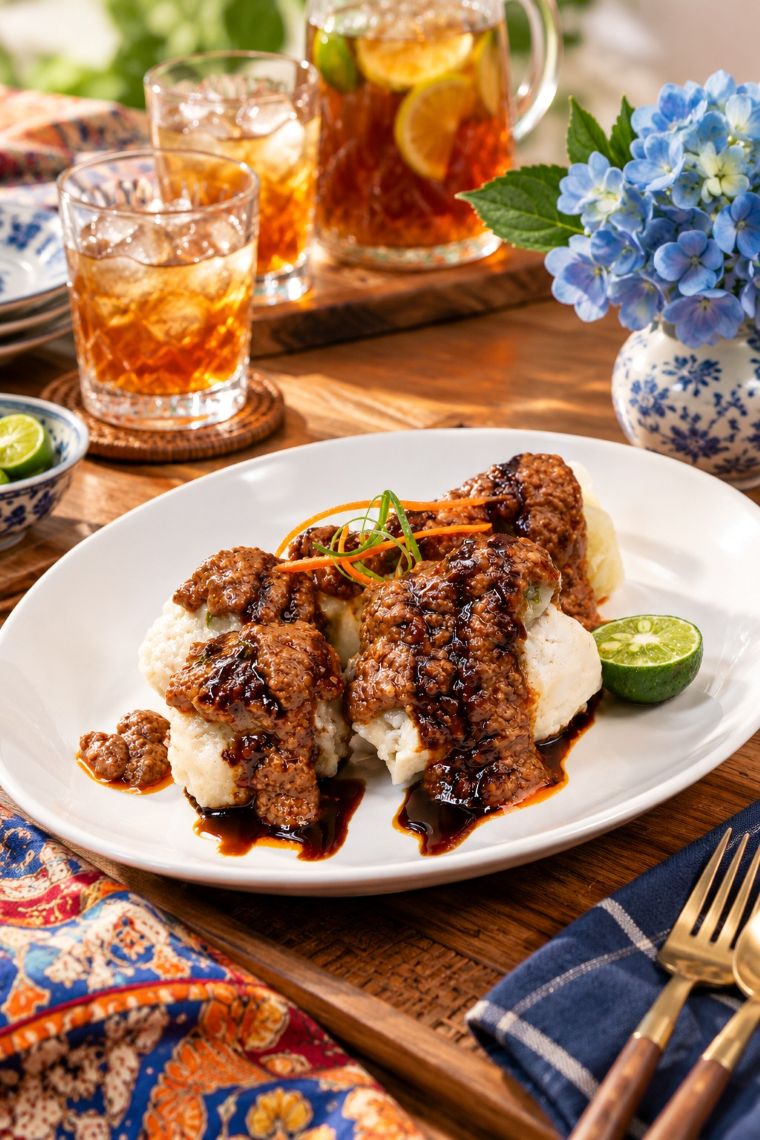
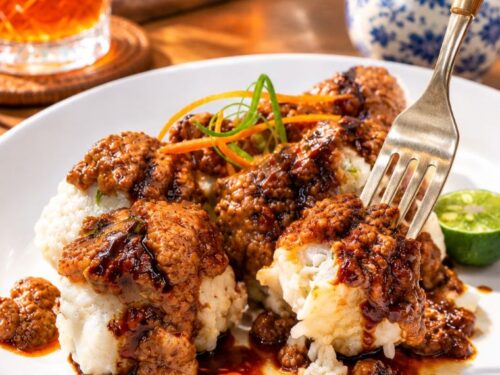
Arrange the warm siomay on a serving plate. Spoon the peanut sauce generously over the dumplings, allowing some sauce to pool around the base.
Serve immediately with freshly squeezed jeruk limau for a bright citrus finish. The acidity helps balance the richness of the peanut sauce.
For a more substantial traditional Indonesian-style serving, accompany the siomay with steamed potatoes, cabbage, boiled eggs, or bitter gourd. Additional chili sauce can be served on the side for those who prefer a spicier dish.
Notes
- Chef's notes
• Keep the mixture cold. Chilled chicken, fish, and ice water help create a smoother, springier dumpling texture.
• Squeeze the chayote thoroughly. Excess moisture can weaken the mixture and make the dumplings too soft.
• Test the seasoning. Steam a small sample of the mixture before shaping the entire batch. Adjust the salt, pepper, or fish sauce if needed.
• Control the consistency. Add the ice water gradually, as the moisture content of the chicken and fish can vary.
• Develop the peanut flavor. Allow the sauce to simmer gently so the roasted peanuts, palm sugar, tamarind, and aromatics have time to blend.
• Adjust the heat to taste. The number of bird's-eye chilies can be increased or reduced without significantly changing the overall method. - Storage and reheating
• Refrigeration: Store cooked siomay and peanut sauce separately in airtight containers for up to 3 days.
• Freezing: Freeze cooked and cooled siomay in a single layer before transferring to a freezer-safe container. For best quality, use within 1–2 months.
• Reheating: Steam refrigerated or frozen siomay until thoroughly heated through.
• Peanut sauce: Reheat gently in a saucepan, stirring regularly and adding a little water to restore the original consistency.
From My Kitchen to Yours — Sandra Djohan