FROM MY TRAVELS TO MY KITCHEN
Travel has always been one of my greatest teachers as a chef. Every destination introduces me to new ingredients, new techniques, and, most importantly, people who carry their culinary traditions with quiet pride.
My memory of dining in Italy, surrounded by the warmth of the nonne and their wonderful home cooking, remains especially dear to me. Their food reminded me that a recipe is never just a list of ingredients. It carries memories of childhood, family gatherings, and generations of hands that have prepared the same dish with care.
Of all the dishes I tasted that day, Cartocci alla Crema Pasticcera became my favorite. It was a simple dessert, yet it held everything I appreciate about good cooking: a beautiful contrast of textures, honest ingredients, and a flavor that stays with you.
Recreating it at home is my way of preserving that memory and sharing a little piece of Italy with my own family and readers. I hope that when you make these pastries, your kitchen will be filled with the same warmth, the fragrance of freshly fried dough, and the pleasure of sharing something delicious with the people you love.
From My Kitchen to Yours — Sandra Djohan

Traditional Sicilian Fried Pastries Filled with Silky Lemon-Vanilla Custard
There are desserts we enjoy, and then there are desserts that stay with us long after the meal has ended. For me, Cartocci alla Crema Pasticcera belongs to the second category.
During one of my travels through Italy, I had the privilege of dining at a restaurant where the Italian nonne—the grandmothers and guardians of traditional home cooking—prepared some of their finest dishes with warmth, generosity, and a deep understanding of their culinary heritage. Their cooking was not about complicated techniques or elaborate presentation. It was about respecting ingredients, preserving traditions, and sharing food made with love.
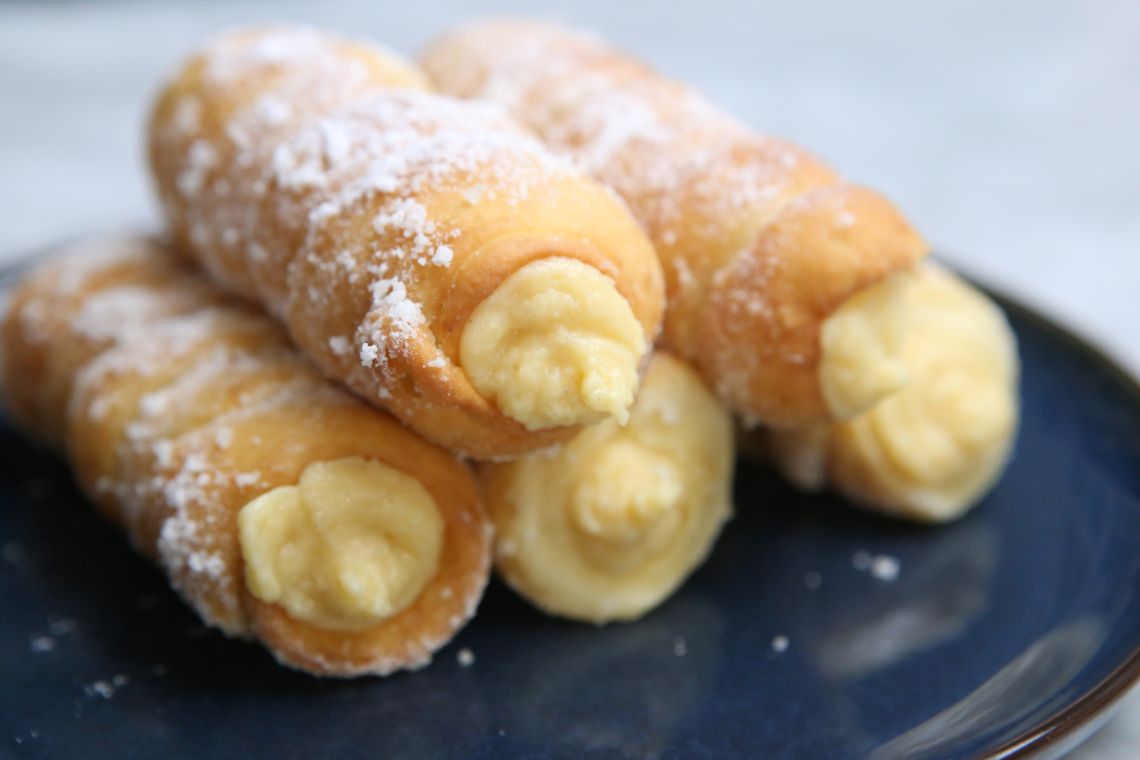
Among all the wonderful dishes I experienced, the dessert was the one that captured my heart. A freshly fried cartoccio, golden and delicately crisp on the outside, was generously filled with smooth, fragrant crema pasticcera. The contrast between the warm, slightly crunchy pastry and the cool, velvety custard was unforgettable.
It reminded me that some of the greatest culinary experiences are not necessarily found in the most sophisticated kitchens, but in the hands of people who have cooked the same dishes for generations.
Cartocci are especially associated with Sicilian pastry culture, where enriched, yeast-raised dough is shaped around metal tubes, fried until golden, coated in sugar, and filled with pastry cream. They are often enjoyed at breakfast, as an afternoon treat, or alongside a good espresso.
This recipe is my way of bringing a little of that Italian experience into my own kitchen. The dough is soft and lightly fragrant with lemon, the exterior is beautifully golden, and the filling is a classic crema pasticcera made with egg yolks, milk, vanilla, and lemon zest.
For me, every bite brings back the pleasure of discovering a dessert through travel and the privilege of tasting the food made by people who truly understand its soul.
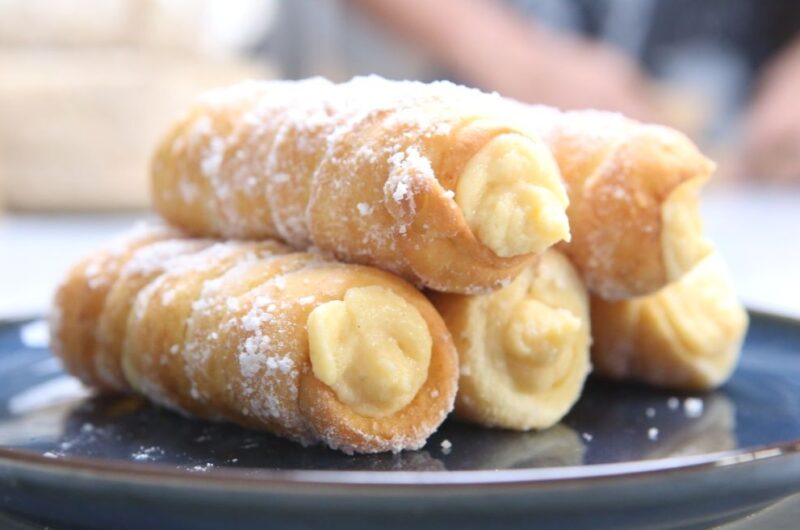
Cartocci Alla Crema Pasticcera
Course: Dessert, Sweet PastryCuisine: Italian14
servings45
minutes35
minutes300
kcalKeep the screen of your device on
Ingredients
- A. For the Yeast Dough
500 g all-purpose flour
60 g granulated sugar
60 g unsalted butter, softened
10 g salt
25 g fresh yeast or 7 g active dry yeast
200 ml lukewarm milk
1 large egg
Finely grated zest of 1 lemon
- B. For the Crema Pasticcera (Italian Pastry Cream)
500 ml whole milk
100 g granulated sugar
4 large egg yolks
40 g cornstarch
1 vanilla bean, split and scraped, or 1 teaspoon pure vanilla extract
Finely grated zest of 1 lemon
- C. For Frying and Finishing
Neutral vegetable oil, sufficient for deep-frying
Granulated sugar, for coating the pastries
Optional: 1 tablespoon Marsala wine can be added to the dough for an aromatic variation. It is not essential to the recipe.
Method
- Step 1: Prepare the Crema Pasticcera
The pastry cream should be prepared first because it needs sufficient time to cool and chill before filling the pastries. A properly chilled custard is easier to pipe and holds its shape better.
1. Pour the milk into a medium saucepan. Add the lemon zest and the split vanilla bean, including the scraped seeds if using a vanilla bean.
2. Heat over medium-low heat until the milk is steaming and small bubbles begin to appear around the edges. Do not allow it to boil vigorously.
3. Remove the saucepan from the heat and let the milk infuse for approximately 5–10 minutes.
4. Meanwhile, place the egg yolks and sugar in a heatproof bowl. Whisk until the mixture becomes slightly paler and the sugar begins to dissolve.
5. Add the cornstarch and whisk until completely smooth, ensuring there are no dry lumps.
6. Slowly pour a small amount of the warm milk into the egg mixture while whisking continuously. Gradually add the remaining milk, whisking as you pour. This process gently warms the yolks and helps prevent them from scrambling.
7. Pour the mixture back into the saucepan. If you prefer a very smooth cream, strain it first to remove the lemon zest and any pieces of vanilla pod.
8. Cook over medium-low heat, stirring constantly with a whisk and scraping the bottom and corners of the pan.
9. As the mixture heats, it will gradually thicken. Continue cooking until the cream reaches a gentle bubble and becomes thick, smooth, and glossy. Once thickened, cook for another 30–60 seconds while whisking to ensure the cornstarch is properly cooked.
10. Remove from the heat. Stir in the vanilla extract if using it instead of a vanilla bean.
11. Transfer the custard to a shallow heatproof container. Press plastic wrap directly onto the surface to prevent a skin from forming.
12. Cool briefly, then refrigerate promptly until completely cold, approximately 2 hours.
Chef's tip: Constant whisking is essential once the custard begins to thicken. If lumps develop, whisk vigorously while the cream is still hot, or pass it through a fine-mesh sieve. The finished pastry cream should be silky, thick enough to pipe, and fragrant with vanilla and lemon. - Step 2: Activate the Yeast
1. Pour the lukewarm milk into a small bowl. It should feel comfortably warm, not hot; approximately 35–38°C (95–100°F) is suitable.
2. Add the yeast and a small pinch of the measured sugar. Stir gently to dissolve.
3. Leave for 5–10 minutes if using active dry yeast, until the mixture looks foamy or creamy on the surface.
4. If using fresh yeast, crumble it into the milk and stir until dissolved. It should begin to look active within several minutes.
Important: Milk that is too hot can damage the yeast. If the mixture does not show signs of activity, check the freshness of the yeast before proceeding. - Step 3: Make the Dough
1. Place the flour, remaining sugar, and salt in a large mixing bowl or the bowl of a stand mixer. Mix briefly to distribute the dry ingredients evenly.
2. Add the egg, softened butter, lemon zest, and activated yeast mixture.
3. Mix until a rough dough forms and no large patches of dry flour remain.
4. Knead by hand on a lightly floured surface for approximately 10–15 minutes, or use a stand mixer fitted with a dough hook for about 8–10 minutes on low to medium-low speed.
5. Continue kneading until the dough becomes smooth, elastic, and slightly tacky. It should stretch without immediately tearing when gently pulled.
6. If the dough is very sticky, knead for another minute before considering additional flour. Add flour sparingly, as too much can make the pastries dense.
7. Shape the dough into a ball and place it in a lightly greased bowl. Turn it once to coat the surface.
8. Cover and leave in a warm, draft-free place for approximately 1–1½ hours, or until doubled in size.
Chef's tip: This is an enriched dough containing butter, milk, and egg. It should be soft and supple rather than stiff. Proper kneading develops the gluten needed to produce a light interior and a tender bite after frying. - Step 4: Shape the Cartocci
1. Once the dough has doubled in size, gently press it down to release excess gas.
2. Transfer it to a clean work surface and divide it into 12–14 equal portions.
3. Roll each portion into a smooth ball and let the pieces rest for approximately 5 minutes, covered with a clean cloth. This relaxes the dough and makes rolling easier.
4. Roll each piece into a long rope approximately 30–40 cm long, depending on the size of your metal tubes.
5. Lightly grease the metal cannoli tubes with a thin coating of neutral oil.
6. Starting near one end of the tube, wrap a rope of dough around it in a spiral, slightly overlapping each turn so the dough forms a continuous cylinder.
7. Pinch the ends gently against the dough to secure them. Avoid stretching the rope too tightly, as the dough needs room to expand.
8. Place the shaped pastries on a lightly greased tray, leaving enough space between them.
Chef's tip: Metal tubes provide the traditional cylindrical shape and help create a hollow center for the filling. Make sure the tubes are suitable for deep-frying and have no plastic or heat-sensitive parts. - Step 5: Proof the Shaped Pastries
1. Cover the shaped cartocci loosely with a clean kitchen towel or lightly greased plastic wrap.
2. Leave them to rise for approximately 20–30 minutes, or until slightly puffed.
3. While they proof, prepare a tray lined with paper towels or a wire rack for draining the fried pastries.
4. Set up a separate shallow dish of granulated sugar for coating.
The dough should look lighter and slightly expanded, but it does not need to double in size again. - Step 6: Fry the Cartocci
1. Pour vegetable oil into a deep, heavy-based saucepan or fryer, ensuring there is enough room for the pastries to float freely. 2. Never fill the pot more than halfway.
3. Heat the oil to 170°C (340°F), using a thermometer to maintain a steady temperature.
4. Carefully lower 2–3 pastries into the oil at a time, depending on the size of your pot. Avoid overcrowding, which can lower the oil temperature.
5. Fry for approximately 3–5 minutes, turning the pastries gently so they brown evenly on all sides. Adjust the heat as needed to maintain the oil temperature.
6. Look for an even golden-brown exterior. The pastries should puff slightly and develop a crisp surface while remaining light inside.
7. Remove the cooked cartocci using tongs or a slotted utensil and allow excess oil to drain on a wire rack or paper towels.
8. When the pastries are cool enough to handle but still warm, carefully remove the metal tubes. If a tube feels stuck, gently twist it rather than pulling forcefully.
9. Roll the warm pastries in granulated sugar until evenly coated.
10. Transfer to a wire rack and allow them to cool completely before filling.
Chef's tip: Oil temperature makes a considerable difference. Oil that is too cool produces greasy pastries, while oil that is too hot browns the exterior before the dough cooks through. Fry in small batches and allow the temperature to recover between batches.
Safety note: Metal tubes retain heat for some time. Use heat-resistant tongs or gloves and let the pastries cool enough to handle before removing the tubes. - Step 7: Fill with Crema Pasticcera
1. Remove the chilled pastry cream from the refrigerator. Whisk it briefly until smooth and creamy again.
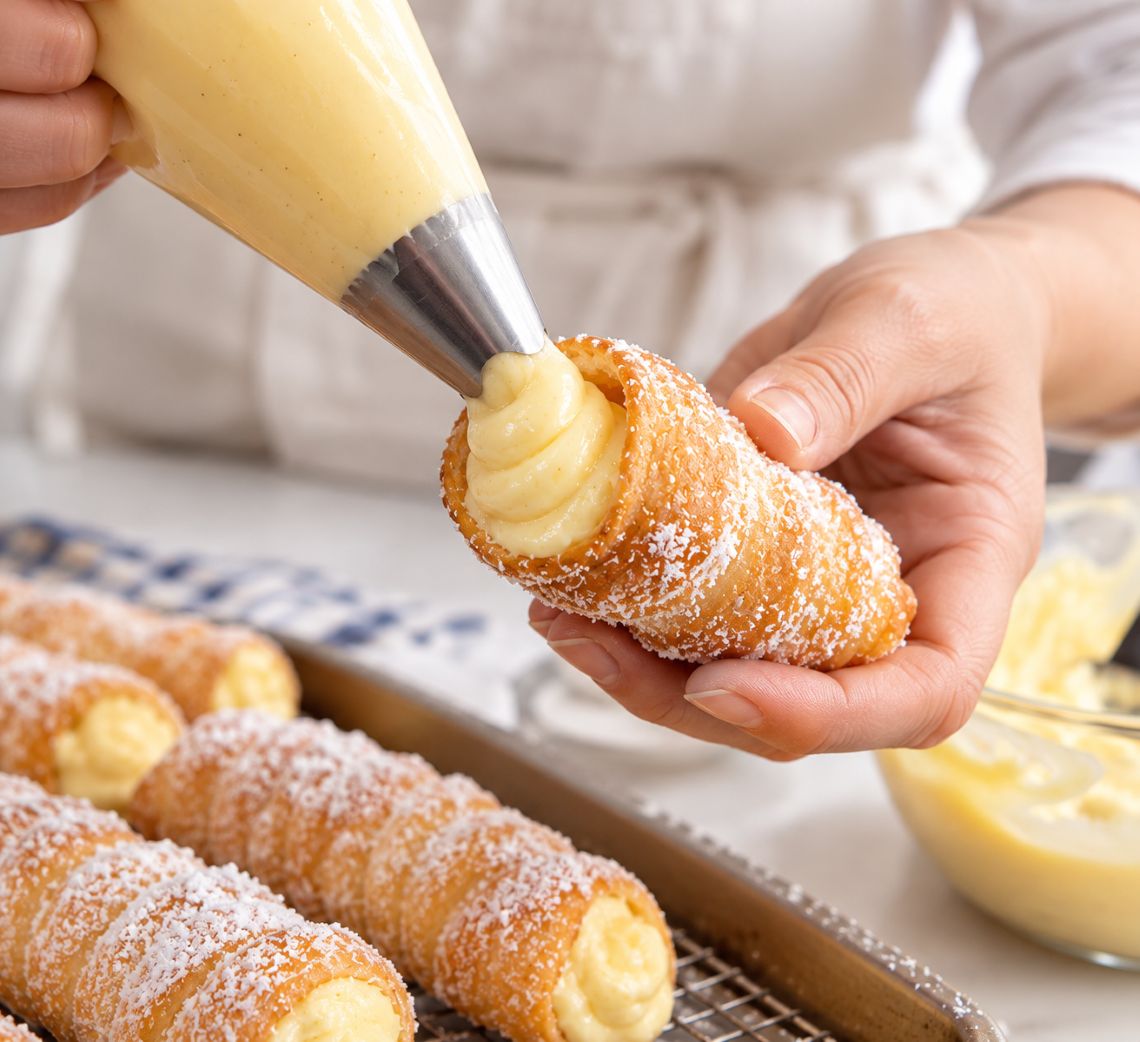
2. Transfer the custard to a piping bag fitted with a plain round nozzle.
3. Insert the nozzle into one end of each cartoccio and pipe the cream into the hollow center.
4. Repeat from the opposite end if necessary, ensuring the pastry is filled evenly from end to end.
5. Avoid overfilling to the point where the pastry splits, but be generous enough that the custard is visible at both ends.
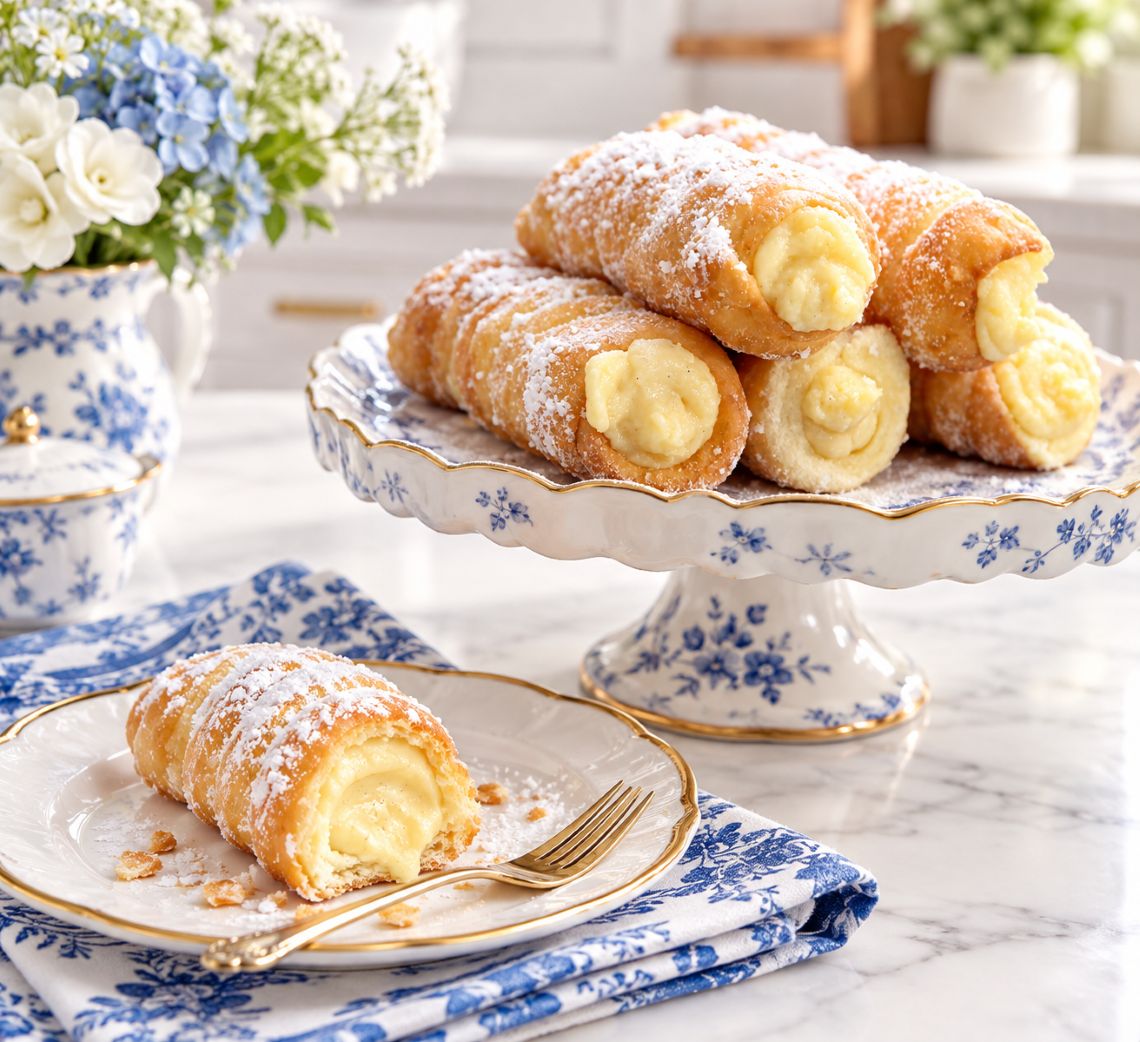
6. Arrange the filled pastries on a serving platter.
Chef's tip: Fill the cartocci as close to serving time as possible. The pastry is at its best when the exterior remains crisp and the custard is cool and silky. Once filled, moisture from the cream gradually softens the fried dough. - Serve the cartocci on the day they are made, ideally soon after filling. The sugar coating gives a delicate sweetness to the crisp exterior, while the chilled custard provides a creamy contrast.
Pair with espresso, cappuccino, or a simple cup of black coffee. For a refined presentation, arrange the pastries on a serving platter and finish with a very light dusting of powdered sugar if desired.
Notes
- CHEF'S NOTES
1. Why lemon zest matters
Lemon zest adds freshness to both the dough and the custard. Its aromatic oils balance the richness of the butter, egg yolks, and milk without making the pastry taste sour.
2. The secret to smooth custard
Temper the egg yolks slowly with warm milk, then whisk continuously while cooking. Pressing plastic wrap directly against the surface during cooling prevents an unpleasant skin from forming.
3. Keep the dough light
Allow enough time for both proofing stages. Under-proofed dough can produce dense pastries, while excessive proofing may cause the shaped dough to become fragile and collapse during frying.
4. Do not fill the pastries while hot
The cartocci must cool before filling, or the heat can loosen the custard and create steam inside the pastry. Cold pastry cream and completely cooled shells give the best result.
5. Storage
Unfilled pastries are best eaten on the day they are fried. Once filled, refrigerate any leftovers promptly in an airtight container and consume within 24 hours. The texture will gradually soften, so freshly filled cartocci are always preferable.
6. A note on tradition
Sicilian pastry traditions vary from town to town and from family to family. This version uses lemon-scented yeast dough and classic vanilla-lemon pastry cream to capture the spirit of the cartocci I remember enjoying in Italy.