Indonesian Kitchen Aceh, Sumatera
What makes this recipe special
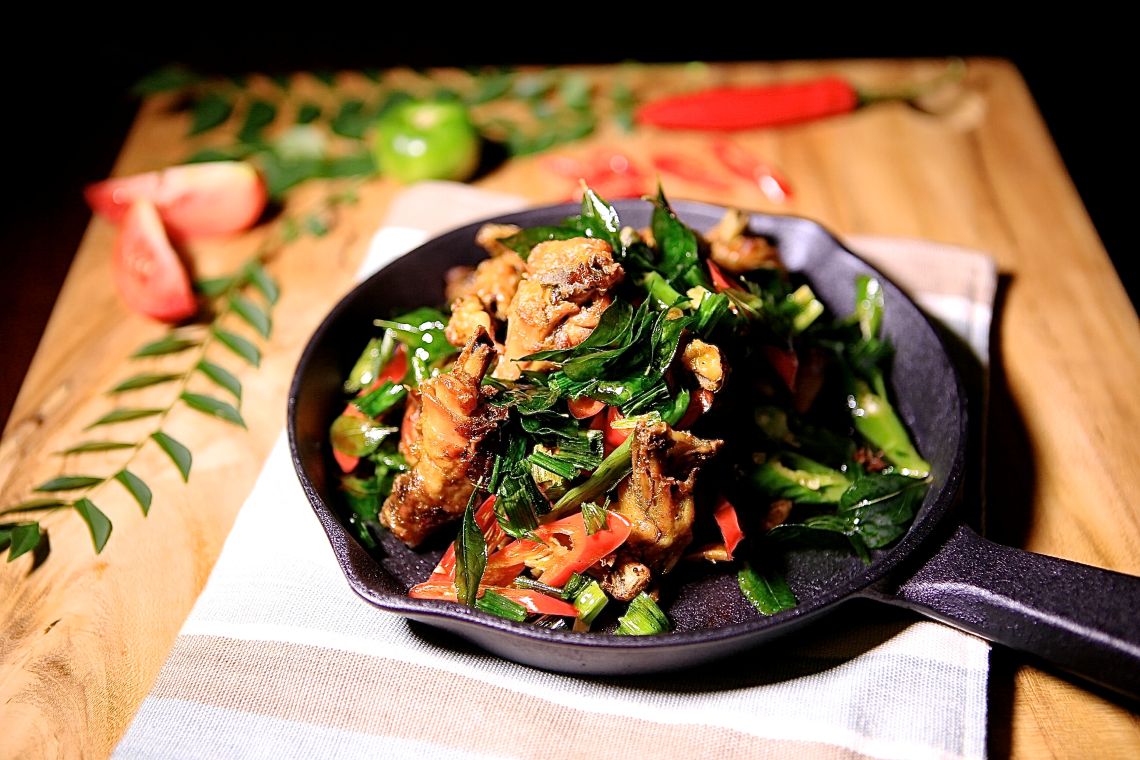
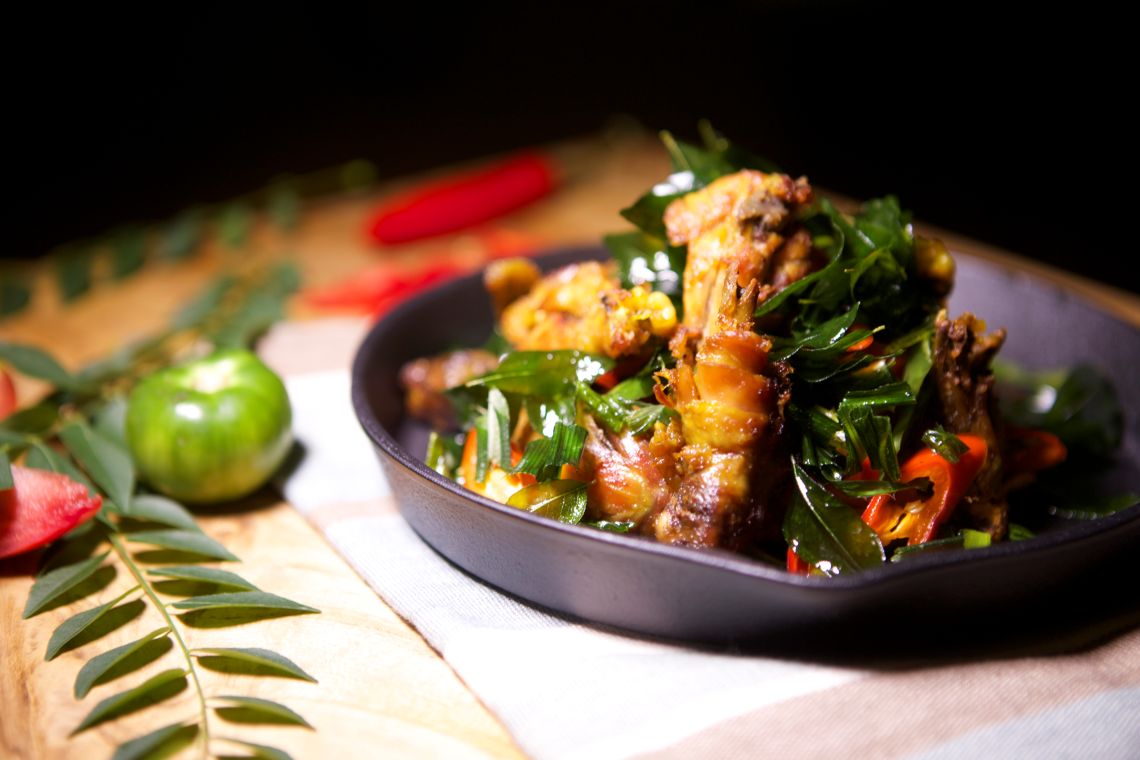
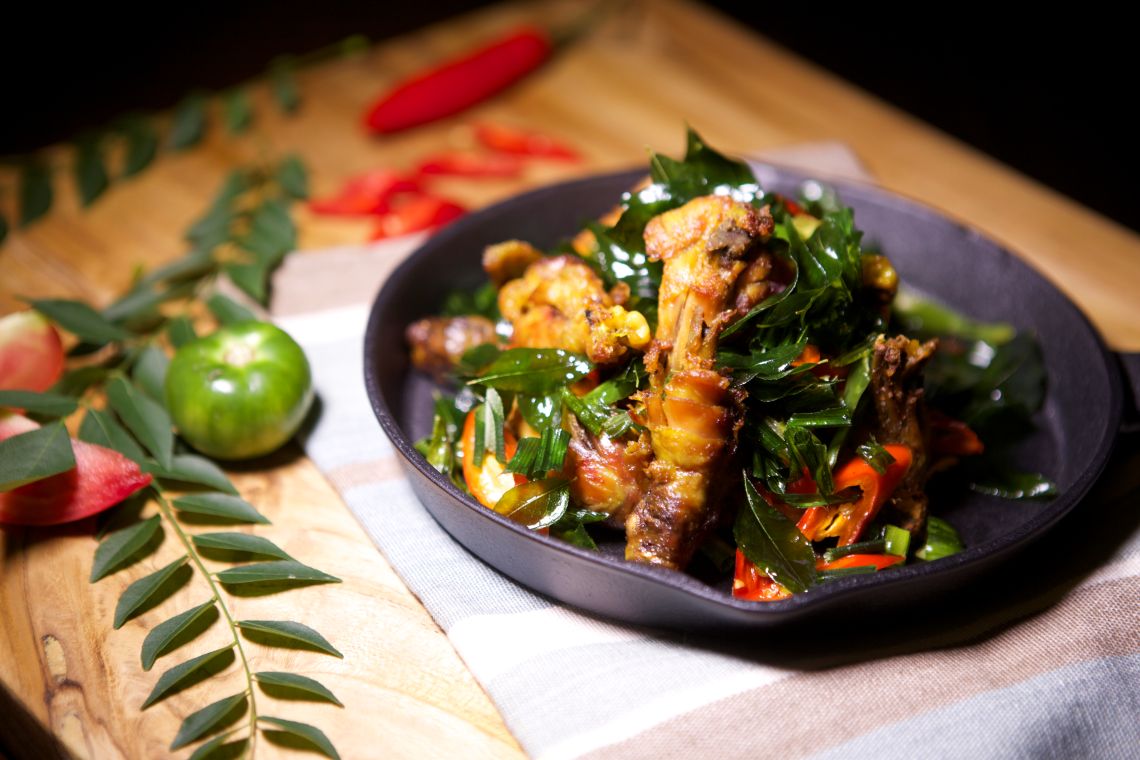
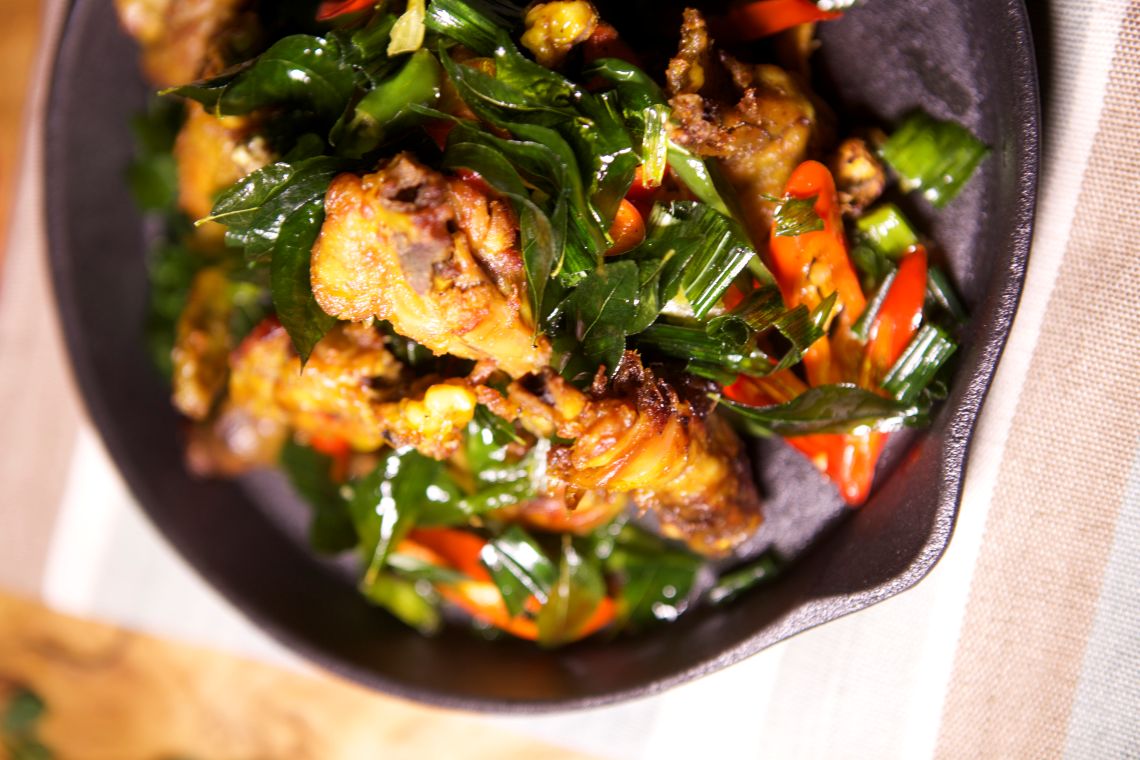
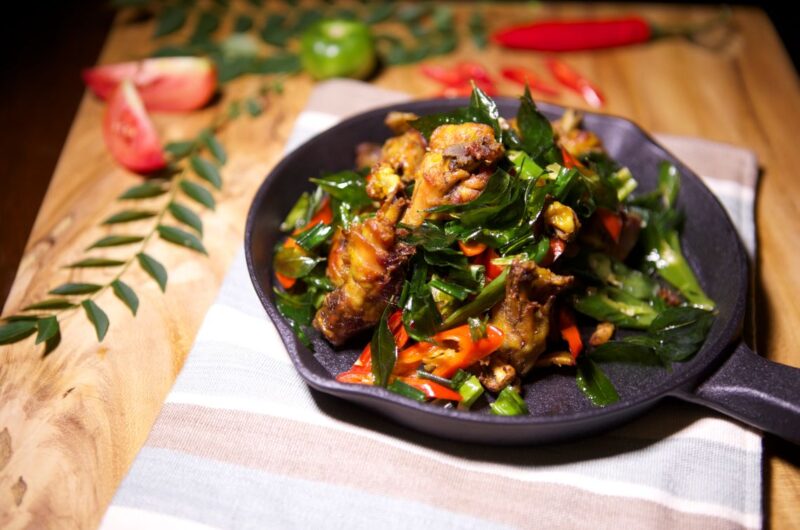
Ayam Tangkap means, roughly, “Caught Chicken” – and the name is not poetic exaggeration. When the dish arrives at the table in Aceh, what you see first is nnot chicken at all. It’s a loose, dark pile of fried curry leaf, pandan, kaffir lime leaf, and turmeric leaf, crackling and fragrant, with the chicken pieces scattered somewhere underneath, half-hidden, waiting to be found. You genuinely have to hunt for your piece – hence “Caught”.
This is my own modification of the dish, built after cross-referencing a few versions I love, including recipes for spiced fried chicken from Just Try & Taste – their Ayam Goreng Terasi, Ayam Goreng Tabur Cabai Bawang, and Ayam Goreng Spicy all fed into how I think about double-cooking chicken in Indonesian kitchens : simmer it inn aromatics first, then fry it hard and fast so the spice crust actually a clings. Ayam Tangkap asks for the same discipline, just with a wilder, greener pile of herbs on top.
“It isn’t a dish you eat quietly. Half a pleasure is digging through the herbs to find out what you’ve caught”.
WHY IT TRAVELS SO WELL BEYOND ACEH
A dish built from a trade routeAceh sits at the very tip of Sumatera, on the strait that shipping between the Middle East, India and China has crossed for over a thousand years. Cloves, peppers, nutmeg, and cardamon moved through Acehnese ports long before they reach European kitchens, and the region’s cooking still carries that history – heavier, more layered spicing than you’ll find almost anywhere else in Indonesia, closer in spirit to the cuisines of the Indian Ocean trade than to the gentler flavour of Java. Ayam Tangkap became a symbol of that identity almost by accident. It started as home cooking and street-stall food in Banda Aceh, but it spread nationally the way a handful of a very specific regional dishes do: through students and workers who left Aceh for Jakarta, Medan, and beyond, and through the wave of interest in Acehnese food that followed the 2004 tsunami, when the world’s attention turned toward the region and its culture. What keeps it popular now, decades on, is simpler – it photographs beautifully, it smells incredible before it's even plated, and the “find your chicken” ritual makes it a dish people want to share and talk about, not just eat.
Ayam Tangkap
Course: Main, Lunch, DinnerCuisine: Indonesian12
servings30
minutesKeep the screen of your device on
Ingredients
- Part A - For Poaching
Simmered with the chicken to season it through before it ever sees oil. 1 whole chickencut into 24 pieces — kampung (free-range village) chicken is traditional and worth seeking out; a standard broiler works fine too
3 leaves pandan leaf, cut into 4 cm lengths
3 sprigs curry leaf (daun salam koja), left whole
3 pieces dried asam sunti (fermented starfruit), or 1 tbsp tamarind water
3 leaves kaffir lime leaf, torn roughly
2½ tsp salt
½ tbsp palm sugar, finely grated
½ tsp ground white pepper
300 ml coconut water, or plain water
- Spice Paste - Ground Fine
8 cloves shallots
4 cloves garlic
5 bird's eye chilies
1 stalk lemongrass, white part only
3 cm fresh turmeric
2 cm fresh ginger
2 tsp coriander seeds, toasted
- Part B - For Frying
Added toward the end, so the herbs fry to a crisp rather than soften.
3 leaves pandan leaf, cut into 2 cm lengths
6 sprigs curry leaf, leaves only
8 leaves kaffir lime leaf, central rib removed
4 green curly chilies, left whole (optional)
3 green curly chilies, sliced thin on the diagonal
3 leaves turmeric leaf, sliced into 3 cm ribbons to taste
fried shallots, for scattering (optional)
Directions / Method
- Marinate the chicken
Rub the chicken pieces with 1 tablespoon of salt and the juice of one lime. Let sit for 15 minutes, then rinse thoroughly under cold water. - Poach in the aromatics
Put the chicken into a pan with everything from Part A and the ground spice paste. Stir to coat, then simmer over low heat until the chicken is cooked through and the liquid has almost entirely reduced away. If the pan dries out before the chicken is done, add a splash more water and keep cooking. Taste and adjust the salt. Remove from heat and set aside. - Fry the chicken
Heat a generous amount of oil in a nonstick pan — enough to properly deep-fry, since the chicken and herbs both need to come out completely dry and crisp. Lift the chicken pieces out of the poaching spices, letting excess cling to a colander, and lower them into the hot oil. Fry until they just start to turn golden brown - Bury it in herbs
Add all of Part B except the fried shallots. Keep frying until the chicken is deep brown, dry and fully cooked, and the herbs have turned crisp. If the chicken browns before the herbs crisp up, lift the chicken out first and let the herbs keep frying alone until they're crunchy to the bite. Lift everything out with a wire skimmer and drain well. - Plate it buried
Pile the fried herbs over the chicken rather than beside it — that's the point of the dish. Scatter with fried shallots if using, and let people dig through to find their pieces.
Notes
- A note on ingredients. Daun Salam Koja (Curry Leaf) and Turmeric Leaf are the two ingredients that define this dish and the two hardest to find outside Sumatera. Curry Leaf freezes well if you can find a source - buy extra when you see it. Turmeric Leaf can sometimes be swapped for an extra Kaffir Lime Leaf or two, though you’ll lose some of the dish’s particular grassy sweetness.